
Welcome:
Login
|
Sign Up
|
About CircleID
Follow:
|
|


|
||
|
||
The Google Threat Intelligence Group (GTIG) recently discovered that Russia-affiliated threat group COLDRIVER seems to have just retooled yet again. Their homegrown backdoor NOROBOT, redesigned into YESROBOT and now, MAYBEROBOT.
The redesigned tool MAYBEROBOT figured in the group’s latest attack going after the same targets—high-profile individuals in nongovernment organizations (NGOs), policy advisors, and dissidents. Based on the GTIG analysis, while the group typically took the phishing route to distribute NOROBOT and YESROBOT, MAYBEROBOT may be meant for more specific targets.
GTIG publicized 14 indicators of compromise (IoCs) comprising 13 domains and one IP address in their report. WhoisXML API dove deeper into the IoCs and uncovered these findings:
A sample of the additional artifacts obtained from our analysis is available for download from our website.
We queried the 13 domains identified as IoCs on First Watch Malicious Domains Data Feed and discovered that four of them were deemed likely to turn malicious 127—182 days before they were reported as such on 21 October 2025. Here are more details for two of them.
| DOMAIN IoC | FIRST WATCH DATE | NUMBER OF DAYS SPOTTED BEFORE THE REPORTING DATE |
|---|---|---|
| documentsec[.]online | 22 April 2025 | 182 |
| system-healthadv[.]com | 9 May 2025 | 165 |
Then, we queried the 13 domains identified as IoCs on WHOIS API and found out that:
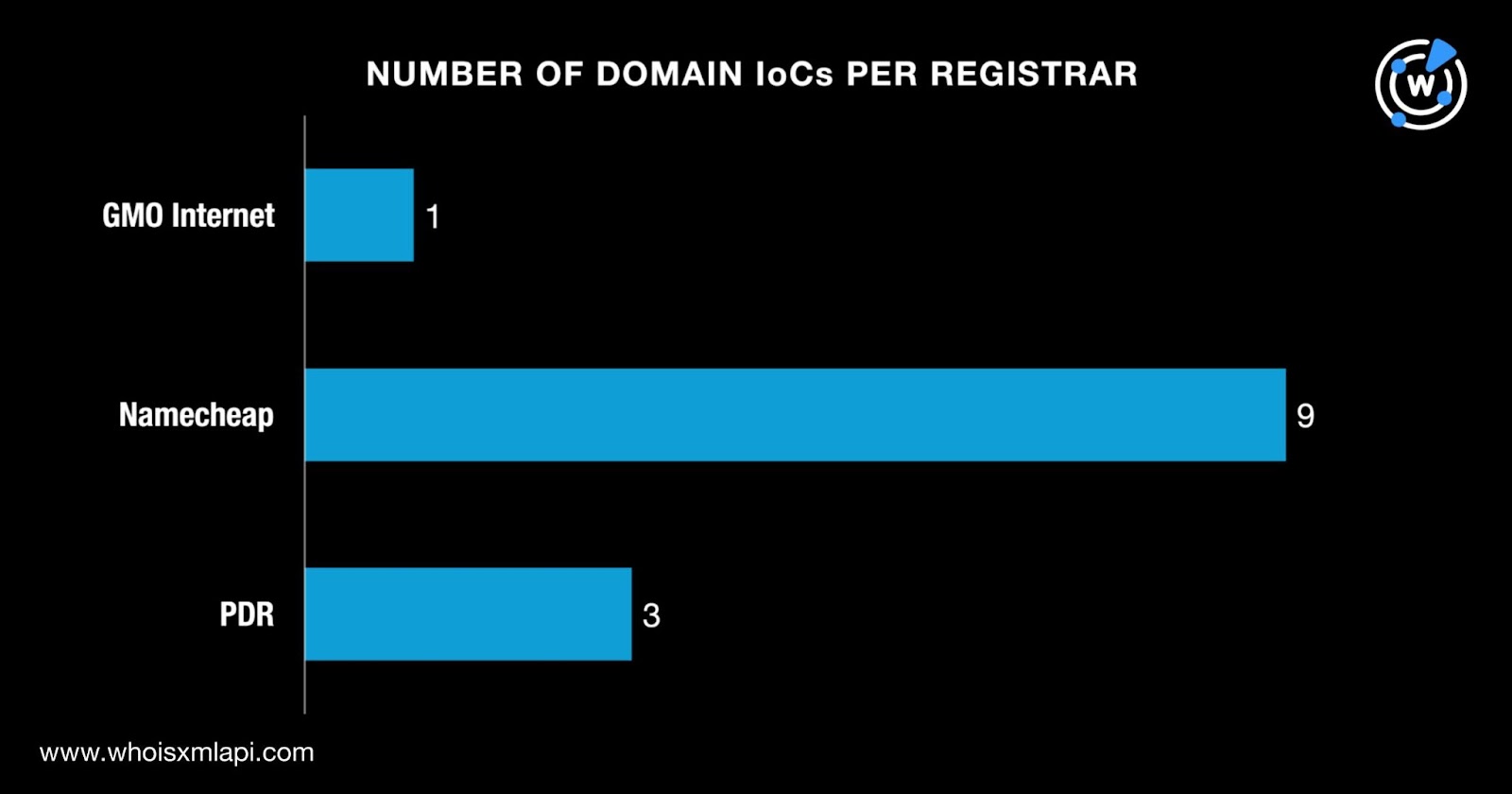
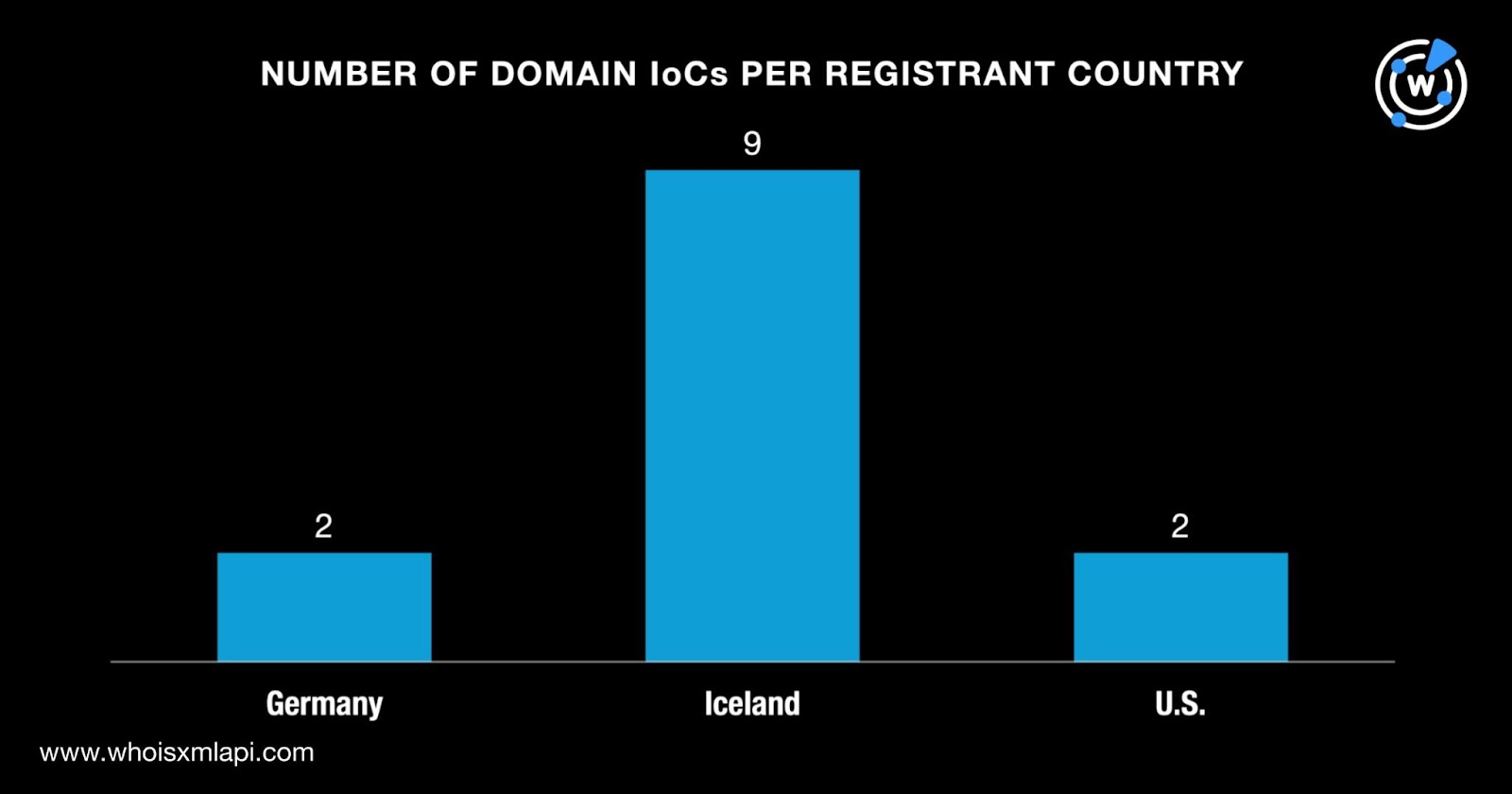
They were registered in three countries topped by Iceland, which accounted for nine domains. Two domains each, meanwhile, were registered in Germany and the U.S.
Next, we queried the 13 domains identified as IoCs on DNS Chronicle API, which revealed that they had 57 historical domain-to-IP resolutions in all. The domain inspectguarantee[.]org posted the oldest resolution on 4 April 2025. It had six resolutions until 29 September 2025. Take a look at more details for five other domains below.
| DOMAIN IoC | NUMBER OF RESOLUTIONS | FIRST RESOLUTION DATE | LAST RESOLUTION DATE |
|---|---|---|---|
| southprovesolutions[.]com | 7 | 5 April 2025 | 2 October 2025 |
| documentsec[.]online | 4 | 23 April 2025 | 2 May 2025 |
| oxwoocat[.]org | 1 | 24 April 2025 | 24 April 2025 |
| documentsec[.]com | 5 | 29 April 2025 | 29 August 2025 |
| system-healthadv[.]com | 6 | 10 May 2025 | 25 September 2025 |
After that, we queried the sole IP address identified as an IoC on IP Geolocation API and found out that it was geolocated in the U.S. and administered by TimeWeb.
A DNS Chronicle API query for the sole IP address as an IoC showed that it had 79 IP-to-domain resolutions from 6 February 2020 to 5 September 2025.
After knowing more about the IoCs, we then hunted for more connected artifacts starting with a WHOIS History API query for the 13 domains identified as IoCs. We found out that 10 of them had email addresses in their historical WHOIS records. We uncovered nine unique email addresses and one of them was a public address.
A Reverse WHOIS API query for the sole public email address led to the discovery of a single email-connected domain after duplicates and those already identified as IoCs were filtered out.
Then, we queried the 13 domains identified as IoCs on DNS Lookup API, which showed that six of them had active IP resolutions. They resolved to four unique additional IP addresses.
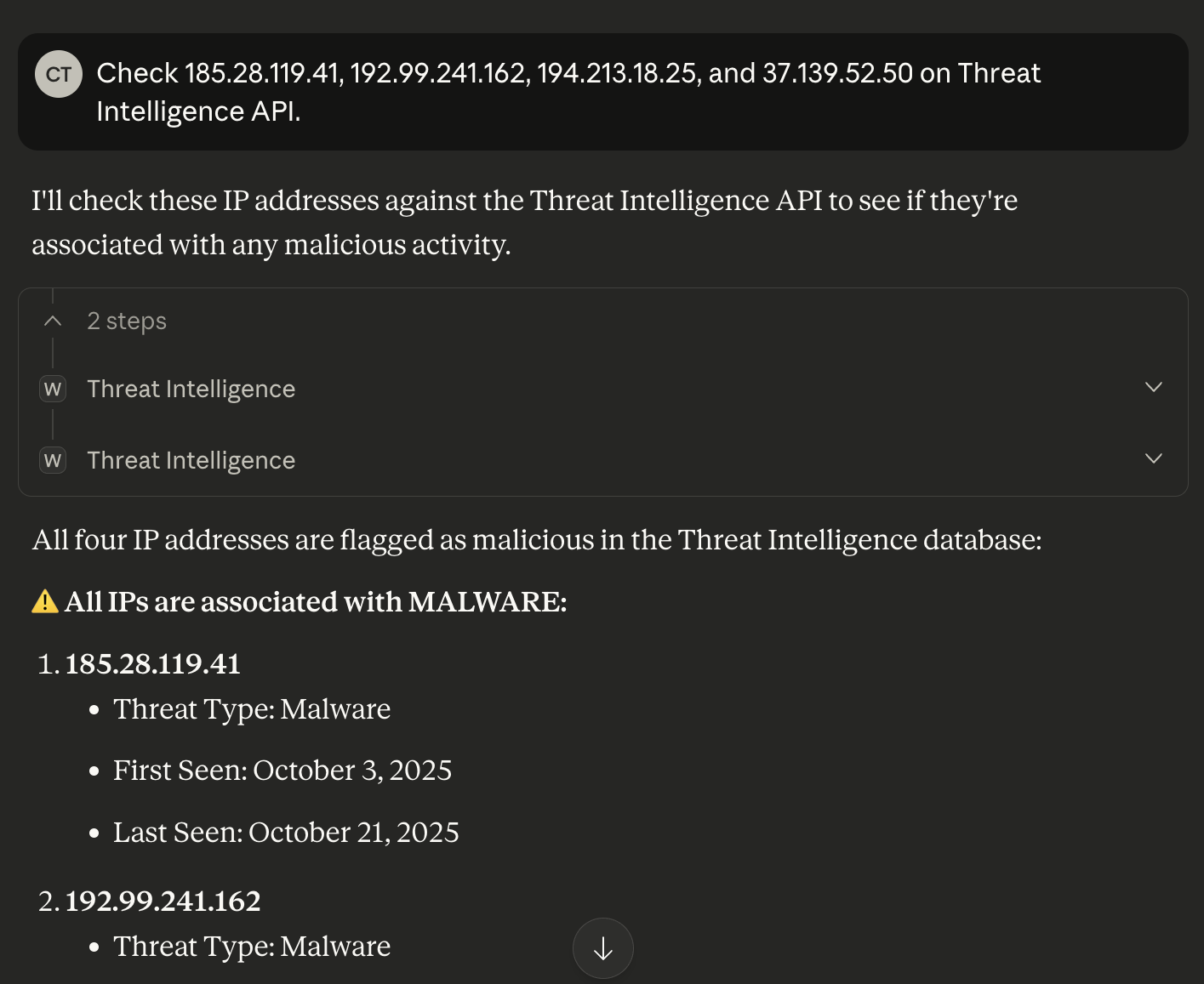
A Threat Intelligence API query via the WhoisXML API MCP Server for the four additional IP addresses revealed that all of them have been weaponized for malware distribution. We used the prompt “Check 185.28.119.41, 192.99.241.162, 194.213.18.25, and 37.139.52.50 on Threat Intelligence API.”
This post only contains a snapshot of the full research. Download the complete findings and a sample of the additional artifacts on our website or contact us to discuss your intelligence needs for threat detection and response or other cybersecurity use cases.
Disclaimer: We take a cautionary stance toward threat detection and aim to provide relevant information to help protect against potential dangers. Consequently, it is possible that some entities identified as “threats” or “malicious” may eventually be deemed harmless upon further investigation or changes in context. We strongly recommend conducting supplementary investigations to corroborate the information provided herein.
Sponsored byWhoisXML API

Sponsored byIPv4.Global

Sponsored byVerisign

Sponsored byDNIB.com

Sponsored byCSC

Sponsored byRadix

Sponsored byVerisign


A World-Renowned Source for Internet Developments. Serving Since 2002.