
Welcome:
Login
|
Sign Up
|
About CircleID
Follow:
|
|


|
||
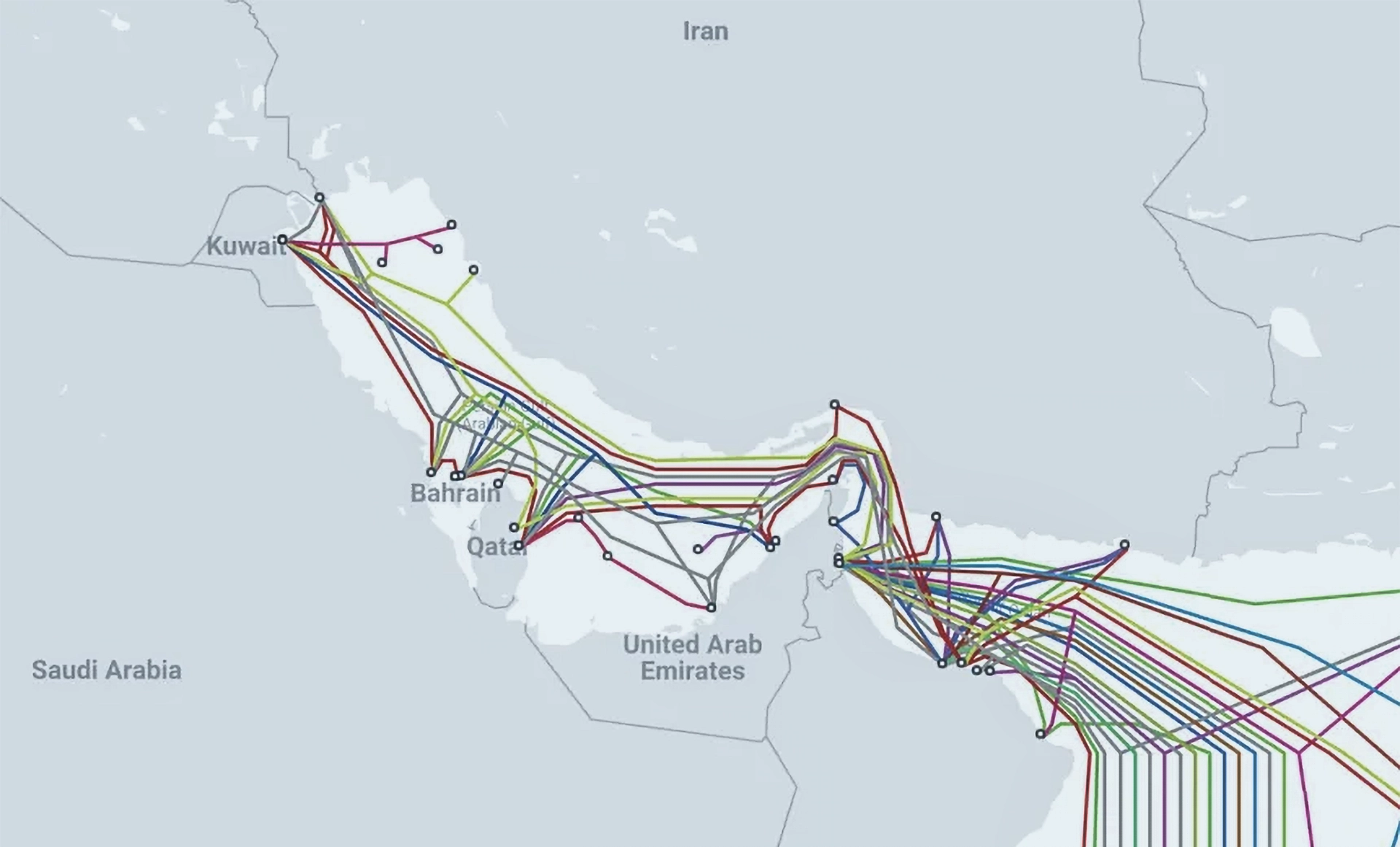
Iran is seeking to expand its leverage over the Strait of Hormuz beyond oil shipments and into the infrastructure underpinning the global internet. Iranian officials and state-linked media have floated plans to charge international technology firms licensing fees for subsea internet cables passing beneath the strategic waterway, while hinting that disruptions could follow if companies refuse to comply.
The proposal targets undersea cables carrying vast quantities of data between Europe, Asia and the Gulf. Iranian outlets suggested that firms such as Google, Microsoft, Meta and Amazon could be required to operate under Iranian law and pay for cable access, maintenance and repair rights. Tehran has framed the initiative as a lawful assertion of sovereignty under international maritime rules.
Hidden risks: Yet legal experts and telecommunications analysts remain sceptical. Most of the cables do not terminate in Iran and many were deliberately routed through Omani waters to avoid geopolitical risks. American sanctions also make direct payments to Iran legally fraught for Western firms. Analysts say Tehran would struggle to enforce such fees without resorting to intimidation.
The greater concern lies in the implicit threat to the cables themselves. Subsea cables carry the overwhelming majority of global internet and financial traffic. Damage to them could disrupt banking systems, cloud computing, military communications and energy exports across several regions. Researchers warn that Gulf economies, India’s outsourcing industry and parts of East Africa could face significant interruptions if the infrastructure were attacked.
Military threat: Experts note that Iran possesses naval divers, drones and small submarines capable of threatening underwater assets. Although cutting cables would be technically difficult and highly visible under heavy American surveillance, even the perception of risk could deter repair ships from entering the area, prolonging outages.
Limited impact: Telecommunications researchers caution that the broader global internet would probably withstand isolated disruptions because traffic can often be rerouted through alternative networks. Nevertheless, the episode highlights the growing strategic importance of digital infrastructure in geopolitical conflict.
The Egyptian model: Iran appears to be drawing inspiration from Egypt, which earns substantial revenue from cables crossing its territory near the Suez Canal. But the comparison is imperfect: the Strait of Hormuz is an international waterway governed by a more contested legal framework.
Sponsored byDNIB.com

Sponsored byVerisign

Sponsored byVerisign

Sponsored byWhoisXML API

Sponsored byRadix

Sponsored byCSC

Sponsored byIPv4.Global


A World-Renowned Source for Internet Developments. Serving Since 2002.