
Welcome:
Login
|
Sign Up
|
About CircleID
Follow:
|
|



|
||
|
||
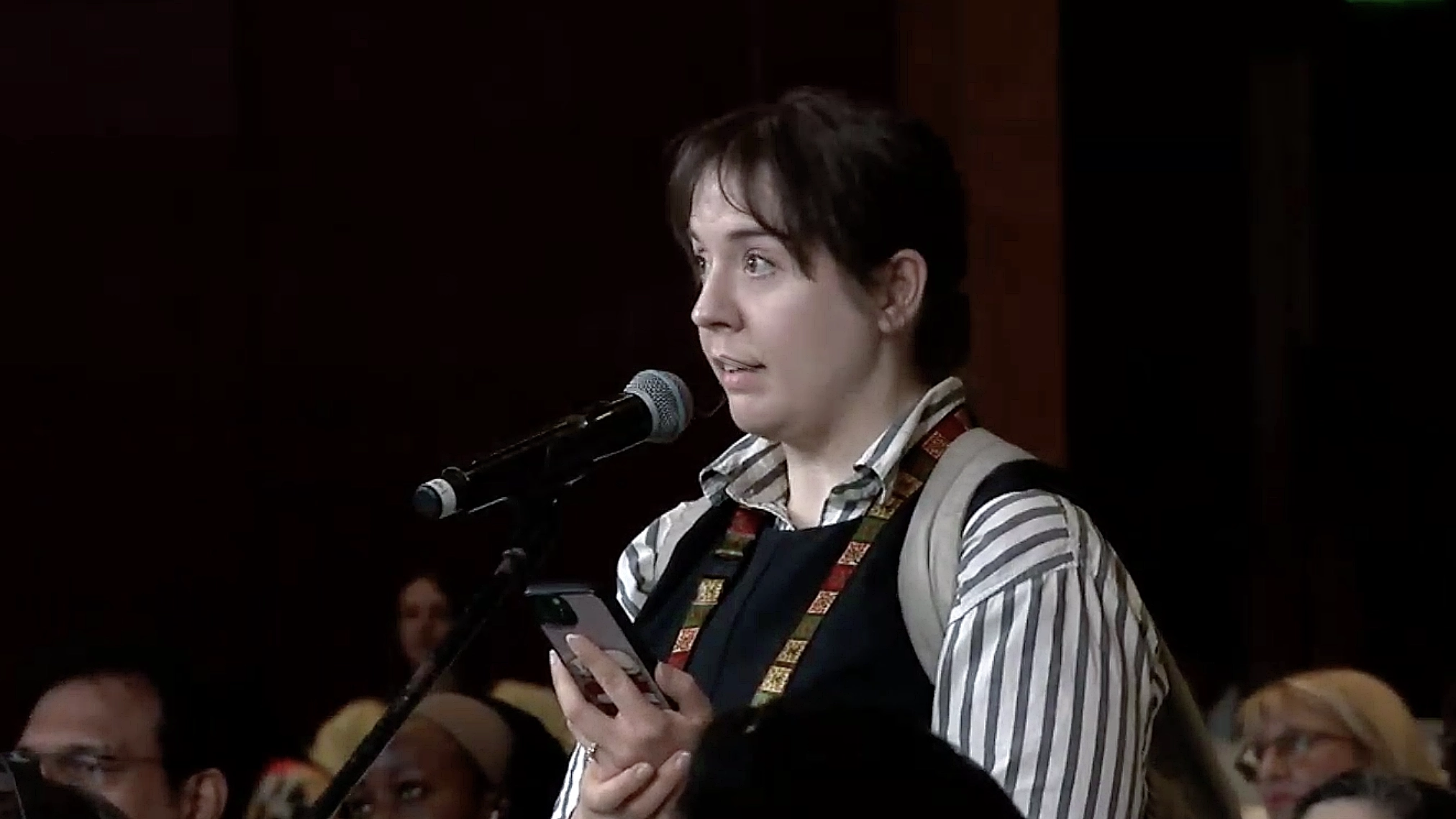
The air is warm, the hospitality is phenomenal, and the energy is abundant at ICANN85 in Mumbai, India. Many, unfortunately, were unable to attend this meeting in person due to the war in the Middle East; but even with the current geopolitical disorder, the meeting still holds a single overarching goal: One World, One Internet. This mantra is pivotal in the shadow of geopolitics as it reminds us about the merits of a global Internet.
It has been a fast-paced past two years for the Internet community. The 20-Year Review of the World Summit on the Information Society (WSIS+20), which took place at the United Nations General Assembly last December, reaffirmed the commitment to multistakeholder Internet governance. Reflecting on WSIS+20, a session coordinated by ICANN was held on 8 March 2026, titled, “WSIS+20 Lessons Learned & Next Steps.”
The session focused on some of the big wins of WSIS+20, namely the newfound permanency of the Internet Governance Forum (IGF). But there are gaps in how the WSIS+20 Review has been understood. Where the IGF is the most visible success for recommitting multistakeholder Internet governance, another win is seldomly discussed in the WSIS+20 aftermath, and its impact poorly understood.
Youth from around the world were able to successfully advocate for their unique stakeholder group to be recognized in the WSIS+20 text. As a stakeholder group, youth have traditionally been left to the margins and shadows of Internet governance. Youth hold overlapping affiliations with their universities, internships, and fellowship programs, resulting in a complex stakeholder identity. Without a clear ability to identify as a stakeholder group such as through stakeholder affiliation at registration, youth have been invisible stakeholders who were difficult to understand and map until the work of Dr. Nadia Tjaha to overcome this deficiency. But youth as a stakeholder group did not give up in their invisibility. For the better part of the past decade, youth have become more vocal in stakeholder recognition, such as advocating for the Youth Track of the IGF, pushing for a youth position on the IGF Multistakeholder Advisory Group, and the overall diversity and sustainability of Youth IGFs around the world as part of the IGF NRI framework.
This brings me back to WSIS+20. Coordinated efforts to convene youth became clear from the onset of the Review process. Youth from the Asia-Pacific region, led and coordinated by Net.Mission, along with the newly formulated WSIS Youth Caucus which was a cross-regional youth-led initiative created as a response for their stakeholder inclusion in WSIS+20, came together and collaborated on ensuring that youth would become a recognized stakeholder group through bottom-up identity formation and meta-participation at various Internet governance arenas.
The efforts by these youth were successful with their stakeholder group recognized in the WSIS+20 text, marking the first time a stakeholder group has emerged through bottom-up advocacy in Internet governance. This is significant as it paves the way for more bottom-up stakeholder identity formation to occur, allowing who we recognize as an Internet governance stakeholder to evolve as much as the Internet itself does.
Stakeholders who still sit in the wings include three primary groups: Indigenous peoples who are poorly connected to the Internet, judiciaries who are responsible for implementing emerging digital policies around the world, and non-civil society aligned medical practitioners who must navigate complex data governance frameworks surrounding their patients’ sensitive health data.
Therefore, what we have seen from the efforts of youth in the WSIS+20 Review is a roadmap for other stakeholder groups to emerge and bring their diverse expertise and lived experiences to Internet governance conversations, thereby strengthening the multistakeholder model.
But this brings me back to the Reflecting on WSIS+20 session at ICANN85. In a noticeable exclusion, youth were not invited to take part in this panel. Our efforts were delineated, resulting in my comment at the microphone of this session critiquing such a lack of reflection about the full-scale merits of the WSIS+20 process. The moment has passed, but the lesson must be learned: as we go forward in fluctuations in Internet governance which the next decade will likely bring, we need all stakeholder groups included and supported by each other to allow the choir of our efforts to be sung in unison for the efforts of an open, trustworthy, and multistakeholder Internet to continue to flourish.
Sponsored byVerisign

Sponsored byDNIB.com

Sponsored byVerisign

Sponsored byIPv4.Global

Sponsored byRadix

Sponsored byCSC

Sponsored byWhoisXML API


A World-Renowned Source for Internet Developments. Serving Since 2002.
For those interested! https://youtu.be/JaKScXfKNKk?t=3224
although, in my book, it was March 9, not March 8 :)