
Welcome:
Login
|
Sign Up
|
About CircleID
Follow:
|
|



|
||
|
||
As industry watchers know, the UN’s World Summit on the Information Society (WSIS+20) review marks a pivotal moment that will shape internet governance well into the 2030s and beyond.
In response, the team at CIRA has published a new report, emphasizing why the multistakeholder model should not only be protected, but refreshed and reinvigorated for the challenges that lie ahead.
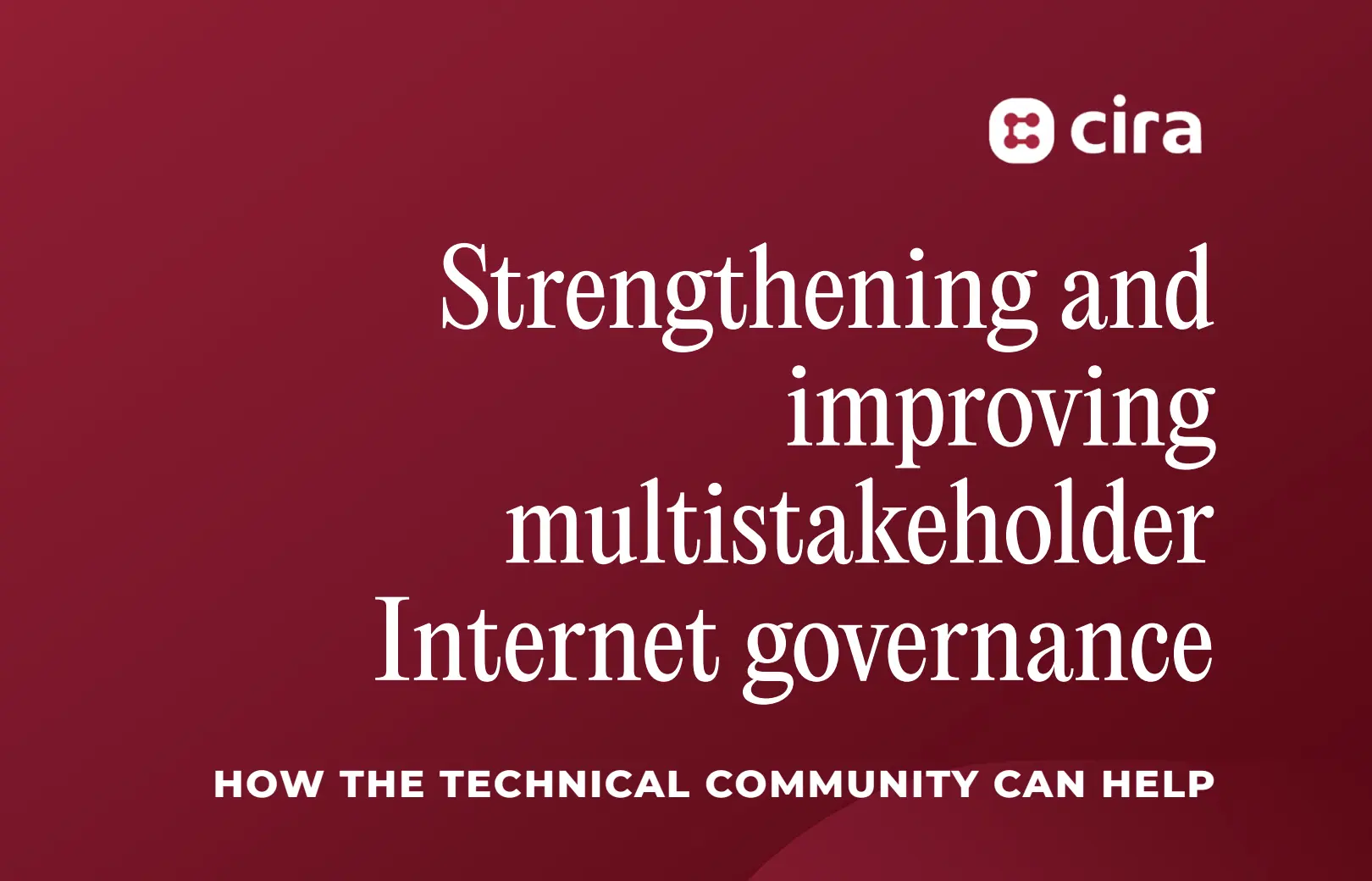
Our report, entitled Strengthening and Improving Multistakeholder Internet Governance: How the Technical Community Can Help, is shaped by the perspectives of more than eighty members of the internet’s technical community from across the world. It’s the fruit of a months-long research project, including focused discussion at CIRA’s Technical Community Summit in March.
The stakes could not be higher, and critical components of the multistakeholder system are on the line. Anyone doubting this should check out what some states had to say at the WSIS+20 preparatory meeting. Beneath their diplomatically couched verbiage was a shared demand for states to have a much bigger say in how the internet is governed, at the expense of other stakeholders.
The reason the internet has worked so seamlessly for so long is because of its multistakeholder governance model, which empowers all stakeholder groups, including states, academia, civil society, the private sector, and the technical community, to come together on equal footing.
This multistakeholder model provides a vital underpinning for the future of the internet—a belief strongly reflected in the feedback CIRA received from participants during the research phase of our report. But participants didn’t stop there, telling us clearly that the multistakeholder model must evolve to ensure that it is fit for purpose for decades to come.
In this respect, participants identified four especially significant challenges: the need for greater inclusivity and transparency; better agility and responsiveness; recognition of technical expertise; and more sustainable funding and resourcing.
They also underlined the ongoing and significant differences between the priorities and challenges facing many in the Global South’s technical community, not least the persistent digital divide in which 2.6 billion people remain offline as of 2024.
Our report presents a number of interlocking strategic proposals, based on participant feedback, as well as research and reflections on developments in the internet policy space, technology, global governance and geopolitics, to address these challenges.
First, we call for improved coordination around funding issues, noting that funding for Internet Governance Forum (IGF)-related processes provides a critically important impetus for involving public policymakers in technical matters.
Second, we highlight the need for deeper exchanges between decision-making fora (such as ICANN) and dialogue-driven fora (such as the IGF), with a view to sharing outcomes, best practices and lessons learned.
Third, we recommend strengthening multistakeholder governance acumen in public policymaking, noting the level of specialist expertise that the technical community can bring to the table.
And fourth, we urge continued innovation on technical governance models, including several potential solutions suggested by participants for further consideration.
As the WSIS+20 review process advances, we strongly advocate for the continued engagement of the technical community, the preservation of the multistakeholder model and the renewal of the IGF’s mandate.
Navigating the coming years to reach outcomes that retain and respect the core elements of a multistakeholder approach will be challenging. Openness to new ideas and evolution is essential, especially in a world shaped by growing geopolitical turbulence and emerging new technologies.
While our report captures valuable insights from across the technical community, it is by no means exhaustive. We view it as a starting point for deeper dialogue and continued collaboration. We thank all who contributed, and we invite others to join us in shaping the future of internet governance together. You can access the report at cira.ca/en/ig-report.
Sponsored byRadix

Sponsored byVerisign

Sponsored byCSC

Sponsored byWhoisXML API

Sponsored byIPv4.Global

Sponsored byVerisign

Sponsored byDNIB.com


A World-Renowned Source for Internet Developments. Serving Since 2002.