
Welcome:
Login
|
Sign Up
|
About CircleID
Follow:
|
|

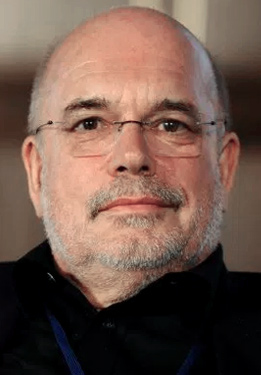 The development of the Internet has arrived at a new Crossroads. The growing Internet Governance complexity is leading also to a higher level of confusion on how the digital future should be shaped. The French president Emanuel Macron and UN Secretary General Antonio Guterres will open both the Paris Peace Forum and the 13th IGF where Internet Governance is a key issue. Is the time ripe for a "New Deal" on Internet Governance? And which stakeholder should bear the primary responsibility for the normative framing of the key challenges internet governance is facing? more
Alphabet Inc.'s Google has announced that it will not compete for the Pentagon's cloud-computing contract with an estimated value of $10 billion; says the project may conflict with its corporate values on artificial intelligence. more
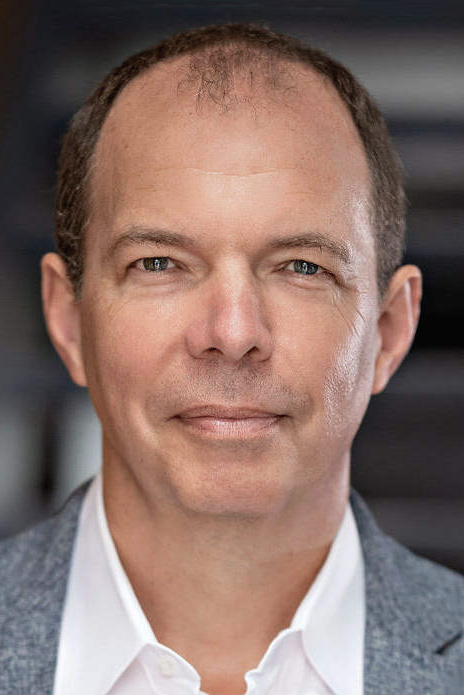 Thanksgiving is just around the corner in Canada. It's a time of year when the harvest is in, the weather grows colder and families gather to give thanks for all they have. It is in this moment of gratitude that I want to highlight one of the most valuable and unique offerings in our industry: the ways in which country code top-level domains (ccTLDs) give back. Canadians who choose to use a ccTLD, which for us is .CA, help contribute to investments in the internet community. more
 Despite headlines now at least a couple of years old, the InfoSec world is still (largely) playing lip-service to the lack of security talent and the growing skills gap. The community is apt to quote and brandish the dire figures, but unless you're actually a hiring manager striving to fill low to mid-level security positions, you're not feeling the pain -- in fact, there's a high probability many see problem as a net positive in terms of their own employment potential and compensation. more
The new High-Level Panel on Digital Cooperation (HLP.DC), appointed by UN Secretary General Antonio Guterres, will have its first face-to-face meeting in New York, September 25-26, 2018, just before the beginning of the 73rd UN General Assembly. The Panel, co-chaired by an American woman, Melinda Gates from the Microsoft Foundation and a Chinese man, Jack Ma from Ali Baba, "is expected to raise awareness about the transformative impact of digital technologies... more
Early June 2018 the European Internet community traveled into the Caucasian Mountains to participate in EURODIG 11. On its way into the digital age, Europe is, as EU Commissioner Mariya Gabriel said, at another crossroad. In cyberspace, Europe risks becoming sandwiched between US and Chinese Cyberpower policies. Social networks, search engines, smartphones, eTrade platforms - key sectors of today's digital economy - are dominated both by the US and Chinese giants: Alibaba and Amazon, Google and Baidu, Facebook and Weibo, Apple and Huawai. more
Digital Transformation (DX) is picking up speed. According to a recent announcement by IDC, the market is expected to grow at a Compounded Annual Growth Rate (CAGR) of 17.9% to reach a whopping 321 billion dollars by 2021. In 2018 alone, IDC expects that 326 billion will be spent on transforming how people and things communicate. Based on these numbers, it looks like Digital Transformation has become the real deal. more
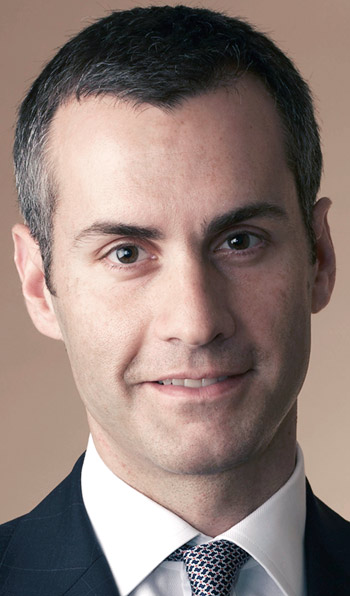 Final echoes of the US Senate committee's questions of Facebook this week will only fade in the UN Security Council where, in a few years, Member States will adopt a treaty on regulation of the Internet Economy. By opening wide the door to questions on privacy, revenue, security and purpose, Congress showed its well-placed concern and signaled that others can too. more
 There is no doubt that big data is going to be one of the most important tools that will assist human society in the future. Our increasingly complex society has been able to move forward, and it will continue to do so, based on rational, scientific facts and figures within the context of the needs of humanity. As an example, neuroscience is giving us more insight into ourselves, and we are learning that many of the elements that we have always thought of as being uniquely human are based on neurological/biological processes that can be put into algorithms. more
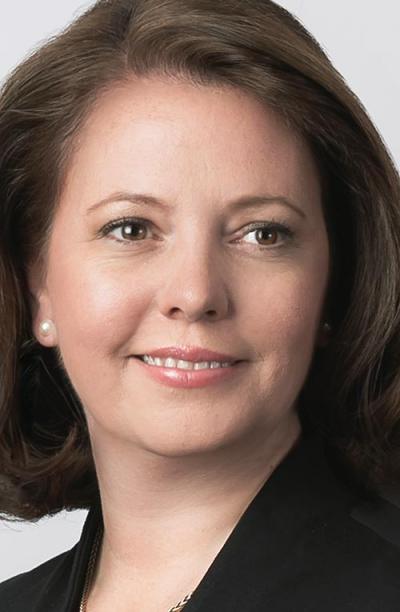 U.S. Chamber of Commerce President Thomas J. Donohue on January 10, 2018, warned that "techlash" is a threat to prosperity in 2018. What was he getting at? A "backlash against major tech companies is gaining strength -- both at home and abroad, and among consumers and governments alike." "Techlash" is a shorthand reference to a variety of impulses by government and others to shape markets, services, and products; protect local interests; and step in early to prevent potential harm to competition or consumers. more
 The French MP and Fields medal award winner, Cédric Villani, officially auditioned Constance Bommelaer de Leusse, the Internet Society's Senior Director, Global Internet Policy, last Monday on national strategies for the future of artificial intelligence (AI). In addition, the Internet Society was asked to send written comments, which are reprinted here. more
Too often, people consider themselves passive consumers of the Internet. The apps and websites we visit are made by people with technical expertise using languages we don't understand. It's hard to know how to plug in, even if you have a great idea to contribute. One solution for this problem is the hackathon. For the uninitiated, a hackathon is a place of hyper-productivity. A group of people converge for a set period of time, generally a weekend to build solutions to specific problems. more
 SpaceX and OneWeb are formidable, experienced competitors in a race to become global Internet service providers using satellite constellations -- routers in space. I posted a status report on SpaceX last week, now let's look at OneWeb. OneWeb founder and executive chairman Greg Wyler has extensive experience with networking in developing nations. In 2003 his company, Terracom, signed a contract to connect Rwandan schools, government institutions, and homes. more
Singapore government has waived telecom frequency fees for 5G trials until December 2019 in order to catalyze market growth and discovery of potential use cases. more
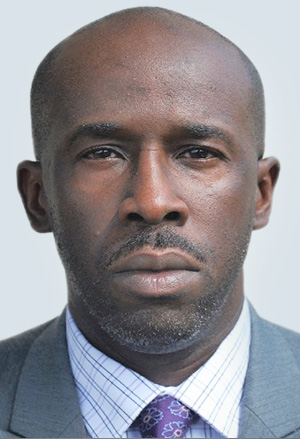 In modern society, there is one fact that is unquestionable: The hyper-connectivity of the digital economy is inescapable. A financial institution without an online presence or omni-channel strategy will cease to be competitive. Universities (for-profit or non-profit) must develop and continuously evolve their online learning capabilities if they are to stay relevant. Online retailers are quickly outpacing and rendering their 'brick-and-mortar' counterparts irrelevant. more
A World-Renowned Source for Internet Developments. Serving Since 2002.