
Welcome:
Login
|
Sign Up
|
About CircleID
Follow:
|
|

 ICANN CEO Fadi Chehadé was already 2 hours into his flight from Singapore to Paris when the pilot's voice interrupted the in-flight entertainment. A tech problem meant turning back, landing in Singapore, waiting for another plane and starting the long haul again! Half a day later, Chehadé landed in Paris. He'd already missed a lunch appointment but was still in time to make a reception organised at French ICANN board member Sébastien Bachollet's initiative. more
 There has been an upsurge in brands withdrawing their applications. The timing undoubtedly is due to the deadline of 70% refund of the $185k application fee. But why are so many of the withdrawals .brand/closed generics? Having been involved in drafting of financial projections for over 50 applications and having answered a number of financial Clarification Questions, I believe that the major reason why there is an acceleration in .brands, especially closed ones, is that they are receiving a large number of CQs... more
 If you are a new gTLD applicant, or if you follow ICANN, or if you just like being in a constant state of confusion, then the recent barrage of ICANN activity has probably been enough to make your head spin. Let's take a look at what we have hurtling towards us, like an out-of-control asteroid, in the next month. more
 My third installment regarding gTLD objections - and understanding exactly what's required for an objector to prevail - moves to the more complex community-based objections. For those getting their first exposure to this unwieldy beast, pull up a chair and get comfortable. The community objection involves multifaceted elements, each having its own set of defining factors and often using similar terminology in different contexts. As such, it can be very confusing and one can easily lose track of the bigger picture. more
 Big news! The official website of the ICANN Independent Objector is now online. Another piece of good news announced at the same time is that the site will also offer a French version, which was under construction at the time. More than a month later, the French version is still under construction. Do we have to wait for eternity? While this situation may not seem critically important on the surface, it must in fact be taken very seriously because it is symptomatic of a far deeper problem... more
 I detect some delight in the domain name community today resulting from Video interview with ICANN CEO Fadi Chehadé. In that interview Chehadé states "We are now targeting to be able to recommend for delegation the first new gTLD as early as the 23rd of April..." On the surface this sounds like very good news. more
 New top-level domain applicants are getting plenty of advice nowadays about how to launch their new Registry. In addition to thinking about their branding and distribution, they should also be thinking about their business practices with Registrars. What many of them do not realize is that their cash flow practices, with respect to Registrars, may be a factor of whether ICANN Registrars even support their Registry. more
 As an applicant in this new gTLD round with quite a few overlapping strings, I've had a keen interest in the various proposed auction platforms. In the past six months the ideas behind private auction have matured significantly and I now see it as a strong mechanism for resolving contention. Following are my observations. more
 Back in September a number of domain name industry leaders wrote to ICANN to express deep-felt concerns about some companies' declared plans for generic domain name extensions. We have sent ICANN another letter this week which is also planned to be distributed in a press release included here in this post. more
 A letter sent earlier this month by the ICANN Board to the Governmental Advisory Committee (GAC) should cause every new gTLD applicant's ears to prick up. Having been through every one of the applications for 1,396 different Internet extensions, the world's governments not only issued formal warnings for 199 of them, but also asked what mechanisms were in place to make sure that people did what they said they would in their applications. more
"No, the new gTLD program isn't ready!" ... "Yes, I was wrong on the Trademark Clearinghouse!" Fadi Chehadé showed some strong leadership qualities during last week's ICANN regional registry and registrar meeting in Amsterdam. Honesty and courage... What started out as a speech soon turned into a heart to heart. As he responded to questions, Chehadé made some surprisingly honest comments. more
 Happy New Year, you're fired. While most of us were getting ready celebrate respective holidays, ICANN was quietly closing a critical office and sending all the staff out to look for new jobs. When asked to confirm this, ICANN's delayed response was pure Orwellian Doublethink. The office was closed because ICANN is "assessing how to effectively grow ICANN resources around the globe." How does one grow global resources while shutting down the Asia-Pacific office right before the Asia-Pacific meeting? more
 ICANN CEO Fadi Chehade gave an alarming assessment of the state of the New gTLD program... It was admirable for Mr. Chehade to stand up and talk frankly about the state of the New gTLD program. It is important for everyone going through the process of applying for a New gTLD to understand the constraints and limitations that ICANN is dealing with as it tries to implement the program, as well as the wider Internet community that will be affected by the new extensions. more
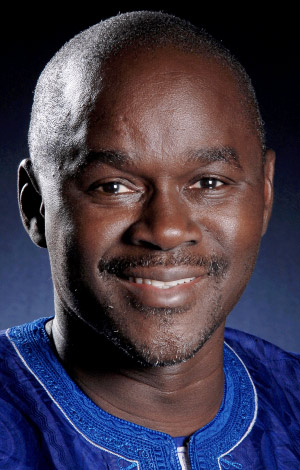 In the last month of last year, the World Conference on International Telecommunications (WCIT-12) ended in Dubai amid, not hugs and fanfare, but finger-pointing and acrimony. The end, much anticipated as it was, wasn't the finest hour for international cooperation for the global public interest. Looking back, one would be forgiven to conclude that the WCIT-12 was doomed to fail. more
 A week ago, ICANN announced the latest delay in the New gTLD Program: the so-called "contention sets" will only be published March 1, 2013. The original deadline was July 2012, postponed serially in two-month intervals. The gTLD program is lost in confusing similarity. What went wrong? In order to determine which TLD applications are in contention, it is necessary to say which TLD strings are confusingly similar to one another. more
A World-Renowned Source for Internet Developments. Serving Since 2002.