
Welcome:
Login
|
Sign Up
|
About CircleID
Follow:
|
|
|

 A number of R&E networks such as SURFnet, JANET, AARnet, etc. are actively promoting mobile services and looking at integration of campus Wifi with 3G/4G networks using Eduroam. Mobile wireless services promises to be major service offering for R&E networks as the Internet of Things and Machine to Machine (M2M) becomes increasingly critical for research. Applications such as personal medical devices on (or in) the body, environmental sensors, traffic monitors and even garbage truck tracking will need such networks. more
ICANN's recently released report, ICANN's Whois Data Accuracy and Availability Program: Description of Prior Efforts and New Compliance Initiatives [PDF], is a summary of the Whois Data Problem Report System's (WDPRS) reports spanning a one-year period that concluded at the end of Fenruary 2007. In case you're not familiar with the WDPRS, it's system that tracks complaints about inaccurate or incomplete whois entries. Notable facts from the report include: There were 50,189 reports for which ICANN received follow-up responses during the year... more
 For the past 27 years, or at least as long as I can remember, I have heard one phrase on an endless loop: "youth are the future." It is a statement that always caused me to feel mild confusion. I thought, "How can I, for instance, be the future if I'm here now?" As I "grew up" and the term "youth" seem to expand in both meaning and breadth of inclusion, I quickly realized that when this statement is used by many it is platitudinous at best and disingenuous rhetoric at worst. What should actually be clarified is that, as no one is immune from the natural progression of the life course (at least not yet anyway), youth will one day constitute the key decision-makers in political, economic and social institutions. more
RHEL6/Centos6 (and presumably RHEL7/Centos7) machines with the latest openssl packages now refuse SSL connections with DH keys shorter than 768 bits. Consider RHEL6 sendmail operating as a client, sending mail out to a target server. If the target server advertises STARTTLS, sendmail will try to negotiate a secure connection. This negotiation uses openssl, which will now refuse to connect to mail servers that have 512 bit DH keys. The maillog will contain entries with "reject=403 4.7.0 TLS handshake failed". more
 It would be one of the ironies of global technology development that the West has effectively so far followed a Jugaad principle of "good enough" innovation for DNS security, whereas India could well embrace all the latest advances in DNS security as its Internet economy grows. Like most other protocols from the early Internet, the DNS protocol was not designed with security built in. For those protocols, security services were typically either implemented at a different layer of the protocol stack, or were added on later. more
 With the number of ASes connected to the Internet constantly increasing, one could expect that the length of the AS paths would also increase as the network as a whole gets wider. However, this doesn't seem to be the case. Also, with IPv6 being more widely deployed, how does the interconnectedness of the IPv6 portion of the Internet compare to IPv4? more
 At its November 5th plenary, the Canadian ICT Standards Advisory Committee approved the recommendations of the Canadian IPv6 Task Group set up by isacc in april. The 50 members of the Task Group were invited to individually produce a list of seven recommendations. Received inputs were collated, debated, ranked and ultimately distilled down to a pair of quite straightforward recommendations for immediate action. more
 The new Administration in the USA laid out a $100 billion proposal for broadband investment as part of its $2 trillion infrastructure plan. Under the proposal, the plan is to provide national broadband coverage. The Administration will use better competition measures, such as price transparency, the use of public utility infrastructure, and subsidies for low-income households to achieve its goals. more
Don't worry about the bad guys turning out the lights. Worry about everything they're stealing while the lights are still on. The theft of intellectual property ranging from Hollywood films to defense secrets is underway by cyber-criminals of various stripes. Maintaining control over intellectual property may be the single most important challenge to American economic security. Implementing a cyber-reliant infrastructure is a national challenge which crosses the traditional boundaries between economic sectors and between public and private domains. more
 It's incredibly hard to keep things private in the new digital age. There are far too many stories circulating about people who talked to a friend on the phone or texted about something and almost instantly got hit with ads for the subject of the conversation. And that happens without malware - no telling what information you're giving out if your devices have been infected with malicious software that is spying on you. more
 Before the experiment has gotten off the ground, some critics have expressed concern about applications to operate domains referring to a "generic" product or service, like .car, .book, or .app. News reports indicate that Microsoft and other Google competitors have filed complaints about Google's applications, while authors' organizations have raised questions about some of Amazon's applications. These complaints assert that giving these applicants the right to operate these new domains would provide an unfair competitive advantage. more
 Still want to protect wine Geographical Indications (GIs)? A hot potato! Where the bucket ends is still to be found and the launching of both .WINE and .VIN new gTLDs is still an issue. At least some of the three applicants are following the ICANN new gTLD applicant guidebook, working with parties interested in bringing better protection mechanism to protect wine GIs. There seems to have been an attempt which has not worked... more
We had a very interesting presentation and discussion regarding the topic of interplanetary internet with my international colleagues, of which Vint Cerf – one of the “fathers of the internet” – is also a member. As a partner of the Interplanetary Networking Special Interest Group (IPNSIG), he took us on a journey that he has been involved with over the last 20 years regarding communication networks in space. A true mind-broadening experience. more
 Now that new gTLD registries have been operating for more than a year, a few registries have already experienced going through an audit and a few more are now receiving notifications that they are next in line. For all, the process of going through an ICANN audit is a first. Once you receive the Request for Information (RFI), you will have 15 days to respond, or seek an extension of time. Extensions may be available on a case by case basis. more
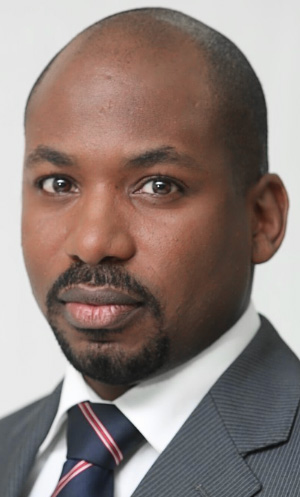 Persons from the Caribbean seeking to contribute to the governance ecosystem of the global Internet can now volunteer for an appointment to the board of trustees of the American Registry for Internet Numbers (ARIN). The call for volunteers will close on April 30 at 5 pm EDT. ARIN is one of five registries worldwide that coordinate Internet number resources. Its region spans the United States, Canada and many countries in the Caribbean. more
Sponsored byVerisign

Sponsored byIPv4.Global

Sponsored byCSC

Sponsored byRadix

Sponsored byWhoisXML API

Sponsored byDNIB.com

Sponsored byVerisign

A World-Renowned Source for Internet Developments. Serving Since 2002.