
Welcome:
Login
|
Sign Up
|
About CircleID
Follow:
|
|
|

 Return Path published their most recent Global Deliverability report this morning. It shows that inbox placement of mail has decreased 6% in the second half of 2011. This decrease is the largest decrease Return Path has seen in their years of doing this report... Filters are getting more sophisticated. This means they're not relying on simply IP reputation for inbox delivery any longer. more
 In Europe yet another package is discussed, and it includes issues related to what I guess one could call Network Neutrality. And, as usual, at the end of the game, texts are negotiated that does not have much meaning in reality. Negotiations on what words imply, while I as an engineer have absolutely no idea what either of the parties actually mean... more
 About 16 months ago, I heard Ed Richards of Ofcom speak at a CITI conference at Columbia, and blogged about it here. I remember thinking that Richards didn't seem to think that highspeed access to the internet was all that important. The market had to demand it, and the market wasn't being demanding. Also, he wasn't interested in government intervention to support highspeed access... more
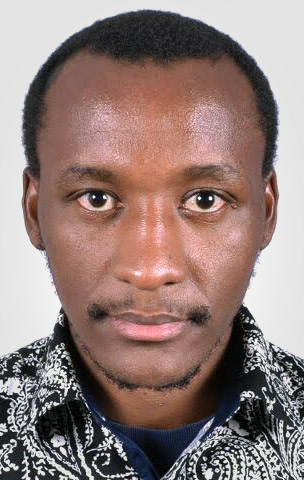 If you are passionate about ICT policy, Peering, and Interconnection, then the Africa Peering and Interconnection Forum (AfPIF) is the place to be. The 7th annual AfPIF takes place in Dar es Salaam, Tanzania from 30 August – 1 September 2016. AfPIF is a multistakeholder forum organized by the Internet Society that brings together a diverse range of business leaders, infrastructure providers, Internet service providers (ISPs), Internet Exchange Points (IXPs), international financial institutions, policy-makers, and regulators from all over the world. more
 NTIA has published a Notice for Public comment that is titled "The Benefits, Challenges, and Potential Roles for the Government in Fostering the Advancement of the Internet of Things". This could become ICANN-2, bigger, longer, and uncut; and with a much greater impact on the future direction of the internet. However, my thoughts on this go well beyond the possibility of another ICANN. more
 Cubans now have 5 million mobile accounts. The five-millionth account was recently opened Guanabacoa, in the eastern part of Havana and we see here that growth slowed last year, but has resumed -- perhaps due to increased 3G availability. Most Cubans have 2G phones, which are used primarily for making calls and sending text messages that may have attached images. more
 When the fantasy of a universal trademark clearance house was floated in the name of protecting existing trademark owners by the opposing lobbies against the global domain name expansion, particularly the gTLD programs, the domain name industry and ICANN quickly accepted the idea. A universal trademark clearance house is perhaps a greatest idea but in reality a fantasy. Today, at ICANN, the best minds are teamed-up and struggling to get the TMHC (Trademark Clearance House) constructed. more
 I'm not sure that most people understand the extent to which our online experience has moved to the cloud -- and this movement to the cloud means we're using a lot more bandwidth than in the recent past. A huge number of online functions now reside in the cloud, when only a few years ago, a lot of processing was done on our computers. Take the example of Twitter, where I keep an account to upload a copy of my blog every day. more
 On 19 February 2020, ICANN announced that ICANN67 would be held via remote participation out of an abundance of caution associated with the COVID-19 outbreak. Little did we know at the time that twelve months later, ICANN meetings would still be held via remote participation. For a community that has been accustomed to meeting face-to-face at least three times a year since ICANN1 in Singapore in March 1999, this has created a tremendous challenge for how we conduct our business. more
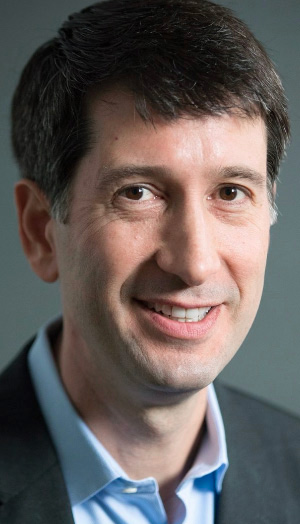 One of the most popular top-level domains under the Uniform Domain Name Dispute Resolution Policy (UDRP) is not even a gTLD (generic top-level domain). It's a ccTLD: .co, the country-code top-level domain for Colombia, in South America. Based on statistics at WIPO as of this writing, 29 .co domain names have been the subject of UDRP disputes this year, making it the most-disputed ccTLD under the popular domain name dispute policy. more
 I'm lucky enough to spend my working life helping some of the world's largest brands drive their .brand TLD projects. The excitement and the challenges of this space stem largely from the fact that this is a new innovation; and when you're working with something truly groundbreaking, naturally there's an element of "learning as you go." And I'm not afraid to admit, sometimes we get things wrong. more
 Unicode's goal, which it meets quite well, is that whatever text you want to represent in whatever language, dead or alive, Unicode can represent the characters or symbols it uses. Any computer with a set of Unicode typefaces and suitable layout software can display that text. In effect, Unicode is primarily a typesetting language. Over in the domain name system, we also use Unicode to represent non-ASCII identifiers. That turns out to be a problem because an identifier needs a unique form, something that doesn't matter for typesetting. more
Imagine that Ford was held responsible every time one of its Mustangs broke the speed limit. Imagine that the company responded by limiting the speed of its vehicles to 65 MPH, or that the company was required by the government to report every speeding car to highway patrol. It sounds far-fetched, but is actually a good metaphor for the way that many want technology companies to respond to infractions. more
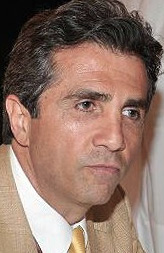 Just under 4 years ago and fresh from his world celebrated election win of the White House and the US Presidency on a platform of "Change Has Come To America", newly elected US President Barak Obama packed his bags and headed to Cairo on a strategic vision and mission that included delivering a speech from Cairo University aimed at winning the trust of Arabs and Muslims worldwide... This morning in Toronto, Canada new ICANN President and CEO Fadi Chehadé will also attempt a similar feat that is no less important to the world than that of Obama's 4 years ago. more
 I've written that a Network Neutrality law needs a Network Management Exception, and I've laid out how this exception is likely to become a giant vacuum-cleaner-fish loophole. The way out is the separation of infrastructure from service, so infrastructure operators can have no financial interests in the services they carry, hence no motive to discriminate in anti-competitive ways. Now today's Financial Times has an editorial on the EC telecom regulator, Viviane Reding's proposal to beef up national telecom regulatory authority within European countries and create a Europe-wide so-called super-regulator. more
Sponsored byVerisign

Sponsored byVerisign

Sponsored byIPv4.Global

Sponsored byDNIB.com

Sponsored byRadix

Sponsored byWhoisXML API

Sponsored byCSC

A World-Renowned Source for Internet Developments. Serving Since 2002.