
Welcome:
Login
|
Sign Up
|
About CircleID
Follow:
|
|


|
||
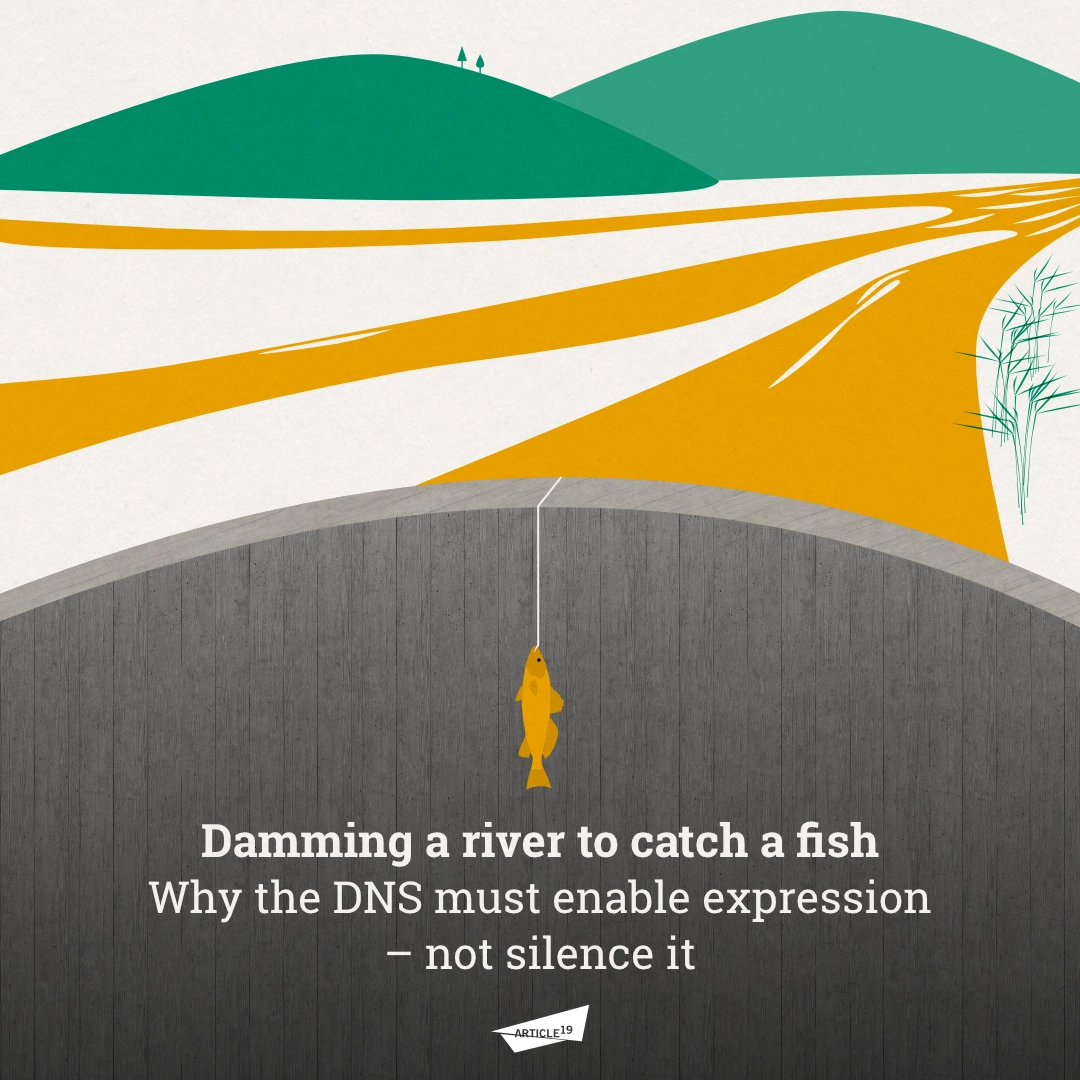
A new report by the human-rights group ARTICLE 19 warns that governments are increasingly using the internet’s underlying infrastructure to censor speech, often with little transparency or legal oversight. In Damming a River to Catch a Fish, ARTICLE 19 argues that authorities are pressuring domain-name operators to suspend entire websites rather than target specific content, creating what it calls a disproportionate threat to freedom of expression.
The report focuses on the Domain Name System (DNS), the mechanism that translates website names into numerical Internet addresses. Managed globally through the Internet Corporation for Assigned Names and Numbers (ICANN), the DNS is administered by registries and registrars that control domains such as “.com”, “.org” and country-specific suffixes. ARTICLE 19 says some governments are increasingly leaning on these operators to block access to websites entirely, affecting journalists, activists and independent media.
Unlike social-media moderation, which can remove individual posts, DNS-level suspensions disable all content attached to a domain, including archives, email services and public-interest reporting. The report compares the tactic to “damming a river to catch a few fish”. It highlights cases in India, Nicaragua and Spain where campaigners or media outlets abruptly lost access to their domains during politically sensitive moments.
Security concerns: Still, the debate is not entirely one-sided. Some internet-governance experts and registries argue that domain suspensions are occasionally necessary to combat serious online harms such as phishing, malware, fraud and child sexual abuse material. ICANN itself maintains a relatively narrow definition of “DNS abuse”, focused largely on technical threats rather than content moderation. Several registry operators interviewed in the report stressed that infrastructure-level intervention should remain a “last resort”, used only when more targeted actions are impossible.
Others caution that governments are placing growing pressure on registries to police content in ways they were never designed to do. Because domain operators generally lack the technical ability to remove individual webpages, critics say broad suspensions risk overreach and collateral censorship. ARTICLE 19 also argues that many suspension decisions are made without public explanation or meaningful avenues for appeal.
The report ultimately calls on ICANN, governments and domain operators to introduce stronger transparency and human-rights safeguards. As policymakers seek new ways to regulate harmful online content, the organization warns that the infrastructure underpinning the Internet risks becoming an increasingly powerful tool for state control.
Sponsored byCSC

Sponsored byIPv4.Global

Sponsored byVerisign

Sponsored byDNIB.com

Sponsored byWhoisXML API

Sponsored byRadix

Sponsored byVerisign


A World-Renowned Source for Internet Developments. Serving Since 2002.