
Welcome:
Login
|
Sign Up
|
About CircleID
Follow:
|
|


|
||
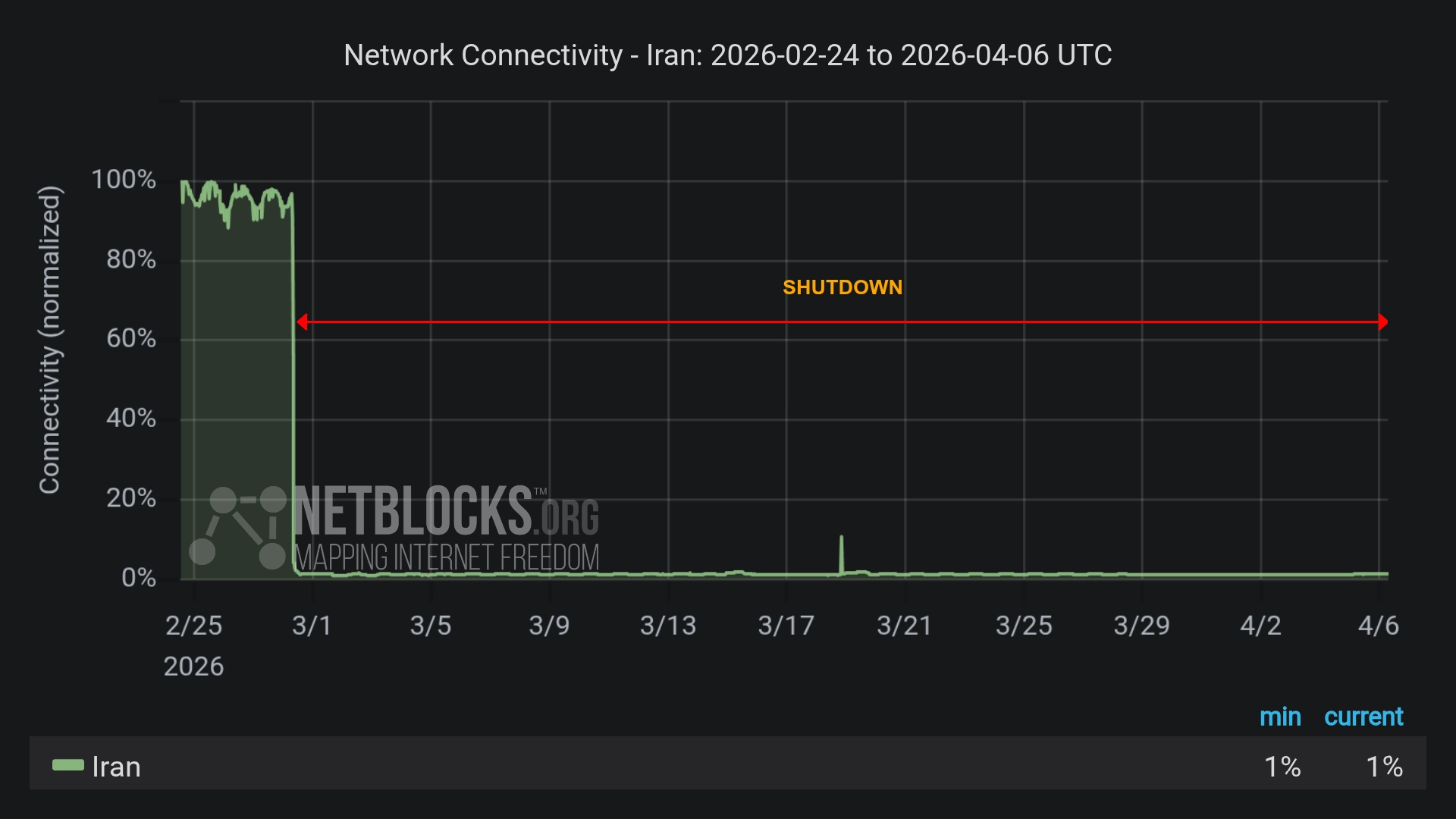
Iran has entered uncharted territory in state-imposed digital isolation. A nationwide internet blackout, now entering its 38th consecutive day, has become the longest continuous shutdown of its kind ever recorded, according to monitoring group NetBlocks. Triggered in the aftermath of US and Israeli strikes on February 28, the disruption has reduced the country’s connectivity to a mere fraction—roughly 1%—of normal levels.
Unprecedented scale: Such a sweeping and sustained disconnection is without precedent. While other countries have experienced prolonged outages, these have typically been regional, intermittent, or characteristic of states never fully connected to the global internet. Iran’s case stands apart: a modern, digitally integrated nation effectively severed from the outside world in one decisive move.
Access restrictions: The blackout has not merely restricted conventional access. Authorities have tightened controls on circumvention tools, including virtual private networks (VPNs) and satellite-based services such as Starlink. Reports suggest that users attempting to bypass restrictions risk warnings, arrest, or imprisonment. Meanwhile, a domestic intranet continues to function, allowing limited access to state-approved services but excluding global platforms and independent news sources.
The strategic rationale appears clear. By curtailing external communication, the government reduces the flow of real-time information, hindering citizens’ ability to document events, organise, or access foreign reporting. Analysts note that this creates an informational vacuum, one that may obscure the realities of wartime conditions both domestically and abroad. The approach echoes earlier, shorter shutdowns during periods of unrest, suggesting a growing reliance on digital controls as a tool of governance.
Human toll: Yet the human cost is considerable. For many Iranians, the blackout has severed contact with family and friends, amplifying uncertainty in an already volatile environment. Anecdotal accounts describe a pervasive sense of isolation, as citizens struggle to obtain reliable updates on casualties, arrests, or broader developments. Rights groups warn that such conditions may enable abuses to go unreported, shielded by the absence of independent scrutiny.
Global implications: The implications extend beyond Iran’s borders. As governments increasingly recognise the internet’s role in shaping political narratives, the precedent set by Tehran may embolden others to deploy similar tactics during crises. What was once an exceptional measure risks becoming a standard instrument of statecraft.
For now, Iran remains largely offline, its population navigating both a physical and digital conflict. Whether this prolonged disconnection proves effective—or sustainable—may shape not only the country’s internal dynamics, but also the future norms governing access to information in times of war.
Sponsored byVerisign

Sponsored byWhoisXML API

Sponsored byIPv4.Global

Sponsored byRadix

Sponsored byVerisign

Sponsored byCSC

Sponsored byDNIB.com


A World-Renowned Source for Internet Developments. Serving Since 2002.