
Welcome:
Login
|
Sign Up
|
About CircleID
Follow:
|
|

 When 72 candidates vie for 8 positions, making tough choices are inevitable. ICANN's 2005 Nominating Committee (Nom-Com) on Friday announced the selection of a diverse and independent set of nominees for important roles in ICANN, including the Board of Directors, the Generic Names Supporting Organization (GNSO), the At-Large Advisory Council (ALAC) and the Country Code Names Supporting Organization (ccNSO). more
 Suddenly internet governance has become a hot topic. Words and phrases fly back and forth but minds rarely meet. We do not have discussion, we have chaos. We are not moving forwards towards a resolution. It's time to step back and review some basic principles. 1. Principle: The internet is here to serve the needs of people (and organizations of people); people are not here to serve the internet. Corollary: If internet technology does not meet the needs of users and organizations than it is technology that should be the first to flex and change. more
 The Sponsored TLD .CAT got the green light to move ahead from ICANN this week, another of the sTLD proposals in the second round of submissions to gain momentum toward being added to the root. When I shared the news today with folks, the most common response was a tongue in cheek response, 'Where is .DOG?'. ...Still, comedy aside, this is not a TLD for animal species, but rather for a language. more
 When does an experiment in networking technology become a public utility? Does it happen on a single date, or is it a more gradual process of incremental change? And at what point do you change that way in which resources are managed to admit a broader of public interests? And how are such interests to be expressed in the context of the network itself, in terms of the players, their motivation and the level of common interest in one network? While many may be of the view that this has already happened some years ago in the case of the Internet, when you take a global perspective many parts of the globe are only coming to appreciate the significant role of the Internet in the broader context of enablers of national wealth. more
 The fact that the market for mobile phones that provide Internet access (aka "smart phones") is predicted to increase during the next several years, with global shipments growing to an impressive nearly 125 million units in 2009, means the competition for bridging mobile content and mobile phone use is likely to be keen. Indeed, dotMP already must face competition for registry services that will target mobile phone users. A few of the biggest names in information technology and mobile communications -- led by Nokia and including Microsoft, Vodafone, HP, Orange, Samsung and Sun Microsystems are planning to wedge into the Top-level Domain name space (TLD) by supporting a new TLD registry for mobile web content focused on web pages built specifically for access by mobile devices like smart phones and handheld computers or Personal Digital Assistants (PDAs)... what may set dotMP apart from the technology giants led by Nokia, is a significant value added benefit to its domain name registration services...it will protect the privacy of its registrants. more
Should ICANN's Wait-Listing Service be implemented?
Why yes or why not? What are the negative or positive consequences that are being overlooked?
In light of the recent events regarding ICANN's approval of the Wait-Listing Service (WLS), CircleID is requesting all stakeholders (all individuals or organization that own domain names or sell related services) to submit their comments 'for' or 'against' WLS. All comments gathered will be posted on CircleID WLS Speical Coverage and presented to key decision makers... more
 I'm happy to report (mostly) positive feedback on my last article that examined how the multistakeholder model tackled, and tackled well, Phase 1 of the review of all Rights Protection Mechanisms. While bad news may sell more clicks, a little good news from time to time also appears to be welcome. Good news also reminds us of how fortunate we are to have a private sector ICANN with a multistakeholder model of policy development... more
 In ICANN's "President & CEO Goals for Fiscal Year 2021", Göran Marby went out to make a curious distinction in the document's second stated goal, according to which he intends to "Implement a common strategy for Internet governance (IG) and technical Internet governance (TIG)". Proceeding to state that "we will begin by identifying the most important issues we need to address, followed by an assessment of where and how we can intervene, the venues we should use, and the resources required to be effective". more
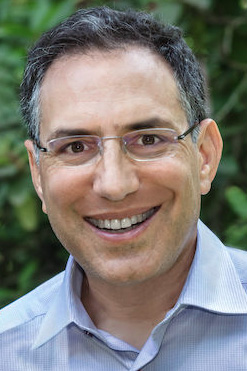 When .org prices rise, who suffers – nonprofits or speculators? Will Ethos Capital raise prices more aggressively than ISOC would? Vint Cerf attributed concerns about higher prices to speculators: "Of course, companies that hold domain names in the tens of thousands for speculative purposes might find such increases more troubling, but I don't have much sympathy for that business model in the context of the organizations the .org brand is intended to serve." more
 This article addresses the issues around the planned sale of the PIR .org registry by ISOC. It examines the history and issues plus looks at several possible paths forward, including PIR becoming a Benefit Corporation (B-Corp) and identifying possible alternative buyers who could retain PIR's non-profit status. Before Tim Bernier-Lee brought the HTML markup language to the Internet, starting in 1989, there were few registered domain names. Access for public registration started in 1986, and by December, there were about five dozen registered .com domain names. more
 On 11 December 2017, about 25 participants from Europe and the US attended the public consultation for the brand new GDPR Domain Industry Playbook by eco (Association of the Internet Industry, based in Germany) at the representation of the German federal state Lower Saxony to the European Union in Brussels. The General Data Protection Regulation (GDPR) poses a challenge for the Registries, Registrars, Resellers and ICANN. more
 A colleague was recently commenting on an article by Michele Neylon "European Data Protection Authorities Send Clear Message to ICANN" citing the EU Data Commissioners of the Article 29 Working Party, the grouping a determinate factor In the impending death of WHOIS. He is on point when he said: What the European Data Protection authorities have not yet put together is that the protection of people's mental integrity on the Internet is not solely due to the action of law enforcement... more
On 6 March 2017, ICANN's GDD finally responded to an applicant letter written on 14 August 2016 to the ICANN Board. This was not a response from the ICANN Board to the letter from 2016 but a response from ICANN staff. The content of this letter can best be described as a Null Response. It reminded the applicants that the Board had put the names on hold and was still thinking about what to do. more
 Since the launch of the New gTLD Program in 2012, it has become evident that new gTLD registries overestimated the demand for new Top-Level Domain name extensions. Furthermore, new gTLD registries did not anticipate the hurdles in raising awareness, not to mention creating adoption for new domains. Even the most pessimistic New gTLD Program critic did not expect such uninspiring results. It was a wake up call for many in the domain industry. The New gTLD Program currently lacks credibility. No new gTLD has yet to go mainstream and capture the world's imagination. more
 ICANN, as we all know, is a California non-profit that is tax exempt in the US as a charity, under section 501(c)(3) of the US tax code. But it's a rather unusual charity. Typical charities support the arts, or education, or sports, or relief for the poor. ICANN doesn't do anything like that. So what's the basis for its tax exemption? We don't have to guess, it's all in the application they filed in 1999. more
A World-Renowned Source for Internet Developments. Serving Since 2002.