
Welcome:
Login
|
Sign Up
|
About CircleID
Follow:
|
|
|

 In 2010, ICANN's Security and Stability Advisory Committee (SSAC) published SAC045 [PDF], a report calling attention to particular problems that may arise should a new gTLD applicant use a string that has been seen with measureable (and meaningful) frequency in queries for resolution by the root system. The queries to which they referred involved invalid Top-Level Domain (TLD) queries (i.e., non-delegated strings) at the root level of DNS, queries which elicit responses commonly referred to as Name Error, or NXDomain, responses from root name servers. more
 In previous installments we've been looking at aspects of the design of the DNS. Today we look at the relationship of similar names in the DNS. A poorly appreciated aspect of the DNS is that there is no inherent relationship between similar looking names. more
Kieren McCarthy reporting in The Register writes: "The US Federal Trade Commission (FTC) has responded to questions over the legality of .sucks domain pricing with a three-page "I told you so" letter to domain name overseer ICANN. more
According to recent study conducted by Minds + Machines, historical data analysis suggests brand owners do not necessarily register their brands when it comes to new generic Top-Level Domains. From the report: "A survey of the domain registration behavior of Fortune 100 companies reveals that they have not registered many of their trademarks in recently created generic top-level domains (gTLDs). A sample of 1043 brands were registered in less than 30% of the eight new open gTLDs created after 2001. If historical registration data is a guide, brands are unlikely to undertake many defensive domain name registrations in the proposed new gTLDs, and furthermore are unlikely to be the victims of cybersquatting." more
U.S. Department of Justice says federal authorities successfully carried out a "significant" coordinated effort to disrupt Business Email Compromise (BEC) schemes designed to intercept and hijack wire transfers from businesses and individuals. more
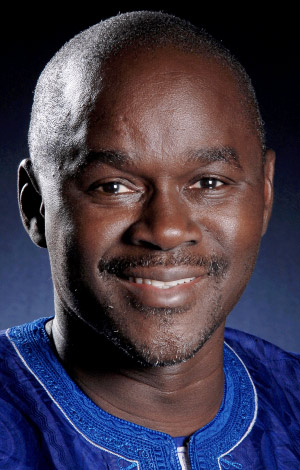 Like everyone else, former ICANN board members have been preoccupied by the horrific November 13th, 2015 attacks on Paris, France, by a bunch of cold-blooded mass murderers. Our email list discussion of the Paris attacks covered a number of issues, including the inevitable question: what, if anything, should ICANN do in response? Some list subscribers concluded that the events had nothing to do with ICANN's mission, and that we should just sigh and move on. Others, on the other hand, said: not so fast, it would serve ICANN well to take a closer look at the matter, and its ramifications on wider world of ICANN. more
In the five previous exciting installments, we've been looking at aspects of the design of the DNS. Today we look at records types, and how you can tell what a DNS record means. All the records in the DNS are strongly typed. Each record includes an RRTYPE, a small number, which defines both the format of the record and what the record means. It is possible and common to have different record types with the same format, but different meanings. more
 Does "voice" communication really matter as much today in business communications? Think about it. When you need to reach someone today, what do you do? Do you call them on the phone? Or do you send them email? Or a text message? or IM? I know personally that my normal communication flow usually goes something like this: Instant Messaging; I check first to see if I can reach the person on some form of IM... SMS; if the matter is relatively important... E-mail/Facebook/Twitter/other; Previously that would have just been email, but these days I find myself very often sending messages via Facebook or Twitter... more
 The indicators of compromise (IOCs) outlined in my last blog post can be used as a baseline for developing intrusion sets and tracking attack campaigns and threat actors. When launching an attack, threat actors use a variety of vectors and infrastructure, which Verisign iDefense analysts -- as well as analysts across the cybersecurity community -- correlate to group attacks, tracking actors and determining attack methods. more
Want to easily show people where a specific submarine cable goes? Or what cables terminate in a particular location? Last year I wrote about Telegeography's cool interactive submarine cable map and how useful it is to understand the submarine cable side of Internet infrastructure. In that article I mentioned how great it would be if you could get a link for a particular cable or location that you could pass along to other people. more
 Yesterday law enforcement officials arrested 6 people and charged them with running a massive internet fraud ring. Over 4 million PCs were part of the botnet. According to the FBI, "the cyber ring used a class of malware called DNSChanger to infect approximately 4 million computers in more than 100 countries. There were about 500,000 infections in the U.S., including computers belonging to individuals, businesses, and government agencies such as NASA." more
 Defense Readiness Condition (DEFCON) is a measure of the activation and readiness of the United States armed forces. The DEFCON scale is a numerical ranking from 5 (standard peacetime protocol) to DEFCON 1 (expectation of actual imminent attack). Today ICANN should find itself at a DEFCON 1 status with the announced pending departure of Doug Brent, ICANN's Chief Operating Officer, effect at the end of July. more
Tim Berners-Lee has called on governments, companies and individuals to back a new "Contract for the Web" that aims to protect people's rights and freedoms on the internet. more
Would you like to present an idea you have related to DNSSEC or DANE to a gathering of people within the DNSSEC community? Do you have an idea for a new tool or service? Have you recently implemented DNSSEC or DANE and want to share your story? The deadline is Monday, August 17, so please send your proposal soon! We are open to proposals on a wide range of topics... more
 ICANN's CEO and President, Rod Beckstrom, has announced that he will be stepping down in July of next year. The announcement came via Twitter of all places, with a press release, presumably with more details, due sometime soon... With the launch of the new Top-Level Domain (TLD) program scheduled to officially launch early in 2012 maybe Beckstrom feels that his job "is done", or maybe there's another motive behind his departure. more
A World-Renowned Source for Internet Developments. Serving Since 2002.