
Welcome:
Login
|
Sign Up
|
About CircleID
Follow:
|
|
|

 I've now read Soloway's plea agreement. Despite some claims from his lawyers that it's some kind of victory that he only pleaded to three of the 40 charges, with the rest being dismissed, it's clear from the agreement that he indeed did just about everything that the government charged. The government as is usual had several similar charges in each category. more
 US papers employed 56,900 full-time journalists in 1990, the year Tim Berners Lee began testing his World Wide Web software, and they employed 32,900 in 2015. The disruption of the newspaper business began 22 years ago, when Craig Newmark launched his classified ad site, Craigslist. (Note that Newmark now generously supports investigative journalism and fact-checking organizations). Newspapers have adapted to the Internet by adding digital editions, but they generate less ad revenue than print editions have lost. more
 For quite a while, it looked like my prediction – one to two articles per day – was overly optimistic. By summer, there were only four new sites: Reed College, University of Oklahoma (at least, I think that that's what uucp node uok is), vax135, another Bell Labs machine – and, cruciallyy, U.C. Berkeley, which had a uucp connection to Bell Labs Research and was on the ARPANET. more
 There are often confused reports in the media about mobile and fixed broadband, with arguments that one could replace the other. Yet the reality is that they coexist and complement each other - perhaps even more so since one cannot manage without the other. Increasingly, devices such as smartphones, tablets and smart TVs are at the end of fixed lines, with a wireless (WiFi) connection between the fixed line and the device. more
 World's mega businesses are about to wake up to the domain name expansion reality, where suddenly a name identity's exclusive ownership on global canvas of cyber branding and functionality will be ensured via gTLD. Something that traditional trademark system took years to achieve. A gTLD brand is not for everyone, structurally designed for powerful new ideas and established organizations around the world; however, following are the ten reasons why it may not work for you. more
 For two things that would seem to be completely unrelated there is an interesting parallel between IPv6 and DNSSEC. In both cases there is a misalignment of interests between content providers and service?providers. Content providers aren't highly motivated to deploy IPv6 because only a small proportion of users have v6 connectivity and even fewer only have v6. Service providers aren't anxious to deploy IPv6? because there isn't a lot of content on v6, and virtually none exclusively on v6 - so they don't expand the universe of interesting stuff on the web by deploying IPv6. Basically the same things could be said about DNSSEC. more
One of the key factors in the transformation of the telecommunications industry was the fact that, thanks to the internet, end-users were suddenly able to become active participants in generating content for both private and public use. Companies such as Google, Amazon, eBay, Skype and Apple, followed by a number of national and international social media companies, all became involved in these new developments, and they became the great game-changers of the industry. Telecoms companies were caught off guard... more
 I always geek out a little when I see something ICANN-related breaking out into the real world, like when the bus-stop display has borked, and its LAN is vainly searching for an IP number so it can reboot. Or the ICANN Paris meeting back in 2008 when the board gave the thumbs up to the GNSO policy to launch new gTLDs. One day we were an obscure Californian organisation doing something technical-seeming most people had never heard of, and the next we were working two phones each, giving journalists quotes and information for dozens of front-page news stories around the world. more
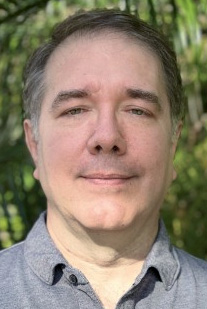 At first blush most are unlikely to see the relationship between new generic Top-Level Domains (gTLDs) and children. However, as a father and someone that has worked with approximately 50% of all new gTLDs approved by ICANN over the last decade, I have a unique perspective that may shed some light on this analogy. Hopefully, as the ICANN community begins to seek closure in connection with the new gTLD implement process, this article may offer one perspective as to what lies ahead. more
The 20th century was the golden age of surveillance. High-speed communication went either by telegraph and telephone, which needed a license from the government, or by radio, which anyone can listen to. Codes were manual or electromechanical and were breakable, e.g., the Zimmermann telegram and Bletchley Park. (The UK government spent far more effort inventing a cover story for the source of the telegram than on the break itself, to avoid telling the world how thoroughly they were spying on everyone.) more
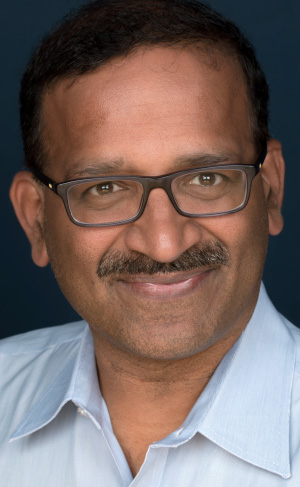 With the latest "DNSpionage" attack, ICANN astutely prompted domain name holders to fully deploy DNSSEC on their names. Afilias absolutely supports this and encourages the same. In this post, I remind you of why DNSSEC is important and our continued role. Afilias has a long history in the development and advocacy of DNSSEC. In 2007, we partnered with Public Interest Registry to help found dnssec-deployment.org. more
Internet users are acutely aware of their exposure on the Internet and clearly concerned about their safety. Increased downloads of scareware as Conficker made headlines in the mainstream media are only the latest evidence. Desktop software is often viewed as a one-stop shop for fighting Internet threats such as viruses, worms and other forms of malware and phishing. These solutions have served us well but more protections are needed to address the dynamic and increasingly sophisticated web based exploits being launched... more
My blog 'What PRISM, credit card hacking and Chromecast have to do with FttH' led to some very interesting discussions all around the world. One of issues that was discussed was that the sheer capacity of FttH will also allow hackers, criminals and others to use that massive capacity for the wrong reasons. Its volume will make it increasingly difficult to police. more
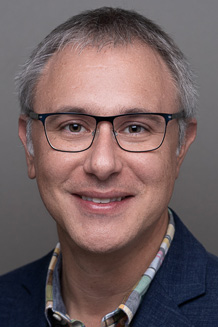 Domain name monitoring - that is, the detection of domains with names containing a brand-term (or other string) of interest - is a very well-established element of brand protection services. Branded domain names are of key importance to brand owners (as the basis for business-critical infrastructure (i.e. 'core' domain names), and as part of a 'tactical' portfolio of strategic and defensive registrations), but also to infringers, who can utilise domains as a means of impersonation, passing off, claimed affiliation, or traffic direction and monetisation. more
 Do you have an idea for a new way to use DNSSEC or DANE to make the Internet more secure? Have you recently installed DNSSEC and have a great case study you can share of lessons learned? Do you have a new tool or service that makes DNSSEC or DANE easier to use or deploy? Do you have suggestions for how to improve DNSSEC? Or new ways to automate or simplify the user experience? If you do, and if you will be attending ICANN 55 in Marrakech, Morocco (or can get there), we are now seeking proposals for the ICANN 55 DNSSEC Workshop that will take place on Wednesday, 9 March 2016. more
Sponsored byIPv4.Global

Sponsored byDNIB.com

Sponsored byCSC

Sponsored byRadix

Sponsored byVerisign

Sponsored byVerisign

Sponsored byWhoisXML API

A World-Renowned Source for Internet Developments. Serving Since 2002.