
Welcome:
Login
|
Sign Up
|
About CircleID
Follow:
|
|


|
||
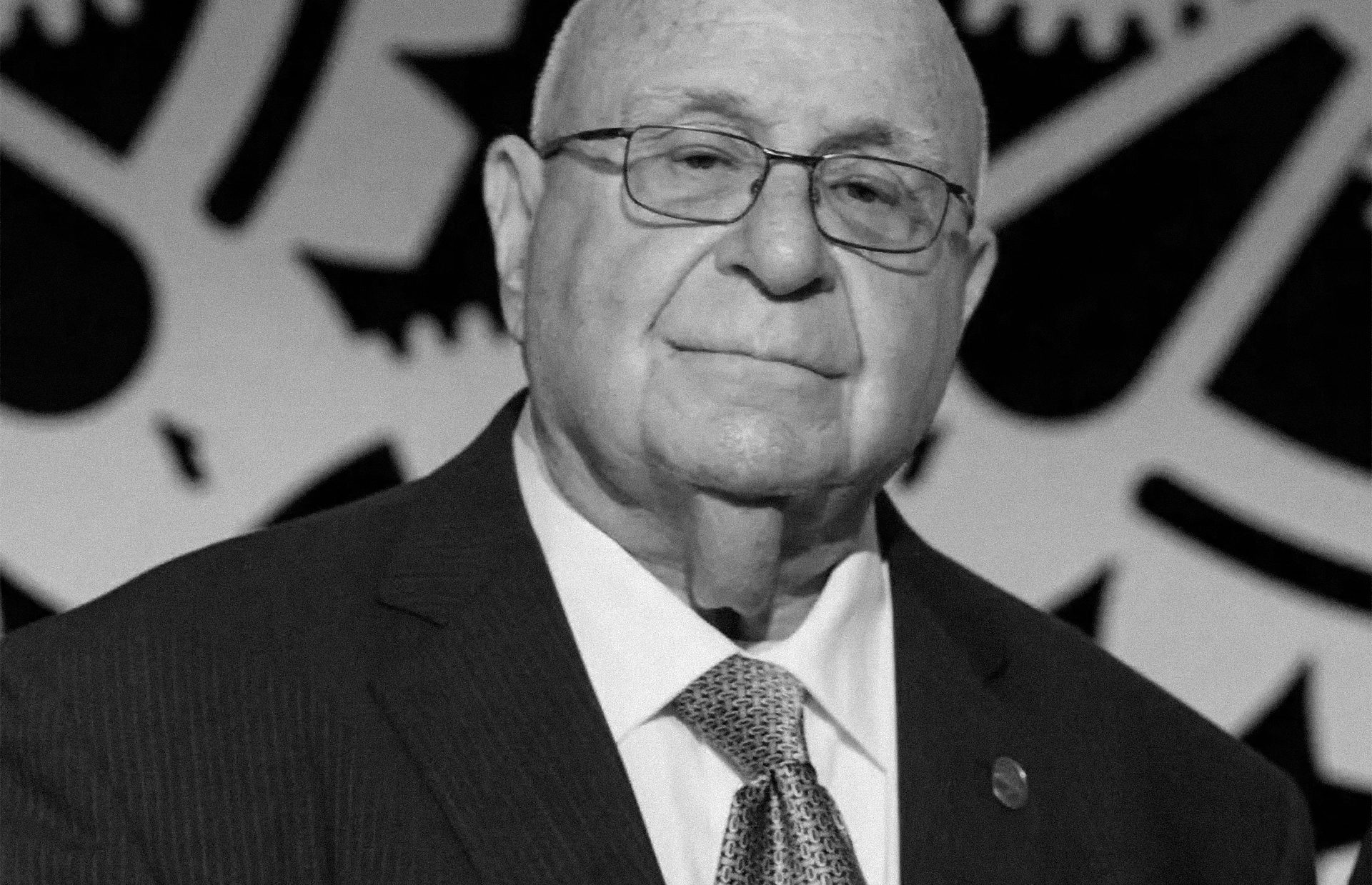
David J. Farber, a pioneering computer scientist who helped lay the intellectual foundations of the internet and mentored several of its key architects, died on February 7th in Tokyo. He was 91. His son, Emanuel, said the cause was heart failure. Farber had been teaching at Keio University since 2018.
When Farber began his career at Bell Laboratories in the 1950s, computers were isolated machines, communicating—if at all—through clattering teletypes and punch cards. Over the following decades, he became a central figure in the effort to merge computing and telecommunications, a convergence that would underpin the modern internet. The New York Times once described him as “an early architect” of the networked world.
Farber’s influence was felt less through a single invention than through the students and policies he shaped. In the early 1970s, during weekly meetings at a Southern California pancake house, he supervised Jonathan Postel, whose 1974 dissertation helped define the emerging Internet Protocol (IP), the rules governing how data packets move across networks. Another student, Paul Mockapetris, went on to design the Domain Name System (DNS), the Internet’s address book.
In a prescient 1977 paper with engineer Paul Baran, Farber argued that digital computers were fast enough to assume core communications functions. That insight helped attract National Science Foundation funding to expand the Arpanet, the Defense Department-backed precursor to today’s internet. Farber played a leading role in linking universities through projects such as CSNet and NSFNET, extending connectivity beyond elite research hubs. By 1991, Congress opened the network to commercial traffic—an outcome few early researchers had anticipated.
Born in Jersey City in 1934, Farber developed an early fascination with electronics, scavenging surplus radio parts after the Second World War. After stints at Bell Labs and the RAND Corporation, he held academic posts at the University of Delaware, the University of Pennsylvania and Carnegie Mellon, among others. He also advised policymakers, serving briefly as chief technologist at the Federal Communications Commission.
Colleagues recall a technologist attuned to the human dimension of networks. Linking machines, he often said, was the easy part; enabling people to communicate was the real achievement. As the Internet continues to evolve, that insight remains both relevant and unfinished.
Sponsored byIPv4.Global

Sponsored byVerisign

Sponsored byVerisign

Sponsored byCSC

Sponsored byWhoisXML API

Sponsored byDNIB.com

Sponsored byRadix


A World-Renowned Source for Internet Developments. Serving Since 2002.
Glad to see he was able to live these past years in Japan which he had come to love as a new home, and pass away there.
Back in the 1980s he would introduce token ring networks during his undergrad networking course at the University of Delaware by analogy to his favored sushi restaurant arrangement in which the dishes would float by on little boats around a track. I don't think there is a student of his from that era who has ever forgotten that description.
https://rule11.tech/history-of-networking-3/
Scroll down to “the Internet,” and you’ll find a recording of Dave discussing his early work on the Internet.