
Welcome:
Login
|
Sign Up
|
About CircleID
Follow:
|
|

 Here at the Anti-Phishing Working Group meeting in Hong Kong, we've just released the latest APWG Global Phishing Survey. Produced by myself and my research partner Rod Rasmussen of Internet Identity, it's an in-depth look at the global phishing problem in the second half of 2013. Overall, the picture isn't pretty. There were at least 115,565 unique phishing attacks worldwide during the period. This is one of the highest semi-annual totals we've observed since we began our studies in 2007. more
Experts and companies in the information security industry today announced the formation of the Secure Domain Foundation (SDF), a new, non-profit, community-driven organization devoted to the identification and prevention of Internet cyber crime utilizing the domain name system (DNS). more
 There have been quite a few news stories released over the last 24 hours regarding a wide-scale compromise of 300,00 Internet gateway devices. Here's the executive summary of what happened, how to check if you are vulnerable, and what you can do to fix it... If you use any of these devices, you should check it to ensure your device has not been compromised. more
 In January 1995, the RFC Editor published RFC 1752: "The Recommendation for the IP Next Generation Protocol"... The Internet is a security officer's nightmare -- so much openness, so easy to capture packet traffic (and/or spoof it!) and send all manner of unwanted traffic. It was built as a research network, hosted by institutes that were 1/ professionally responsible and 2/ interested in working together collegially. So, in the 19 years since the publication of that statement, have we really failed to address the stated goal? more
 Not long after the message that Microsoft will stop updating Windows XP from 8 April onwards, after extending it beyond the regular life cycle for over a year already, came the soothing message that malware will be monitored for another year. That may be good news to some, but the fact remains that this is not the same as patching. Remaining on XP leads to a vulnerable state of the desktop, lap top and any other machine running on XP; vulnerable to potential hacks, cyber crimes, becoming part of a botnet, etc. more
Here we are with CircleID's annual roundup of top ten most popular posts featured during 2013 (based on overall readership). Congratulations to all the participants whose posts reached top readership and best wishes to the entire community for 2014. more
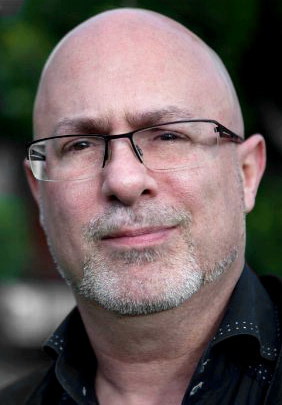 Canada's Anti-Spam Law, CASL, is now a done deal. Last Thursday, Treasury Board of Canada President (and champion of CASL) Tony Clement approved Industry Canada regulations in their final form. Today, Minister of Industry the Honourable James Moore announced CASL will come into force in July 1, 2014. more
In 2010 the Messaging, Malware and Mobile Anti-Abuse Working Group (M3AAWG) and the Internet industry as a whole lost a great friend and supporter, Mary Litynski. Her dedication, excellence, perseverance and tireless work behind the scenes of M3AAWG helped make the organization the success that it is today. Through this award, M3AAWG seeks to bring attention to the remarkable work that is done far from the public eye over a significant period of time... more
 The 1st Latin American & Caribbean DNS Forum was held on 15 November 2013, before the start of the ICANN Buenos Aires meeting. Coordinated by many of the region's leading technological development and capacity building organizations, the day long event explored the opportunities and challenges for Latin America brought on by changes in the Internet landscape, including the introduction of new gTLDs such as .LAT, .NGO and others. more
 The Internet Governance Forum in Bali is not without excitement as usual. There is a rumour about a power grab by the technical community. If the "power grab" is true, then I am assuming that this is a response to threats of institutional frameworks governing or interfering with the current status quo. Personally, I feel that this is anti thesis to "enhanced cooperation". If for some reason, ICANN or the US Government is behind the scenes in instigating this move, then I would suggest that it is very bad strategy and will cause more damage than harm to the current status quo. more
 I often think there are only two types of stories about the Internet. One is a continuing story of prodigious technology that continues to shrink in physical size and at the same time continue to dazzle and amaze us... The other is a darker evolving story of the associated vulnerabilities of this technology where we've seen "hacking" turn into organised crime and from there into a scale of sophistication that is sometimes termed "cyber warfare". And in this same darker theme one could add the current set of stories about various forms of state sponsored surveillance and espionage on the net. more
 A few days ago, ABC News ran an "investigative" piece called "Group Probes Ease and Danger of Buying Steroids Online." ABC describes the "group" at issue as "an online watchdog," the Digital Citizens Alliance. That group determined that some of the millions of available YouTube videos encourage steroid use and that YouTube (which is owned by Google) places ads next to steroid-related videos and search results. They argue that Google and YouTube should be held legally responsible for any illegal content linked or posted. more
In support of National Cyber Security Awareness Month, DDoS Awareness Day is a virtual, global event focused on raising awareness and education around the threat of DDoS attacks. Hosted by Neustar with and exclusive media partner CSO, DDoS Awareness Day brings together top experts in global security to share their views, technical tips and from-the-trenches experience. Attendees will also be given access to a wealth of DDoS materials: white papers, surveys, presentations, best practices and more. more
 Back in a time before most members of Congress or prosecutors knew that there was an Internet, there was Prodigy. Prodigy, as part of its service, ran family-friendly chat rooms that it moderated in an effort to keep kids protected from unfortunate content. In a different Prodigy chat room, some unknown third party said something apparently bad about an investment firm Stratton-Oakmont. Stratton-Oakmont didn't like that very much, and sued. more
Symantec has disabled part of one of the world's largest networks of infected computers, according to reports today. About 500,000 hijacked computers have been taken out of the 1.9 million strong ZeroAccess botnet. The zombie computers were used for advertising and online currency fraud and to infect other machines. Security experts warned that any benefits from the takedown might be short-lived. more
A World-Renowned Source for Internet Developments. Serving Since 2002.