
Welcome:
Login
|
Sign Up
|
About CircleID
Follow:
|
|
|

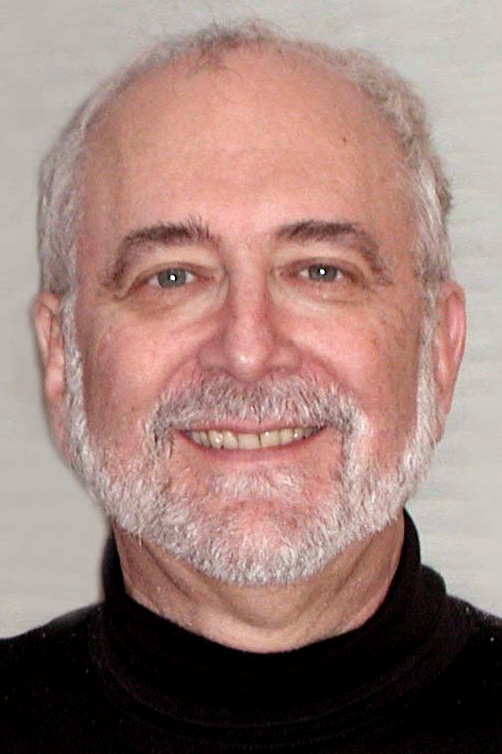 Turning network technical protocols into religion seems like an inherently bad idea -- transient and unstable at best. However, it happens. More than 40 years ago, the world of legacy telecommunications and network design formalism started the tendency with OSI (Open Systems Interconnection) and ISDN (Integrated Services Digital Networks). A few years later, the academic research community did it with their myriad host-to-host datagram protocols -- eventually calling one "the Internet." more
In a phone briefing with reporters on Tuesday, Senior FCC officials revealed plans whereby state and local governments will not be able to impose local laws regulating broadband service.
more
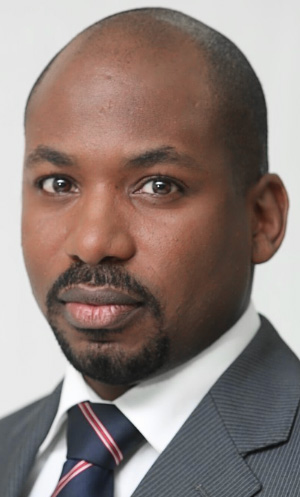 IBM Security, Packet Clearing House (PCH) and Global Cyber Alliance (GCA) unveiled a free Domain Name System (DNS) service designed to protect all Internet users from a wide range of common cyber threats. Launched on November 16 with simultaneous press events in London, Maputo and New York, the public DNS resolver has strong privacy and security features built-in and can be enabled with a few changes to network settings, as outlined on the organisation's website. more
Today's announcement from the Commission that it intends to roll back the exercise of Title II utility-style regulation over "any person engaged in the provision of broadband internet access service" at its 14 December meeting is the right step. As a veteran of 40 years of internet related regulatory wars in the FCC and numerous other venues, the Commission's decision and the actual Rules promulgated in the February 2015 Report & Order stand among the most ill-considered application of authority and regulatory gerrymandering ever witnessed. more
 In an earlier post, I described Havana's community network, SNET, and wondered what it could become if the government and ETECSA were willing to legitimatize and support it. Spain's Guifi.net provides a possible answer to that question. Guifi.net is said to be the largest community network in the world. It began in 2004 and has grown to have 34,165 nodes online with 16,758 planned, 407 building, 612 testing and 4,043 inactive. more
Federal Communications Commission Chairman Ajit Pai today released a statement on his draft "Restoring Internet Freedom Order", circulated to Commissioners this morning and will be voted on at the FCC's Open Meeting on December 14 more
 Dictionary words, alone, combined as phrases, modified by other parts of speech, and single letters that function as marks also retain in parallel their common associations that others may use without offending third-party rights. As a rule of thumb, generic terms are not registrable as marks until they perceivably cross a threshold to suggestive and higher classifications. more
 ICANN has issued a guidance notice to registrars and registries in relation to Hurricane Maria, which caused massive damage throughout the Caribbean. This isn't the first time that this has happened, with a previous incident in Asia triggering action from both registrars and registries to give domain name registrants impacted by the natural disaster breathing space. more
The White House has released a charter offering more transparency into the Vulnerabilities Equities Process. more
The new DNS service, called Quad9, is aimed at protecting users from accessing malicious websites known to steal personal information, infect users with ransomware and malware, or conduct fraudulent activity. more
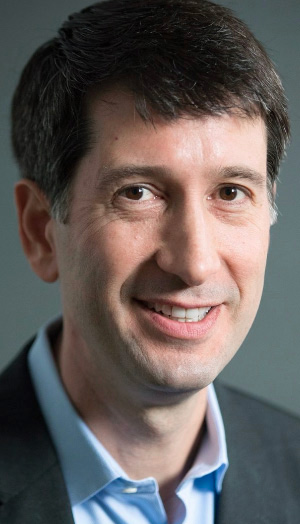 Although including multiple domain names in a single UDRP complaint can be a very efficient way for a trademark owner to combat cybersquatting, doing so is not always appropriate. One particularly egregious example involves a case that originally included 77 domain names -- none of which the UDRP panel ordered transferred to the trademark owner, simply because consolidation against the multiple registrants of the domain names was improper. more
Speaking at The Times Tech Summit in London, Ciaran Martin, chief of the National Cyber Security Centre (NCSC), warned Russia is seeking to undermine the international system. more
Researchers have been able to successfully demonstrate a commercial aircraft can be remotely hacked. more
 As more people get online every day, Internet Freedom is facing a global decline for the 7th year in a row. Today, Freedom House released their 2017 Freedom on the Net report, one of the most comprehensive assessments of countries' performance regarding online freedoms. The Internet Society is one of the supporters of this report. We think it brings solid and needed evidence-based data in an area that fundamentally impacts user trust. more
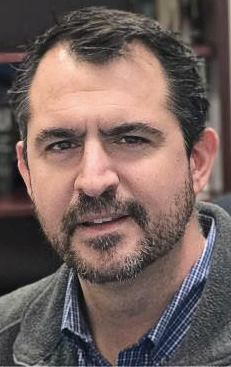 Plaintiff anti-malware software provider sued defendant -- who also provides software that protects internet users from malware, adware etc. -- bringing claims for false advertising under the Section 43(a) of Lanham Act, as well as other business torts. Plaintiff claimed that defendant wrongfully revised its software's criteria to identify plaintiff's software as a security threat when, according to plaintiff, its software is "legitimate" and posed no threat to users' computers. more
A World-Renowned Source for Internet Developments. Serving Since 2002.