
Welcome:
Login
|
Sign Up
|
About CircleID
Follow:
|
|

Domain Names |
Sponsored by |

|
On July 2, 2002, Damien Cave published an interview on Salon.com with John Gilmore, "original 'cypherpunk' and all-around Internet supergeek," titled "It's time for ICANN to go." In this wide-ranging interview, Gilmore -- an early employee of Sun Microsystems who also co-founded Cygnus Software (acquired by Red Hat) and was an early supporter of the Electronic Frontier Foundation and the Internet Society (ISOC) -- offered blunt insight and eye-opening historical detail... more
 The domain name system is not the place to police speech. ICANN is legally bound not to act as the Internet's speech police, but its legal commitments are riddled with exceptions, and aspiring censors have already used those exceptions in harmful ways. This was one factor that made the failed takeover of the .ORG registry such a dangerous situation. But now, ICANN has an opportunity to curb this abuse and recommit to its narrow mission of keeping the DNS running... more
 Back in September of 2020, ICANN CEO Göran Marby wrote a blog post discussing the implementation of "a common strategy for Internet governance (IG) and technical Internet governance (TIG)", raising the question of whether the ICANN org. intended to pursue this distinction moving forward, as debated in a previous article. This was proven to be the case during the 2020 IGF's Open Forum #44: "ICANN Open Forum - Technical Internet Governance", organized by ICANN itself... more
 The term "attack surface" is often heard in cybersecurity conversations. It refers to the sum of all possible attack vectors or the vulnerabilities that threat actors can exploit to penetrate a target network or damage an organization somehow. An unused and forgotten subdomain, for instance, can become an attack vector when taken over. Certain categories of companies have very large attack surfaces. Such is the case of streaming media businesses like Netflix and HBO Max. more
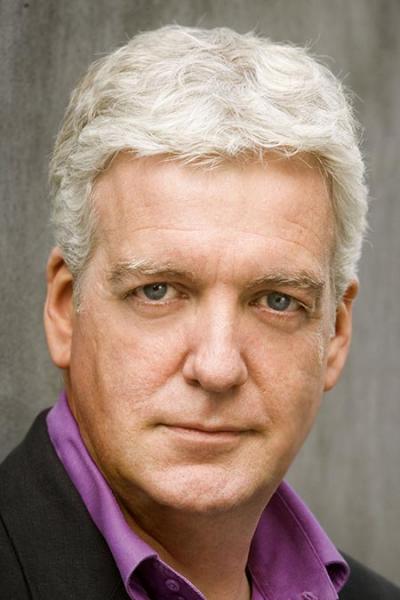 After two decades of involvement with ICANN, I am stepping down from the Board of Directors, where I served for nine years. I have spent considerable time of late reflecting on the past 20 years, and I have isolated some memories that help frame my time with ICANN. ... November 2000, ICANN07 in Marina del Rey, California - With only a scant idea of what ICANN is all about, I am warmly welcomed by the flag-wearing country code top-level domain (ccTLD) community, who come to ICANN to ensure that nothing happens to affect the independence of ccTLDs... more
 There is a lot of discussion about the Expedited Policy Development Process (EPDP) Phase 2 report on evaluating a System for Standardized Access/Disclosure (SSAD) to non-public gTLD registration data after the decisions taken by the GNSO Council on September 24th. Notably, the Business Constituency (BC) and the Intellectual Property Constituency (IPC) have voted against the adoption of the Final Report of the EPDP team. more
 After two years of grueling, complex and contentious debate, the ICANN EPDP team delivered its Phase 2 Final Report on July 31st, 2020. Unfortunately, and disappointingly, the policy recommended for the so-called "System for Standardized Access/Disclosure" (SSAD) fails to meet the needs of the users it supposedly is designed to benefit. more
 As a search engine optimization (SEO) and domain name consultant, one of the questions I get asked most often about domain names is whether or not the domain name or TLD (Top-Level Domain) matters. Will the domain name ending have an effect on SEO or search engine rankings. Are certain domain name endings preferred by the search engines over other domain name extensions? I decided to answer this question... more
 This past week I had two items pop up on my alerts. The first was about Facebook suing domain registrar Namecheap for allowing domains that impersonate the social media company and can be used for scams. The second was a plea by the Electronic Frontier Foundation to join in its crusade to stop the sale of the .ORG domain. It took me a moment to realize these are linked. more
 Over the years, the Kenyan Network Information Center (KeNIC) has struggled to reach the 100,000 mark in .ke Kenya country code domain registrations. Many reasons have been given for this shortfall, among them pricing, competition from generic Top-Level Domains (gTLDs) like .com and .org, and also competition from Geographic domains like the new .africa. Also, not opening up the second level for registration has been cited as one of the reasons for the low number. more
 With the latest "DNSpionage" attack, ICANN astutely prompted domain name holders to fully deploy DNSSEC on their names. Afilias absolutely supports this and encourages the same. In this post, I remind you of why DNSSEC is important and our continued role. Afilias has a long history in the development and advocacy of DNSSEC. In 2007, we partnered with Public Interest Registry to help found dnssec-deployment.org. more
 The ICANN community is currently in full congratulatory mode because the team responsible for the delivery of the Phase 1 Final Report of the Expedited Policy Development Process on gTLD Registry Data (EPDP) has managed to do so in a record-breaking seven months. The GNSO Council approved the Final Report in a special meeting on 4 March 2019, and the report will now be sent to the ICANN Board for consideration and hopefully adoption. more
 The legal status of domain names is one of the most hotly debated topics with regards to evolving property rights and how they should be applied to technological and intellectual property 'innovations' in cyberspace. At present, there are two opposing factions on this topic: On one hand, there are those who maintain that domain names should be considered as contracts for services, which originate from the contractual agreement between the registrant and the registrar. more
 When you've been around the domain industry for as long as I have, you start to lose track of time. I was reminded late last year that the 6-year agreement Verisign struck with ICANN in 2012 to operate .com will be up for expiration in November of this year. Now, I don't for a second believe that .com will be operated by any other party, as Verisign's contract does give them the presumptive right of renewal. But what will be interesting to watch is what happens to Verisign's ability to increase the wholesale cost of .com names. more
 I have hesitated in writing this memorial for udrpsearch.com because I did not want to announce a demise that may not be true or the fear that my saying it will make it so. The website went dark for a short period in 2017, before being restored after a brief shutdown, and (I thought) it could happen again. I was waiting for history to repeat itself. But, the website remains dark, without explanation, and I fear it will not return. We lost it on or about January 6, 2018. more
A World-Renowned Source for Internet Developments. Serving Since 2002.