
Welcome:
Login
|
Sign Up
|
About CircleID
Follow:
|
|
|

 Engineering wise, how's the industry doing? With that question in mind, hundreds descended on Denver for this year's Society of Cable Telecommunications Engineers (SCTE) Cable-Tec Expo. That question begs to be answered. Really, can we still separate the engineering 'cool' stuff from the business chic? By that, I mean the business requirements from subscribers who demand communication and entertainment when they want it, where they want it, and on whatever device they want it delivered to. more
One of my staff members pointed me to an article by Mikko Hyppönen in Foreign Policy. In this article Mikko argues that a new top level domain (TLD) like .bank for some reason would prevent on-line fraud, at least partially. Mikko seems to be arguing that with a dedicated TLD registry for financial institutions and a fee high enough to act as an entry barrier you would have a trustworthy bank domains that would be immune against today's phising attempts... more
 One of the first in-depth reviews I’ve found for T-Mobile’s fixed cellular broadband was published in the Verve. It’s not particularly flattering to T-Mobile, and this particular customer found the performance to be unreliable – fast sometimes and barely functioning at other times. But I’ve seen other T-Mobile customers raving about the speeds they are receiving. We obviously can’t draw any conclusions based upon a single review by one customer... more
 Ten years ago today, and with 300,000 domains in the zone file, we introduced DNSSEC at .se. It was the end of a fairly long journey, or at least the first stage. The first Swedish workshop to test the new function according to the specifications from the Internet Engineering Task Force was arranged in 1999. At that time, I was still working in the IT Commission's Secretariat, and the standard was far from complete as it turned out. Our ambition was to change the world, at least the world that exists on the internet. more
 The transition of the Internet Assigned Numbers Authority (IANA) to the multi-stakeholder community is one step closer to becoming reality. The National Telecommunications and Information Administration (NTIA) approved the proposal submitted by the ICANN to privatize oversight of the internet domain name system's central root zone last week, crossing a critical hurdle for advocates of the transition. However, two recent Congressional hearings have put the IANA transition back in the crosshairs of many policymakers and political pundits, keeping the likelihood of the transition occurring before September up in the air once again. more
 A few months ago, I mentioned that China’s social code would also be expanded to companies who want to deal with China. I have come across information that shows that China is indeed serious about this. China’s cyberspace regulator has proposed requiring companies pursuing share listings in Hong Kong to apply for cybersecurity inspections if they handle data that concerns national security. Large internet platforms planning to set up headquarters, operating or research centers abroad will have to submit a report to regulators. more
 In the previous decade and the beginning of this one, Server Load Balancing (SLB) reigned supremely in the web data center. Lately, a new class of products is replacing the older load balancers. These products are known as Application Delivery Controllers (ADC) and in the following paragraphs I will share my thoughts on the reasons for that. more
 Do you have information about DNS security or routing security that you would like to share with the global community? Have you developed a new tool or system in this area? Do you have results from a research project that you want to share with a technical community? If so, please consider submitting a proposal to the DNSSEC and Security workshop to be held at ICANN 74 in June 2022. more
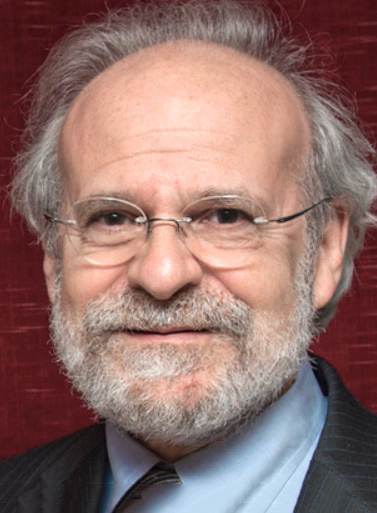 Connected devices need a free-to-use infrastructure that allows for innovation beyond the needs of a provider or other intermediary. An interface is best when it disappears and the user can focus the problem at hand. In the same way infrastructure, is best when it can simply be assumed and becomes invisible. With an invisible infrastructure as with an invisible interface a user can concentrate on their tasks and not think about the computer. Dan Bricklin and I chose to implement VisiCalc on personal computers that people could just purchase. more
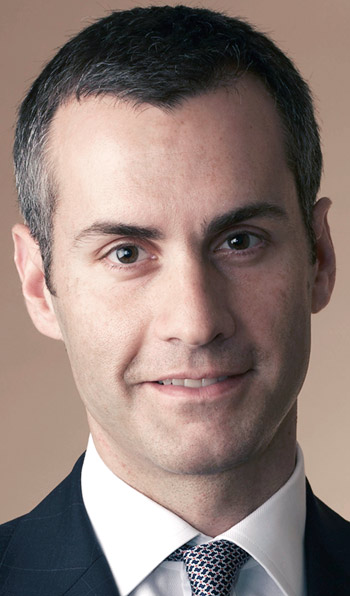 Since the World Conference on International Telecommunications (WCIT) discharged delegates from an atmosphere of restrained acidity last December, ITU habitués have wondered how that outcome will affect the rhythms of their regular work in Geneva. This is no less true for governments that approved of the WCIT treaty as it is for those which did not, though the immediate anxiety may be greatest for the latter - for those whom we can call, with sloppy shorthand, the G8. more
I recently followed a webinar session organized by the University of Queensland on the factory of the future. Smart or not, the future will still need factories to make the stuff we humans use every day. One of the discussed questions included: "how will existing production models cope with the staggering and ongoing rate of digital disruption and advanced capabilities?" more
 For all of us at Public Interest Registry, working to remove child sexual abuse content from the Internet isn't just a part of our work; it's our moral duty. As stewards of the .ORG community, addressing the problem head on is the only option compatible with our values. Talking about Child Sexual Abuse Materials (CSAM) is challenging and uncomfortable. It's also far too important, and prevalent, of a problem to ignore. While it's impossible to know exact numbers, online CSAM is a major, rapidly growing crisis. more
 Ten years ago everyone evaluating DNS solutions was always concerned about performance. Broadband networks were getting faster, providers were serving more users, and web pages and applications increasingly stressed the DNS. Viruses were a factor too as they could rapidly become the straw that broke the camel's back of a large ISP's DNS servers. The last thing a provider needed was a bottleneck, so DNS resolution speed became more and more visible, and performance was everything. more
 As news of the spread of the coronavirus (COVID-19) continues to emerge, CSC has undertaken the first in a series of studies looking at how the development of the crisis has affected online content. This first article looks at the numbers of registered domains with names containing coronavirus-related strings - "coronavirus" or "covid(-)19" (optional hyphen) - and analyzes the types of content present on the associated websites. more
My previous article on brandable domain names1 -- that is, available (unregistered) domain names which may be appealing to any entity looking to identify a potential name for a new brand launch -- focused on the use of phonotactic (i.e. 'readability') analysis techniques to identify candidate names. more
Sponsored byVerisign

Sponsored byRadix

Sponsored byDNIB.com

Sponsored byIPv4.Global

Sponsored byVerisign

Sponsored byCSC

Sponsored byWhoisXML API

A World-Renowned Source for Internet Developments. Serving Since 2002.