
Welcome:
Login
|
Sign Up
|
About CircleID
Follow:
|
|



|
||
|
||
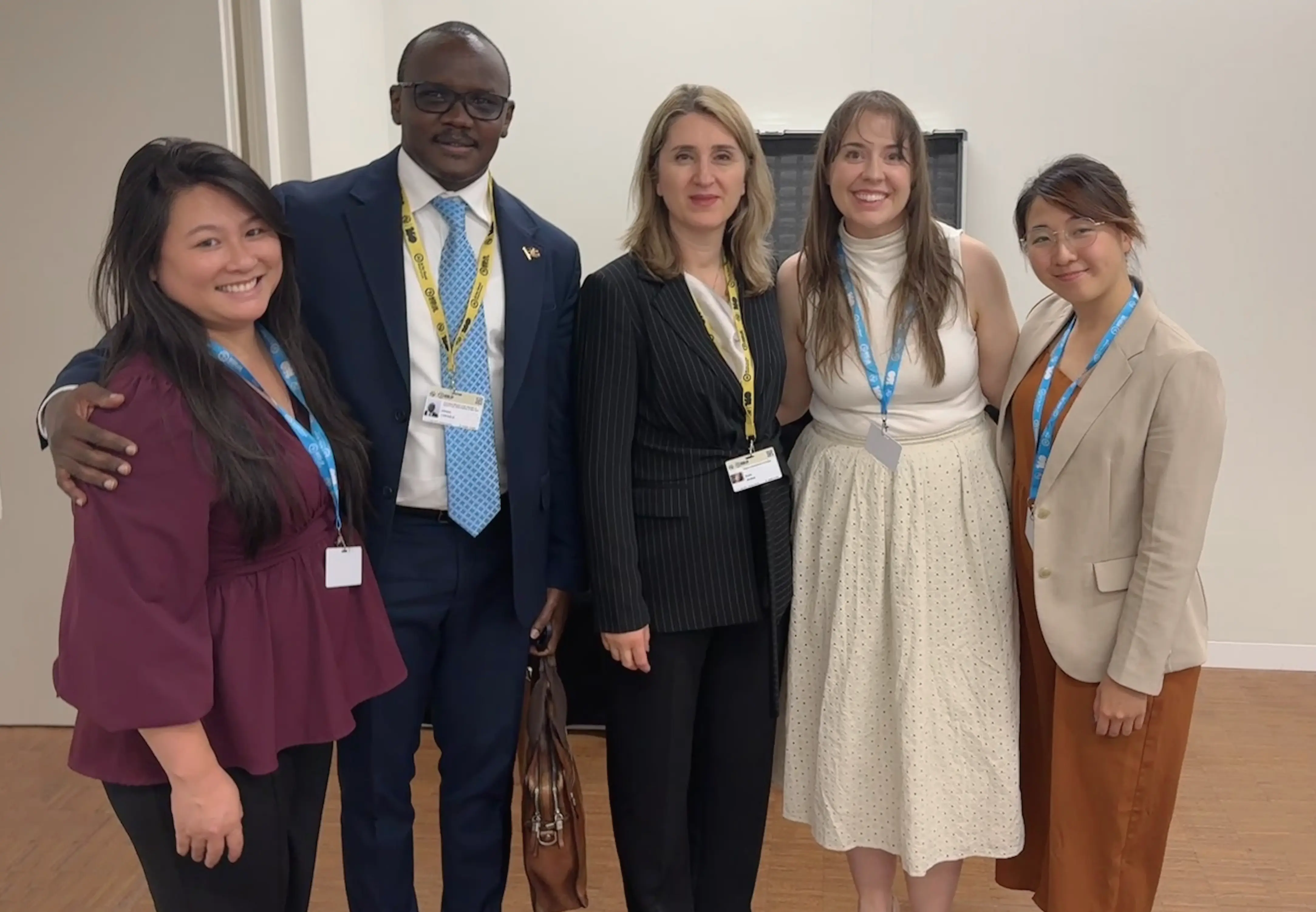
On Wednesday, 9 July, I attended the WSIS+20 HLE Overall Review multistakeholder consultation with co-facilitators H.E. Mr Ekitela Locale from the Republic of Kenya, and H.E. Ms Suela Janina from the Republic of Albania with my UNU-CRIS hat and had the opportunity to talk with them together with my fellow youth IGF colleagues Dana Cramer and Jasmine Ko.
We discussed youth participation in Internet governance, and I raised my concerns about the future of youth IGFs.
At the WSIS+20 HLE, the questions addressed were mostly focused on how youth can contribute more to WSIS, and how can WSIS become more accessible to youth. Here, I think it’s important to contextualise this with current youth participation. During WSIS Forums, youth are invited as innovators and community leaders to showcase the work they have achieved or present the activities they provide for their communities. They are selected and funded to attend and to present.
This makes the threshold of participation at WSIS Forums very high, you must be established, and have proven yourself as evidenced by outcome-focused criteria and visibility in national environments.
Building on this, sessions at the WSIS+20 HLE throughout the week raised questions and comments about national and regional IGFs’ relationships with WSIS Forums and why there is no larger and stronger presence of these groups—and specifically youth—at WSIS Forums. I raised this point with the co-facilitators, when it relates to youth IGFs, emphasising the participation threshold between WSIS Forums and the IGF is different. Where WSIS Forums are outcomes-focused, the IGF provides opportunities for capacity building, peer-exchange, and personal growth (whatever this may mean to the individual). Any young person with a curious mind can attend an IGF space and is able to learn about developments in the field and contribute through a variety of different activities, ranging from participation from lived experiences to leadership positions which support community building (I’ve written a paper on this here).
WSIS Forums and the IGF are two distinct spaces: at WSIS Forums, we assess our progress and celebrate our successes and at the IGF, discussions lead to co-creation and project building. Together, we seek to build towards a virtuous cycle.
To add to my above comments, I observed two key points during this week at the WSIS+20 HLE:
The last comment I shared is that a key component of youth participation in Internet governance is the opportunity to find mentorship. This is not only about networking but also to ground the contexts the discussions are taking place in, someone helping you find opportunities for funding and collaborations, and building intercultural and interdisciplinary friendships and trust. Where WSIS Forums, with its prizes and action lines, is goal-oriented; the IGF is people-oriented. I find that most youth attending WSIS Forums were able to be there because they already found mentorship that supported their goals, and that most youth attending the IGF are looking for mentors and feel that they can approach them to explore relationships and ideas. This capacity to find personal connection is the bedrock of youth participation for sustainable multistakeholder Internet governance.
With the WSIS+20 elements paper public consultation due in a few days, I hope that we can build a discussion that is conscious of youth participation, in which the focus is on how these spaces can contribute to enrich youth participation, and not where these spaces extract knowledge and volunteering to enhance manpower from youth participants to meet political goals.
Sponsored byDNIB.com

Sponsored byCSC

Sponsored byWhoisXML API

Sponsored byVerisign

Sponsored byRadix

Sponsored byIPv4.Global

Sponsored byVerisign


A World-Renowned Source for Internet Developments. Serving Since 2002.