
Welcome:
Login
|
Sign Up
|
About CircleID
Follow:
|
|

Domain Names |
Sponsored by |

|
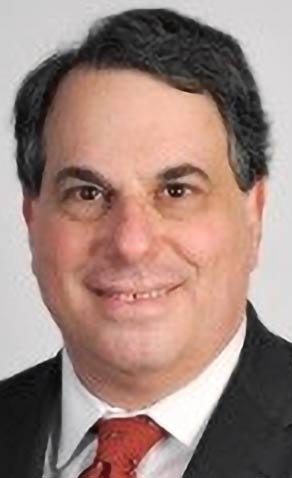 The PIR/.ORG transaction is a watershed moment for ISOC. What had once seemed (at least to ISOC and its Board) to be ISOC's chance to transform its finances now seems to many to be a threat to ISOC's essence, and even its very existence. From the ISOC-NY perspective, this entire affair points out the paucity of community-involved multistakeholder participation in ISOC's critical decision-making processes (and other processes, too). more
 We were disappointed to see The Pittsburgh Post-Gazette publish a recent editorial on February 13 about the sale of Public Interest Registry (PIR, the company that operates .ORG) that propagates false information about the transaction, including runaway prices, censorship and lack of experience. Runaway prices? Ethos Capital and PIR have committed to capping price increases to no more than ten percent per year on average. more
 Within the next year, the ICANN Board may well face a decision that will help determine whether ICANN is capable of serving the global public interest or whether it is degenerating into an industry-controlled self-regulatory association. The issue can be framed quite simply: will ICANN approve a process for the creation of a new wave of new generic top level domains that will include "closed generic" gTLDs? more
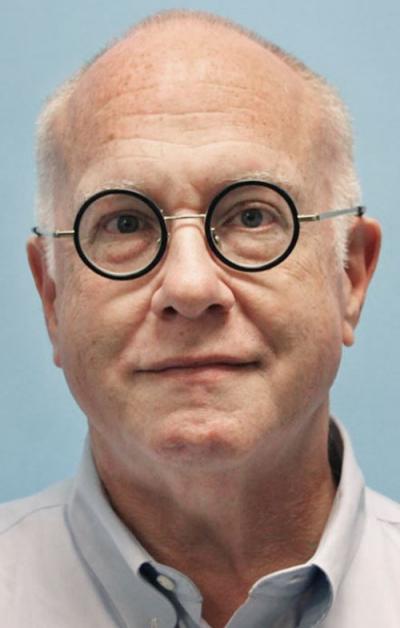 Many of my friends in the civil-liberties and Internet-law communities have been criticizing the Internet Society's agreement to sell the Public Interest Registry, which administers the .ORG top-level domain. I'm a free-speech guy, so I support their right to raise all these criticisms. But they often ask me directly – knowing that my track record as an Internet civil-libertarian is longer than most – why as a member of the Internet Society (a.k.a. ISOC) board I decided to join the board's unanimous approval of the deal. more
A few good questions have circulated in response to my recent blog post seeking clarity around the following: 1) what we mean with respect to adhering to Public Interest Registry's (PIR) historic practices on pricing, and 2) our interpretation of how the new co-operative proposal would reward speculators. With regard to Ethos' pricing commitments: we are not saying that we will raise prices 10% every year -- our commitment is that any price increase would not exceed 10% per year on average, if at all. more
Given the level of public interest in Ethos' acquisition of Public Interest Registry ("PIR") from the Internet Society, it is no surprise that this agreement continues to attract press attention. Ethos welcomes open discussion on this important investment, and we are of course following the media coverage closely. Unfortunately, it is not always possible to respond point-by-point to every article, so I would like to take this opportunity to address several mischaracterizations of the deal recently reported by Wired, Deutsche Welle, and others. more
 I was on the front lines of the SOPA wars, because SOPA touched on two matters of strong personal and professional importance for me: protecting the Internet infrastructure, and protecting the economy from Internet related crime. I've continued to study this field and advise industry participants in the years since then. The 2017-02-20 paper by Annemarie Bridy entitled Notice and Takedown in the Domain Name System: ICANN's Ambivalent Drift into Online Content Regulation deserves an answer, which I shall attempt here. more
I was glad to join Meghna Chakrabarti on NPR this week for an engaging discussion about Ethos Capital's acquisition of Public Interest Registry (PIR) from the Internet Society, which you can listen to here. I always appreciate an opportunity to answer questions about .ORG, and was pleased to be joined by Andrew Sullivan, President and Chief Executive Officer of the Internet Society, and Esther Dyson, founding chairwoman of ICANN from 1998 to 2000. more
 When .org prices rise, who suffers – nonprofits or speculators? Will Ethos Capital raise prices more aggressively than ISOC would? Vint Cerf attributed concerns about higher prices to speculators: "Of course, companies that hold domain names in the tens of thousands for speculative purposes might find such increases more troubling, but I don't have much sympathy for that business model in the context of the organizations the .org brand is intended to serve." more
We respect the right of all parties who wish to express a point of view on the Internet Society's sale of Public Interest Registry ("PIR") to Ethos Capital. However, it's important those views are based on facts -- which has not always been the case. Some have expressed concern that for-profit ownership of .ORG will automatically mean .ORG prices will rise dramatically, or that .ORG's principles will change. more
 The .ORG sale has placed Maureen Hilyard – ICANN's At-large Chair – squarely between the largest outpouring of individual user sentiment that the Internet community has ever seen, and the people who can do something about it. For At-large, the stakes are high. ICANN has spent years building up a user organization to balance corporate and government interests. At-large could be a key bulwark against the capture of Internet resources by those with capital and political power. more
 The early designers of the Internet quickly realized that as the number of domain names flourished, there was a need for tracking domain name owners to resolve questions and conflicts that might arise. To that end, they created WHOIS, a public database with the names, phone numbers, email addresses, and mailing addresses of registered domain owners and operators. more
The Number Resource Organization (NRO), acting as the Address Supporting Organization (ASO), today announced it has submitted correspondence to ICANN regarding the Internet Society's proposed transfer of ownership of PIR, the .org registry, to Ethos Capital. more
 This article addresses the issues around the planned sale of the PIR .org registry by ISOC. It examines the history and issues plus looks at several possible paths forward, including PIR becoming a Benefit Corporation (B-Corp) and identifying possible alternative buyers who could retain PIR's non-profit status. Before Tim Bernier-Lee brought the HTML markup language to the Internet, starting in 1989, there were few registered domain names. Access for public registration started in 1986, and by December, there were about five dozen registered .com domain names. more
The stakeholder community needs to get with the program and assert itself now – if it still can. The recent attempts by the Internet Society (ISOC) to wrap itself in the halo of Jon Postel's "original intent" for .org is specious and laughable. As I've previously published, Postel also didn't like how big the top-level domains were getting and suggested, in 1993, that top-level domains should be capped at 10,000 names and that further zone growth should happen at the second- and third-levels (similar to how the UK has .uk and then .com.uk, for example). more
A World-Renowned Source for Internet Developments. Serving Since 2002.