
Welcome:
Login
|
Sign Up
|
About CircleID
Follow:
|
|
|

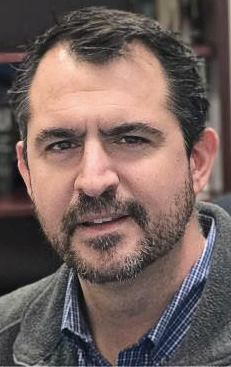 If a court won't let you use your own name, you might feel like you're a mere ghost of your former self. That happened to Ed Kalis of Broward County, Florida. In a recent case, Florida's court of appeal considered whether a trial court's order against Kalis, enjoining him from using his own last name in various means of advertising and in the URL for his company's website, was proper. The appellate court held that the injunction was overkill. more
 Readers of my blog may recall that the Canadian Internet Registration Authority wrote a public letter earlier this year to ICANN that expressed concern over the current lack of accountability (note that I am on the CIRA board). The letter indicated that CIRA was withholding payment of any voluntary fees to ICANN until the accountability concerns were addressed. This week CIRA followed up with a second public letter to ICANN... more
 The UK today is one of the main attack targets by phishing organized crime groups, globally. Phishing damages will amount to about two billions USD in 2006 worldwide -- not counting risk management measures such as preventative measures, counter-measures, incident response and PR damages. In most cases, phishing is caused by the fault of the users, either by entering the wrong web page, not keeping their computers secure or falling for cheap scams. Often this is due to lack of awareness or ability in the realm of Internet use rather than incompetence by the users... more
Timothy D. Morgan's recent paper titled, "IPv6 Address Cookies", seeks to apply the fundamental shift in resource availability brought about by the vastly increased Internet address space in IPv6 to develop a novel, lower cost solution to mitigating spoofed attacks. "Spoofed denial of service attacks have plagued the Internet for a number of years, and show no signs of abating. Research into mitigation techniques has apparently not led to a financially viable solution, and new attacks have been discovered in the wild without being widely anticipated". The following provides an introduction to this paper. more
The DNSSEC is a security protocol for providing cryptographic assurance (i.e. using the public key cryptography digital signature technology) to the data retrieved from the DNS distributed database (RFC4033). DNSSEC deployment at the root is said to be subject to politics, but there is seldom detailed discussion about this "DNS root signing" politics. Actually, DNSSEC deployment requires more than signing the DNS root zone data; it also involves secure delegations from the root to the TLDs, and DNSSEC deployment by TLD administrations (I omit other participants involvement as my focus is policy around the DNS root). There is a dose of naivety in the idea of detailing the political aspects of the DNS root, but I volunteer! My perspective is an interested observer. more
 The success of a proposal by AT&T and Verizon to end net neutrality does not threaten the Internet. The broadband customers of AT&T and Verizon will just no longer have access to the Internet. The development appropriately creates alarm among AT&T and Verizon's customers, but the combined customer bases of these companies represent less than 2% of the billion or so users of the Internet. The fact that access to the Internet requires net neutrality does not depend on laws passed by the US Congress or enforced by the FCC. Neutrality arises as a technical and business imperative facilitating the interconnection 250,000 independent networks that choose to participate in the Internet. more
 I had hoped to take a longer break from the theme of Net Neutrality, but a piece on Om Malik's blog by Daniel Berninger seems to be screaming for a reply. Berninger hails from Tier 1 Research; his credentials show a close association with Jeff Pulver's Free World Dialup, and hence a piece that is sympathetic to the 'Save the Internet' movement. His legalistically styled piece attempts to suggest that, in the absence of conformance to network neutrality principles, telephone companies will lose their common carrier status and therefore should lose their access to low cost rights-of-way. Good try, Dan... more
 In What's Driving the Next Telecom Law, David Isenberg writes about the incumbents desire to preserve "Rational Competition"... Rational competition is the idea that corporations, knowing their own costs, and their competition's pricing, will price their products to maximize profits. It is tied up in the language of predatory pricing. Some economists argue that predatory pricing is rare, because it is, in fact, irrational... The flaw in the incumbent's argument is twofold... more
 A new article by Ken Camp, published at Realtime VoIP, discusses telephony regulations, describing some existing regulatory issues surrounding telecommunications and how they might impact VoIP services. The following is an introduction to this article: "Bringing new technologies such as VoIP into service presents a wide range of technical challenges. Given the highly regulated environment of telecommunications, VoIP presents a set of regulatory challenges. For the most part, these challenges present hurdles to VoIP service providers who want to deliver commercial services to consumers and businesses and don't directly impact business VoIP deployment. ...Businesses that embrace managed VoIP services might want to review some of these regulatory issues, such as E-911 services, with the managed VoIP service provider." more
 Susan Crawford, seeking to learn from Korea and Japan, identifies three routes towards broadband competition... Facilities based competition: Still waiting for that mythical third wire, or perhaps some unused, unlicensed TV spectrum, but not holding my breath. (Broadband over powerline? It is such an encumbered technology that it is its own barrier to entry.) Wholesale access: Been there, tried that, but the Bells wouldn't unbundled elements... more
 The primary reason that Japan and Korea do so much better than the U.S. on any measurement of broadband (availability, penetration, price, speed) is that there is fierce competition in the market for broadband internet access in these countries. ...How do you increase competition in the U.S. for broadband access? Right now, we have giants fighting with each other -- cable and telephone companies. Small numbers of these companies control 80%-90% of the market for broadband access... more
 A few weeks ago ICANN's domain name policy making organ (the GNSO) decided that the purpose of Whois was domain name coordination and not compulsory surveillance of domain name registrants. The US and Australian governments expressed their opposition. The US government's lack of concern for privacy is well known. But what about Australia? The Australian ICANN Governmental Advisory Committee (GAC) representative, Ashley Cross, tried to use his authority as "a government" to intimidate the GNSO, sending it a message announcing that "Australia" supports a broader definition of Whois purpose that gives ICANN a blank check... What does "Australia" really support, however? more
With everyone talking about network neutrality, with all the heat, it didn't feel good to have to be in NY today and miss the goings-on in Washington. I watched part of the late afternoon markup session online, with Rep. Barton sounding awfully effective as he marched steadily through Title III -- quickly taking votes, soothing congress people who were suggesting soon-to-be-rejected amendments, and sounding confident. The only substantive work I heard was the rejection of an amendment that would have left in place all state laws that regulate the subjects of the bill -- like mini wireless networks. But the real news had already happened... more
 I like the drift of the Pulver/Evslin proposal on emergency communications, and wish there was as vigorous a debate going on over here. I just hope we in the UK aren't jerked out of complacency by some major disaster -- although widespread use of pre-paid cellular means the problem of sunken landlines isn't as acute. Yet I can't help but wonder why the poor public has to wait for a disaster before they're given partial control over how their number maps to different destinations and services. Why can't I get a voicemail service from someone other than my connectivity provider? Why is ENUM hostage to the telcos, whose interest lies in ensuring that new services can only come from them? more
Recently, FCC placed on public review a petition filed by Evslin Consulting and pulver.com. The petition grew out of the experiences felt during a breakdown in communications network caused by Hurricane Katrina. As you may recall, whole communities were evacuated in the Gulf coast and many families were separated because they ended in different cities. Added to the trauma, many of these evacuees found it difficult to contact and communicate with each other. But those who have VoIP service and those who subscribe to premium features on their PSTN lines were better off because their services were able to forward the calls to the new location... more
A World-Renowned Source for Internet Developments. Serving Since 2002.