
Welcome:
Login
|
Sign Up
|
About CircleID
Follow:
|
|

 On October 28, as ICANN met in Shanghai, China for its regular board meeting, ICANN at Large held a lengthy meeting to address user concerns, particularly the disenfranchisement of the At-Large by ICANN, and the At-Large's self-organizing in response. The meeting was chaired by YJ Park, one of our Executive Panel Members, and was well attended. Attendees included ... more
In the beginning there was silence; then, silence begat communication, and communication begat more communication and, ultimately, group communication formed and begat a primordial "network" of communication that gradually and inevitably increased in effectiveness and complexity: there were only signal fires at first but, then, there were cave drawings, carrier pigeons, shouting from hill-tops, smoke from fire, lines of cannon fire, the telegraph, Alexander Graham Bell, and, finally, the network of networks known as the Internet. But, is that it? Is there not something more impressive in its impact upon communication than the Internet? What more might one desire than the dynamic wonders of the Internet, you ask? Well, what about ENUM? "E-What!?" more
The US Department of Commerce (DOC) has recently signed a new contract with the Internet Corporation for Assigned Names and Numbers (ICANN) for one more year. ICANN and the DOC are to continue to work together to design an organizational form that is suitable to administer and control the infrastructure of the Internet. That infrastructure includes the IP numbers, which are critical to the functioning of the Internet protocol TCP/IP. These numbers must be unique for the Internet to continue to function. The infrastructure also includes the protocols that make the Internet possible. Protocols involve the conventions or agreements that each network that is part of the Internet accepts in order to make communication possible across the boundaries of the different technical and political and administrative entities that comprise the networks of the Internet. Another component of the Internet's infrastructure is the domain name system (DNS). This system includes the names that identify various sites on the Internet and the translation of those names into IP numbers via the system of computers that make the one to one mapping between names and numbers. more
When it comes to domain name disputes, no domain name has captured more media attention than sex.com. Of course, disputes about sex often obtain a great deal of attention, and the sex.com domain name dispute can grab its share of headlines because the case involves sex, theft, declared bankruptcy, a once-thriving Internet porn business, and fraud, instead of the typical cybersquatting allegations. Indeed, this case is remarkable for its potential impact on the development of caselaw concerning whether there is a valid basis to assume that trademark interests should overwhelm all non-commercial interests in the use of domain names. The answer is no, but the caselaw to support that answer is in tension with cases that strongly imply a contrary conclusion. more
 Africa's digital transformation challenge is not a lack of strategies or research, but weak institutional learning that prevents governments from preserving project lessons, applying evidence and avoiding repeated failures across administrations and technology programs. more
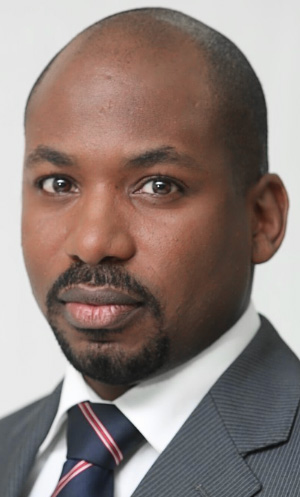 Barbados-born cybersecurity specialist Niel Harper joins ICANN's board in October, aiming to strengthen Latin American and Caribbean participation, improve DNS security and abuse mitigation, and expand developing-economy access to the next gTLD round. more
 Past gTLD disputes show applicants can win ICANN accountability rulings without obtaining the contested string, raising a critical question for 2026 applicants about whether expanded review mechanisms can deliver meaningful remedies. more
 A LinkedIn short-link anomaly in Iran reveals how sanctions, corporate compliance and geolocation controls can translate geopolitical boundaries into infrastructure-level restrictions, creating an Internet that remains globally connected while becoming functionally unequal. more
Estonia's data embassy model offers African governments a different approach to digital sovereignty, combining cross-border infrastructure, legal safeguards and geographic redundancy to keep critical state systems secure, recoverable and operational during major disruptions. more
Ghana has expanded digital connectivity, but many rural communities remain underserved. Community networks could close the gap, provided policymakers create proportionate regulation, improve infrastructure access and build sustainable models that complement commercial operators. more
 The battle over open-source AI echoes England's Enclosure Movement, pitting collaboration against proprietary control as technology firms compete to shape innovation, economic power and the future governance of the digital commons. more
As AI increasingly relies on digital archives, the quiet revision of ICANNWiki entries raises broader questions about platform accountability, historical integrity, and whether institutions can reshape the records that future researchers and machines will treat as fact. more
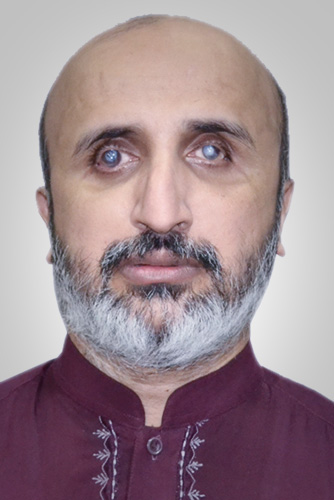 The IGF-DCAD fellowship shows that meaningful inclusion requires more than open access. By funding accessibility, leadership and participation, it offers a practical blueprint for making Internet governance genuinely representative of the one-sixth of humanity living with disabilities. more
Africa's pursuit of digital sovereignty demands more than keeping data at home. True resilience depends on controlling the infrastructure, platforms, cybersecurity capabilities, governance, and human expertise that underpin an increasingly interconnected digital economy across Africa. more
 ICANN applies identical rules to every registrar, yet new research reveals a sharply unequal market where seven firms capture half of inflows, renewals dominate activity, and many accreditations barely operate at all in practice today. more
A World-Renowned Source for Internet Developments. Serving Since 2002.