
Welcome:
Login
|
Sign Up
|
About CircleID
Follow:
|
|
|

 When the UK announced its intention to withdraw from the European Union it was clear to some of us that this would cause complications with .eu and possibly other domain name extensions. Over the past year, it's become clear that the European Commission, who mandate the .eu domain name policy, weren't interested in providing a "soft landing" for impacted registrants of .eu domain names. more
 I've been proud to serve Public Interest Registry (PIR) since 2017 and play a part in helping the organization support those with a mission to do good. I recently joined every one of my fellow board members in reaching the unanimous decision to approve the sale of PIR, as I believe PIR's mission will best be served by the sale and .ORG's long-term future will be stronger under Ethos Capital ownership. more
 Barely a week passes without something in the news that reminds us of the critical role encryption plays in securing our data. It is a technology that protects so much of what we rely on, as individuals protecting our privacy, as companies securing our business assets and transactions, and as governments responsible for critical national infrastructure. ... The request Kathy mentions came after the San Bernardino shootings in California... more
ICANN plans to announce the long-anticipated list of applied-for domain names under its new generic Top-Level Domain (gTLD) program tomorrow. The announcement will be made in London at 12:00PM and streamed live on ICANN's website. ICANN has received over 1,900 applications from around the world. more
U.S. House Republicans have invited CEOs of major technology and telecommunications companies to weigh in on the net neutrality debate amidst Federal Communications Commission move to repeal the Obama-era rules. more
 As the recent Senate vote on gun reform legislation has shown (wherein 42 of the 45 dissenting senators had recently received donations from gun industry lobbyists), getting things done for the good of the people is a hard task where legislation is concerned. It has been thus with the US's broadband infrastructure for years. A number of states have legislated against community broadband networks, often resulting from the lobbying efforts of the main telcos affected. State Legislatures commonly pass bills revoking local decision-making authorities from communities, effectively making them dependent on the dominant cableco and DSL provider. more
Japan's cybersecurity minister, Yoshitaka Sakurada, 68, who recently stated he doesn't use a computer, also admitted on Thursday to a parliamentary committee that he's not very familiar with the whole cybersecurity field. more
 The Complainant is the owner of the well-known Coachella festival. It owns a trademark registration, issued in 2016, for the mark CHELLA. The Respondent asserted that he intended to use the disputed domain name to set up an online women's clothing store but never did so. He claimed that growing up, his nickname was "Chelle" and that he modified that name to make it sound more feminine for use in connection with the store. more
 Reading up on COVID-19 and Zoom/Boris Johnson outcry yesterday, an analogy struck me between the two: the lack of testing. In both cases, to truly know how safe and secure we are, testing needs to be stepped up considerably. This post focuses on cybersecurity. Over the past days and weeks, more and more organisations have switched to digital products and services to sustain working from home, to keep productivity up and to be connected. more
Google has expanded Google Ideas, its think tank project, to a technology incubator called Jigsaw, the company announced today. Jigsaw is tasked to tackle geopolitical challenges, countering violent extremism, censorship, and other political challenges through the use of technology, says Alphabet executive chairman, Eric Schmidt in post on Medium. more
In an after-action analysis of the Mirai botnet attacks on Dyn, business intelligence firm, Flashpoint has assessed with "a moderate degree of confidence" that the perpetrators behind the attack were most likely not politically motivated, and most likely not nation-state actors. more
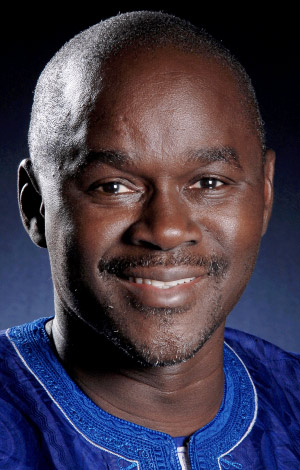 Artificial intelligence is transforming Africa's informal economy by improving access to finance, optimizing business operations, and helping small-scale entrepreneurs transition into the formal sector, despite challenges such as digital illiteracy and infrastructure gaps. more
The Internet Society has released an announcement setting out its views on the development of policy to address the balance between security and privacy. From an Internet perspective and in the context of the growing threat vector from hacking, targeted cyber attacks on networks and individuals, and surveillance, the Internet Society's approach to the development of cyber security policy initiatives is based on the following key considerations. more
 It used to be so much easier to manage a system of cross subsidies for communications. If a regulator wanted consumer services to be subsidized by businesses, rural to be subsidized by urban, local subsidized by long distance, TV production subsidized by distribution, it could just issue an order to make it so. So let it be written; so let it be done. There were few, if any, other suppliers of those services, so there were limited arbitrage opportunities. more
 There is no single name system that is necessarily bound to the Internet. Unlike IP addresses which are in every IP packet, names are an application construct, and, in theory, applications have considerable latitude in how they handle such names. There could be many name systems that could coexist within the Internet, in theory. In practice, there is strong peer pressure to use a single name system. more
A World-Renowned Source for Internet Developments. Serving Since 2002.