
Welcome:
Login
|
Sign Up
|
About CircleID
Follow:
|
|
|

 It is just another phishing case. Why should I care? I happened to receive my own copy of the phishing email message. Most Internet users will just smile bitterly before deleting it. I checked it to see why it had gone through the spam filters. It had no URL in the text but a reply-to address. So it needed a valid domain name, and had one: postfinances.com. PostFinance (without trailing "s") is the payment system of the Swiss Post. It has millions of users. more
 Anyone who expected that with the end of the Dubai ITU World Conference on International Telecommunications (WCIT) in December 2012, the heated debate on the future regulation of the Internet will slow down should remember to fairytale of the battle of the knight with the seven-headed dragon. Hardly a head is cut off, another is growing. In 2013 the discussion on Internet freedom will likely gain in sharpness. more
 It was 30 years ago today, on January 1, 1983, that the ARPANET had a "flag day" when all connected systems switched from using the Network Control Protocol (NCP) to the protocols known as TCP/IP. This, then, gave rise to the network we now know as the Internet. more
 The capabilities IPv6 provides will enhance online security, but the shift to the new Internet address scheme may also present risks if not properly managed. Previously, Internet security was largely an after-thought for the early Internet, as its primary purpose was to facilitate open, end-to-end, any-to-any communications and information exchange for bridging and accelerating research efforts. Today, we have a much more complex online ecosystem that spans billions of users across the globe and serves not only as an engine for e-commerce, but as an engine for all commerce. more
 The problem with setting expectations is that when they are not fulfilled the fallout is generally considered to be a failure, and while everyone wants to claim parenthood of success, failure is an orphan. In that sense it looks like the WCIT meeting, and the International Telecommunications Regulations (ITRs) that were being revised at that conference this month are both looking a lot like orphans. There have been a number of reports of the outcome of the two week... Most of the blogs were quick to characterize the outcome as a loss for the dark forces that lurked somewhere in the closets of the ITU's headquarters in Geneva. But there is more to it than that. more
 In the end it was a disappointment that the treaty on International Telecommunications regulations (ITRs) that had been under negotiation for two weeks at WCIT-12 was not acceptable to 55 countries, and that, as a consequence, these countries did not sign the final version of the international treaty (89 did sign). After two weeks of sometimes fractious negotiation - 1,275 proposals were discussed in all - the contentious issues were significantly watered down. However the dissenting countries felt that the key issue - anything in relation to the internet - should not be included at all and, quite correctly, did not compromise on that. more
 Thank goodness for Monday's new gTLD draw!!! To date the process has been more of an intellectual exercise in marketing, technology, and strategic game thinking - it was getting a little boring. A business needs to see regular 'wins' to keep momentum and stay motivated. The presumptive lineup of new gTLDs has now been established which has given most applicants (save those poor souls looking at 2015 as their launch year) a clear view of the starting gate. more
 I am pleased to see that several companies are starting to recognize that building zero carbon data centers is a more sustainable direction rather than focusing on energy efficiency (i.e. PUE). As China, India and the rest of the developing world starts to deploy data centers, GHG emissions will continue to increase in portion to the number of data centers regardless of the PUE. But building zero carbon data centers powered only by renewable energy means that as the world deploys many more hundreds of data centers, GHG emissions will remain virtually unaltered and close to zero. more
The gTLD Prioritization "Draw" was a mistake. But its negative impact can still be mitigated. The best course of action follows directly from information that can be gleaned from available data. Let us start with the latest piece of intelligence: who "played" in the "Draw"? 1766 of 1917 applications had a lottery ticket. This is much worse than expected. Very few abstained. Even the purely defensive applicants saw no other choice but to "play". more
 Internet crooks never cease to surprise me. The inventiveness in being bad is super. If these guys lent their thinking power to the economy, the economic crisis would be solved within a week. Today I ran into three brand new cyber security threats that were reported on. In one day. So I thought to share them with you. more
 In the latest development from the World Conference on International Telecommunications, a new "compromise proposal" has been leaked to wcitleaks.org. This proposal is certainly no compromise, as it not only is a bald faced power grab by the sponsors (Russia, UAE, China, Saudi Arabia, Algeria, Sudan at this point), but shows a stunning lack of comprehension of how the Internet works and how it is currently governed. It also shows that the coalition of Civil Society groups and private sector organisations that have focused on WCIT have been correct all along. more
 The second phase of the Dubai Debacle is now well underway. The first of the ITU-T bodies, the World Telecommunication Standardization Assembly (WTSA) finished its ten day meeting. The second body, the World Conference on International Communication (WCIT) completed its second day. WTSA shapes the ITU T organization and detailed agenda, while the WCIT gives it a treaty-based construct with regulatory mandates. WTSAs occur every four years; WCITs every twenty-five - although there is a proposal to hold them more frequently. more
A key element of the World Conference on International Telecommunications (WCIT) is to connect the people around the world who are not yet connected. These are people in developing economies, but also people in rural areas within developed economies, as well as the 650 million people with disabilities. The question is whether the International Telecommunications Regulations (ITRs) that are being discussed at WCIT can assist in this. If we go back to 1988, when the current ITRs were first established, the focus was on access and interoperability. more
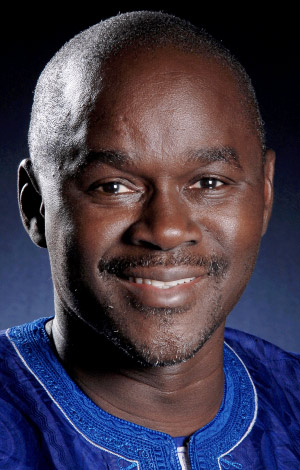 Last week, the much-anticipated Governmental Advisory Committee (GAC) Early Warnings on new gTLD applications were finally issued. And the GAC didn't disappoint. A total of 242 warnings were issued on 163 strings (including 31 strings applied for by Radix). The GAC warnings yet again show that Africa is perfectly capable of being at the top of league tables -- for the wrong reasons. more
This is the report on Day One of the World Conference on International Telecommunications (WCIT), directly from Dubai. The conference started off in a positive way that did not reflect the sometimes bitter debate that has taken place in the press in recent months - although, of course, there was a great deal of discussion about the comments made in the press over that period. All comments were welcomed, as an indication of the importance of the internet and telecommunications; nevertheless the Secretary-General, Hamadoun Touré, was clearly critical of some of the deliberate misinformation that has been spread before the conference. more
A World-Renowned Source for Internet Developments. Serving Since 2002.