Welcome:
Login
|
Sign Up
|
About CircleID
Follow:
|
|
|

Brand Protection |
Sponsored by |

|


 It is not surprising that the phase 1 review of domain name rights protection mechanisms is delayed, but it is a bit of a surprise that in responding to a question posed in 2020, business executives and their lawyers replied with answers first offered and rejected five years earlier. In that time before COVID-19, the launch of the Vox Populi Registry and its dotSucks domain names drew quite a lot of attention. more
 With the growing tension between the cross-border Internet and the patchwork of national jurisdictions, it becomes crucial to keep track of key global trends that drive the debate on appropriate frameworks. One year ago, the Internet & Jurisdiction Project initiated a global multi-stakeholder dialogue process on these issues. To provide a factual basis for such discussions, it established an Observatory, supported by a network of selected international experts, to detect and categorize relevant cases via an innovative crowd-based filtering process in order to identify high-level patterns. more
 We had a very interesting presentation and discussion regarding the topic of interplanetary internet with my international colleagues, of which Vint Cerf – one of the “fathers of the internet” – is also a member. As a partner of the Interplanetary Networking Special Interest Group (IPNSIG), he took us on a journey that he has been involved with over the last 20 years regarding communication networks in space. A true mind-broadening experience. more
The following is based on my experience and interpretation of the UDRP and the relevant laws of the United Kingdom and European Union. This is not legal advice but just my own experience and interpretation. How does a UK citizen create a non-commercial trademark.tld parody criticism website and avoid harassment from the trademark holder? Here are the steps... more
 There's more than a hint of theatrics in the draft PROTECT IP bill that has emerged as son-of-COICA, starting with the ungainly acronym of a name. Given its roots in the entertainment industry, that low drama comes as no surprise. Each section name is worse than the last: "Eliminating the Financial Incentive to Steal Intellectual Property Online" (Sec. 4) gives way to "Voluntary action for Taking Action Against Websites Stealing American Intellectual Property". more
 As I've written before, domain name disputes involving multiple trademarks sometimes raise interesting issues, including whether a panel can order a domain name transferred to one entity without consent of the other. While panels typically have found ways to resolve this issue, one particularly troubling fact pattern arises when a panel denies a complaint simply because a disputed domain name contains trademarks owned by two different entities. more
 As the third quarter of 2020 winds down, the domain industry continues to show development and progression amid uncertain global economic conditions. From improvements in products and additional TLD launches to growth in .brand email usage and upcoming virtual meetings, the Q3 2020: New gTLD Quarterly Report from our MarkMonitor team has a little something for everyone. more
 Online fakes can be a lucrative business and difficult to crack down on, due to the ease and low-cost of setting up multiple virtual storefronts and the ability to obfuscate an operation's identity. A federal lawsuit filed on March 1, 2010 by Polo Ralph Lauren and VF Corp. illustrates these points and highlights many of the intricacies of an online counterfeit ring. more
 I firmly believe that we need to protect any form of intellectual properties (IP) built by one through hard and honest work. At the same time, I also believe that several of the current methods of protecting IP, such the as the copyright laws, patent systems and legislations, are not evolving fast enough in order to protect IP and avoid hindering the path of creativity and innovation. more
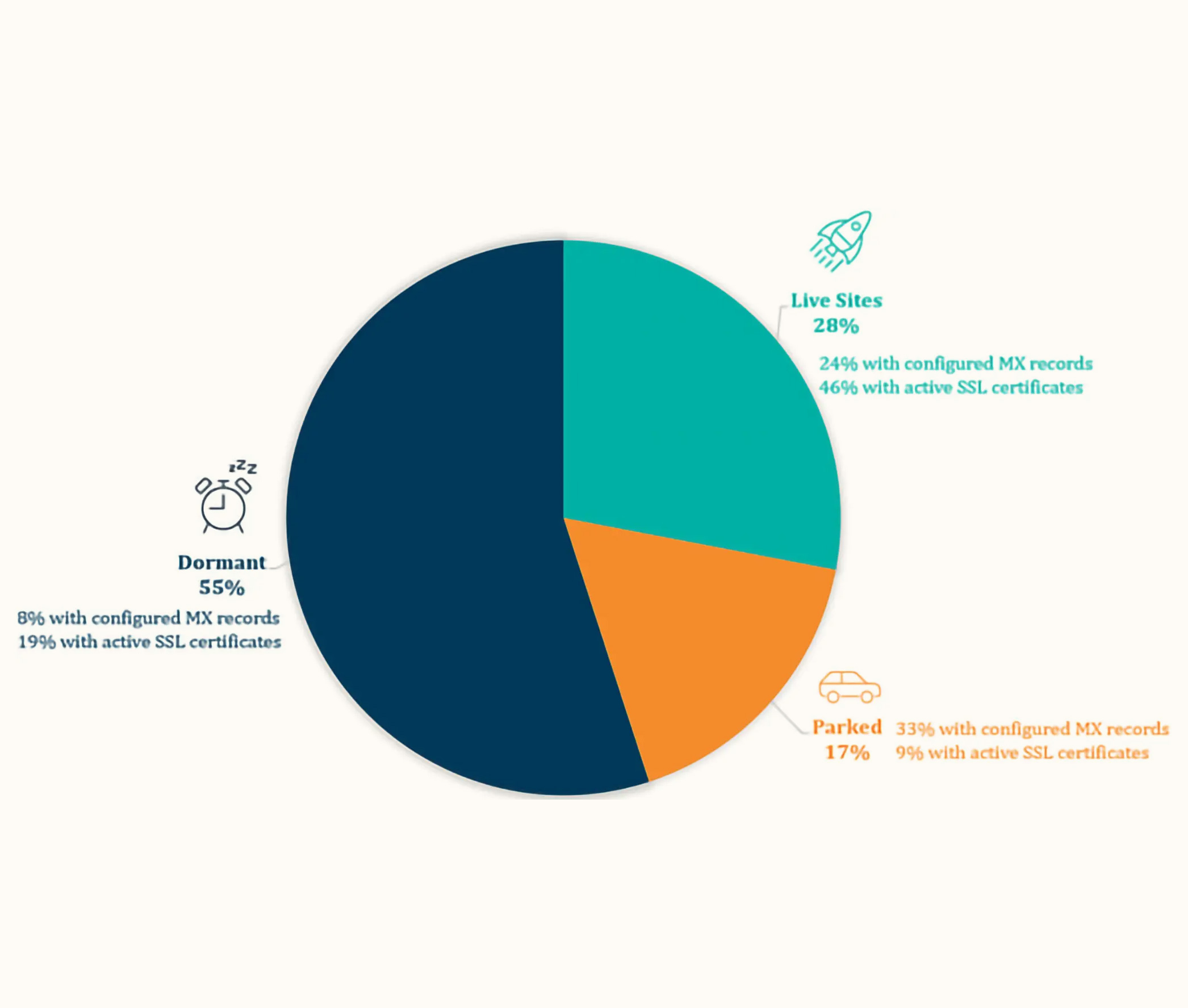
 As with any high-stakes event, elections have become a prime target for cybercriminals seeking to exploit public trust through impersonation, misinformation, and scams. CSC's comprehensive research about the 2024 U.S. Election reveals the alarming role of dormant domains, which have the potential to be exploited for launching cyber attacks against political campaigns, organizations, and constituents. more
 Internet use has become ever more pervasive. With around five billion global users, it generates an economy of around 15% of global gross domestic product (GDP); that's around $15 trillion and is a figure that's growing 2.5 times faster than GDP itself. This makes the internet an attractive channel for infringers. Phishing and other fraud tactics, selling counterfeit goods online, and digital piracy are primary areas of concern. more
 On March 9th, 2016, during its final open meeting at ICANN 55 in Marrakech, Morocco, the Generic Names Supporting Organization (GNSO) Council approved a motion that I proposed to adopt the Charter of the Policy Development Process (PDP) to Review all Rights Protections Mechanisms (RPMs) in all Generic Top-Level Domains. I serve on the Council as one of the two representatives of ICANN's Business Constituency, and my fellow Councilors have designated me to serve as the GNSO's Liaison to the Working Group (WG), and as its Interim Chair. more
In the fourth in this series of articles exploring how the application of appropriate tools, algorithms and analysis techniques can identify the existence of attractive, unregistered brandable domain names, I consider the prevalence of a few additional styles of name. more
 With the COVID-19 pandemic persisting, online shopping will be the preferred method for the 2020 holiday shopping season. While staying home to shop is the safest option right now, it means consumers are more vulnerable to online fraud, counterfeits, and cyber crime. Increased online activity provides opportunities for unscrupulous infringers to abuse trusted brand names to drive visitors to their own fraudulent content. more
 Just as we started the new year, the U.S. Department of Homeland Security's Cybersecurity and Infrastructure Security Agency's (CISA) issued an alert. On January 6, 2020 , they warned of domain name system (DNS) hijacking and other cyber threats that may be used by nation-state threat actors to disrupt business activity and take control of vital internet assets. A familiar refrain heard in 2019 now repeating in 2020. more
A World-Renowned Source for Internet Developments. Serving Since 2002.