
Welcome:
Login
|
Sign Up
|
About CircleID
Follow:
|
|
|

 When reading some of the nonsense constituting this initiative occurring in Washington, one wonders what planet the proponents live on. It is like peering through some perverse wormhole back to a 1990s Washington view of the world that saw “the internet” as some salvation for all the problems of humankind. For a world now focused on rolling out 5G virtualization infrastructure and content-based services and meshed devices, the challenges of cybersecurity and network-based harm to society, the initiative makes the U.S. Administration seem utterly out of touch with reality. Simply goofy. more
 Over two years ago, an MIT research group ran a simulation of the low-Earth orbit broadband constellations of OneWeb, SpaceX, and Telesat, and last January they repeated the simulation updating with revised constellation characteristics and adding Amazon's Project Kuiper. They ran the new simulation twice, once using the planned initial deployments of each constellation and a second time using the configuration shown. more
 One of the basic tools in network design is the so-called "stacked" protocol model. This model was developed in the late 1970s as part of a broader effort to develop general standards and methods of networking. In 1983, the efforts of the CCITT and ISO were merged to form The Basic Reference Model for Open Systems Interconnection, usually referred to as the Open Systems Interconnection Reference Model or the "OSI model." more
 It's now been a decade since the world officially ran out of blocks of IP addresses. In early 2011 the Internet Assigned Numbers Authority (IANA) announced that it had allocated the last block of IPv4 addresses and warned ISPs to start using the new IPv6 addresses. But here we are a decade later and not one of my clients has converted to IPv6. more
 It has become very clear once again: the domain industry won't stop. The scenario we know today is constantly changing, and our industry adapts to the changes taking place in society and the economy. Thanks to its versatility, the domain industry continues to amaze with some big changes year after year. This sector has its own peculiarities, rules, and opportunities for all stakeholders involved. more
As I've pointed out in recent articles, the promises and obligations of the Memorandum of Understanding (MOU) are merged by direct reference into the InterNIC licensing agreement between the U.S. Department of Commerce and ICANN. This licensing agreement has been extended twice by mutual consent, most recently until January 2025. Therefore, the MOU's promises and obligations remain in effect through the InterNIC licensing agreement despite the fact that the MOU itself terminated in 2009. more
Reading the White House $100 billion broadband plan was a bit eerie because it felt like I could have written it. The plan espouses the same policies that I've been recommending. This plan is 180 degrees different than the Congress plan that would fund broadband using a giant federal, and a series of state reverse auctions. The plan starts by citing the 1936 Rural Electrification Act, which brought electricity to nearly every home and farm in America. more
 We are on the cusp of a grave risk where unscrupulous groups with various agendas are using digital technologies to wage cultural war to stamp out dissent and gain control and power. The two most prominent recent examples are Donald Trump's "Make America Great Again" (MAGA) and China's Social Credit System (SCS). The following piece was prompted by work on the UDHR and Internet Governance series, for CircleID to deal with UDHR Article 27 and the role of culture, arts, and science in the life of the community. more
 Back in 2014, to foster innovation and to better the choice in domain names, ICANN introduced new generic top-level domains through its New gTLD Program. It was a monumental move that enabled businesses, individuals, and communities across the globe to mark their presence on the Internet. Allowing users to be present digitally in their chosen language (non-ASCII characters and scripts) gave opportunities to local businesses, civil societies, and governments to better serve their communities. more
On July 2, 2002, Damien Cave published an interview on Salon.com with John Gilmore, "original 'cypherpunk' and all-around Internet supergeek," titled "It's time for ICANN to go." In this wide-ranging interview, Gilmore -- an early employee of Sun Microsystems who also co-founded Cygnus Software (acquired by Red Hat) and was an early supporter of the Electronic Frontier Foundation and the Internet Society (ISOC) -- offered blunt insight and eye-opening historical detail... more
Internet Governance, like all governance, needs guiding principles from which policy making, and acceptable behavior, are derived. Identifying the fundamental principles to guide Internet ecosystem policy making around digital citizenship, and around the integrity of digital practices and behavior, can and should start with the Universal Declaration of Human Rights, (UDHR). more
 The domain name system is not the place to police speech. ICANN is legally bound not to act as the Internet's speech police, but its legal commitments are riddled with exceptions, and aspiring censors have already used those exceptions in harmful ways. This was one factor that made the failed takeover of the .ORG registry such a dangerous situation. But now, ICANN has an opportunity to curb this abuse and recommit to its narrow mission of keeping the DNS running... more
 Back in September of 2020, ICANN CEO Göran Marby wrote a blog post discussing the implementation of "a common strategy for Internet governance (IG) and technical Internet governance (TIG)", raising the question of whether the ICANN org. intended to pursue this distinction moving forward, as debated in a previous article. This was proven to be the case during the 2020 IGF's Open Forum #44: "ICANN Open Forum - Technical Internet Governance", organized by ICANN itself... more
 The term "attack surface" is often heard in cybersecurity conversations. It refers to the sum of all possible attack vectors or the vulnerabilities that threat actors can exploit to penetrate a target network or damage an organization somehow. An unused and forgotten subdomain, for instance, can become an attack vector when taken over. Certain categories of companies have very large attack surfaces. Such is the case of streaming media businesses like Netflix and HBO Max. more
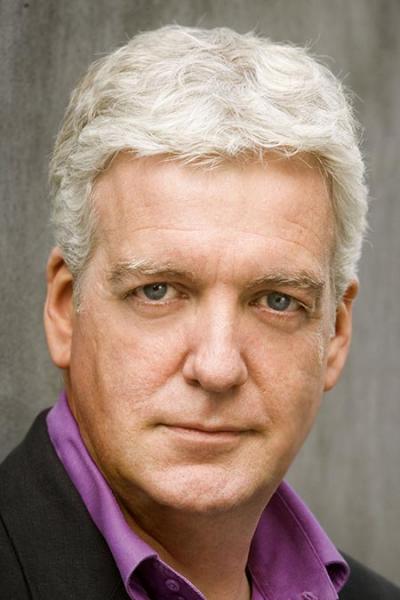 After two decades of involvement with ICANN, I am stepping down from the Board of Directors, where I served for nine years. I have spent considerable time of late reflecting on the past 20 years, and I have isolated some memories that help frame my time with ICANN. ... November 2000, ICANN07 in Marina del Rey, California - With only a scant idea of what ICANN is all about, I am warmly welcomed by the flag-wearing country code top-level domain (ccTLD) community, who come to ICANN to ensure that nothing happens to affect the independence of ccTLDs... more
A World-Renowned Source for Internet Developments. Serving Since 2002.