
Welcome:
Login
|
Sign Up
|
About CircleID
Follow:
|
|
|

 The majority of network breaches begin and end with the installation of malware upon a vulnerable device. For the rest, once that initial malware beachhead has been achieved, the story is only just beginning. The breach disclosures that make the news are often confusing as they're frequently compiled from third-hand reports, opinions and technical assumptions. More often than not, they include a discussion about the malware - how advanced it was, etc. - and whether any 0-day vulnerabilities were likely used by the mysterious attacker. more
 The fixed broadband network is the infrastructure needed to meet the needs, both economic and societal, of developed markets. While some people in some developed markets have abandoned their fixed telephone connection in favour of all-mobile solutions, the majority (90% plus) still have both a fixed and a mobile connection... And so wireless broadband and FttH will develop, in a complementary and harmonious way. There are several reasons for this. more
Australia, New Zealand and the USA have taken international leadership in relation to their approaches to the infrastructure investment their countries are committed to in relation to the multi-billion dollar investment in national broadband and smart grid infrastructure. This is based on open networks, which will allow multiple access to infrastructure that can be used for e-health, smart grids, tele-education, as well as, of course, to telecoms, Internet and entertainment services. more
Fibre-based infrastructure requires vision and recognition of the fact that many of today's social, economic and sustainability problems can only be solved with the assistance of information and communications technology (ICT). In many situations the capacity, robustness, security and quality necessary for this calls for fibre optic infrastructures. This need will increase dramatically over the next 5 to 10 years as industries and whole sectors (healthcare, energy, media, retail) carry out the process of transforming themselves in order to much better address the challenges ahead. more
 The Dutch Internet registry SIDN has launched a unique program in partnership with CleanBits to identify what proportion of .nl domain names were hosted on a green or CO2-neutral basis. The results show a strong trend towards the 'greening' of the .nl internet zone. Nearly 30 per cent of .nl names were found to have green hosts. more
 ASOP (Alliance for Safe Online Pharmacies) is often seen as taking a rather confrontational stance towards domain name registrars, registries and hosting providers. However both ASOP and others, including LegitScript, often cite the assistance they've received from internet industry players in their work. This year ASOP has decided to take this a step further... more
 Verizon recently posted a webcast with investors where Ronan Dunne, EVP and CEO of the Verizon Consumer Group said that he believed that 5G hotspots using millimeter wave spectrum would eventually displace WiFi in homes. He cites major benefits of 5G over WiFi. He believes that a 5G network will be more reliable and more secure. He thinks that people will value the safety that comes from having traffic inside their home being encrypted... more
We have reported in the past on the rapid decline of the copper telecoms network in the USA. A decade ago BuddeComm predicted that it would be impossible to move two customer access networks in parallel towards the new fibre future, the one operated by the telcos and the other operated by the cable companies. At that stage we indicated that a possible outcome could be that the telcos would upgrade their networks to FttH and that the cable companies would become the key tenants on that network. more
 Like the Coronavirus, 5G Dementia seems to be spreading around Washington. The latest manifestation has appeared at the FCC -- which is trying its best to make U.S. 5G infrastructure as insecure and primitive as possible. But first, an explanation of how 5G Dementia begins at the top and spreads in the U.S. capitol. 5G Dementia begins with "The Genius" who lounges around White House quarters and emits spontaneous tweets on whatever motivates him at the moment. more
 When it comes to breach disclosures, today's chief information security officers (CISOs) are struggling with an especially turbulent regulatory environment. Security teams are understaffed, and systems are more extensive, making them harder to monitor and defend, while threats are becoming more sophisticated, more frequent, and more varied. It's at precisely this difficult juncture that regulations and enforcement are rapidly changing, leaving CISOs feeling like they are running up the down escalator. more
The telecoms industry represents one of the most dynamic sectors in the world. Only 25 years ago 90% of all activities took place via telephone calls over fixed telephone lines. Now, within the broader ICT industry, telecoms is underpinning all of the new developments in relation to the digital, sharing and interconnected economies. It facilitates new social and economic developments in all sectors such as e-health, e-education, e-business, smart grids, smart cities, e-government, and so on. more
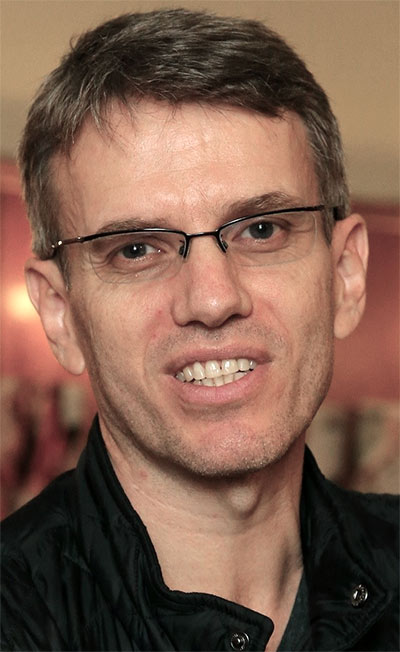 This year in July gen. Keith Alexander, director of the National Security Agency and head of the US Cyber Command participated at DefCon, the hackers conference in Las Vegas. In his address, gen. Alexander said, among other things, "This is the world's best cybersecurity community. In this room right here is the talent our nation needs to secure cyberspace."... As someone, who is regularly meeting the top Russian cyber folks, I already know (unofficially, of course) how the words of gen. Alexander were met in Moscow. more
 This is a story about my mother and Obama. My mother: "Have you heard about Obama? Really impressive guy." Me: "What about him?" My mother: "x, y and z." Me: "Where did you hear about this?" My mother: "I read email too, you are not the only one who is into technology." Luckily, my mother bases her opinion on more than just spam messages... more
Equifax has announced a comprehensive resolution for its 2017 cybersecurity incident that includes a fund of up to $425 consumer fund. more
Bruce Schneier in an op-ed piece published in the Guardian on Thursday writes: "Government and industry have betrayed the internet, and us. By subverting the internet at every level to make it a vast, multi-layered and robust surveillance platform, the NSA has undermined a fundamental social contract..." more
A World-Renowned Source for Internet Developments. Serving Since 2002.