
Welcome:
Login
|
Sign Up
|
About CircleID
Follow:
|
|
|

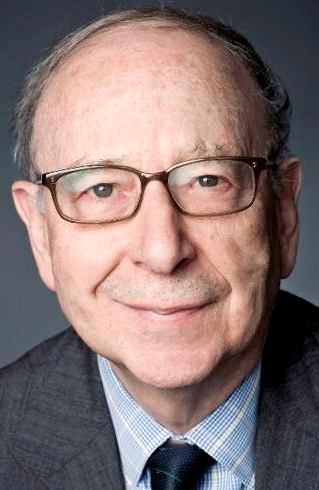 There is a difference, of course, between asserting a claim that cannot possibly succeed in an administrative proceeding under the Uniform Domain Name Dispute Resolution Policy (UDRP) and being unprepared to prove a claim that may have merit with the right evidence. Still, there is also an overlapping similarity in that complainants are either shockingly unfamiliar with UDRP procedures and jurisprudence... more
 Do you know of a person or organization who has made a great contribution to the Internet community? If so, have you considered nominating that person or organization for the 2013 Jonathan B. Postel Service Award? The nomination deadline of May 31 is fast approaching! more
 Having followed IP communications as an analyst since 2001, I've seen a few cycles come and go, and Smart Grid reminds me a lot of VoIP. Telcos and utilities both operate large, complex and costly networks, and prior to 1984, both were heavily regulated. Following the deregulation of telecom came a wave of unprecedented innovation and disruption built largely around IP technologies. We all know what that's done for telcos -- and communications in general. more
 Like several other engineers, I'm disturbed by the white spaces debate because it focuses on what I regard as the wrong question. The White Space Coalition argues that showing that a system can be constructed that prevents interference between White Space Devices and television broadcast signals compels the Commission to offer up the White Spaces for unlicensed use. This is far from obvious. more
 A woman on the radio talks about revolution, though it's already passed. The window is now closed. A snapshot can be taken. A baseline can be set. How have the public markets valued the new gTLD program? And more importantly, how will public markets value it going forward? Until a few months ago, the new gTLD program was arcane policy discussion among a very narrow technical population of the Internet community. more
 In an interesting move the FCC's Technical Advisory Council has outlined the need for setting a 'sunset' date for the closure of the circuit switched network. This is a first step that eventually could lead to the replacement of the PSTN in the USA, rather than letting the network slowly fade into oblivion the FCC proposes the bring the issue in the open so that it can be properly evaluated and discussed. more
 ICANN's Nominating Committee (NomCom) is both a strange animal and a precious resource. Having a committee charged with first recruiting, then selecting suitable candidates to hold key positions within ICANN is something that is often little, or even mis, understood. Within the ICANN community itself. By the very nature of its recruitment role, the NomCom has to remain secretive. About who the candidates are, at any rate. But that doesn't mean the rest of the NomCom's processes must remain so. more
 The curtain rises on January 12th 2012 but key players are still singing different tunes. Let's peek into their performance as they start taking center stage. FTC, the Federal Trade Commission, has sent a letter to ICANN on December 16th 2011. Re: Consumer Protection Concerns Regarding New gTLDs. They write; "We write now to highlight again the potential for significant consumer harm resulting from the unprecedented increase in new gTLDs." The following paragraph clearly highlights the lack of information about the ICANN gTLD platform. more
Vinton Cerf, widely known as the "Father of the Internet," has been awarded the IEEE Medal of Honor in 2023 for his contributions to the development of the Internet architecture and for his leadership in its growth as a critical infrastructure for society. more
The blog on the need for a new internet received quite a bit of (international) attention, and with the assistance of colleague John Day, we would like to elaborate a bit further on this. I mentioned RINA as a good example that can be used to have a look at how such a new internet should look like. Interestingly the basics are not all that new. Already in the 1970s, but certainly two decades later, there were plenty of telecoms and computer engineers who started to understand that the future telecommunications work would have more to do with computing than with telecoms. more
 Every year, Verisign iDefense Security Intelligence Services produces its Cyberthreats and Trends Report, which provides an overview of the key cybersecurity trends of the previous year and insight into how Verisign believes those trends will evolve. This report is designed to assist in informing cybersecurity and business operations teams of the critical cyberthreats and trends impacting their enterprises, helping them to anticipate key developments and more effectively triage attacks and allocate their limited resources. more
 A recent televised roundtable enumerated advances in the computerization of Cuban society, including: Telephone density is 58% with 6.5 million accounts, 5.2 million of which are cell phones. 1.5 million people access Nauta mail with cell phones. Over 1.7 million have permanent accounts. There are 1,713 public-access spots: 709 WiFi locations, over 700 at ETECSA premises and the same number in third-party locations (but 709+1400 is 2109, not 1,713). more
 Within every organization a chosen few are tasked with introducing IPv6 into their networks, outward facing services or applications. But who are they? We know them as Network Engineers, System Administrators and Software Developers but are they one trick ponies spending all their time in layer 3? more
 Occasionally, people ask my perspective on the Internet, since I often object to confusing it with things like the telephone or Cable TV. Recently I composed a response that captures my perspective, as one of the participants in its genesis, and as an advocate for sustaining its fundamental initial design principles. I hope these words clarify what I believe many of those who continue to create the Internet continue to do, even though most of them are not aware of it. I also hope many will see their interest in keeping the core principles of the Internet alive. more
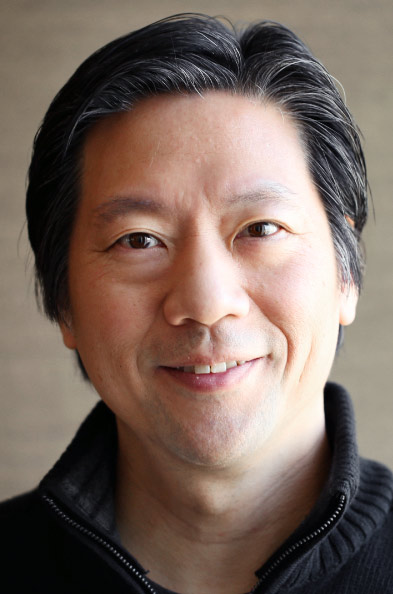 Eight years ago, we made the decision to apply for ".gay" with encouragement from Clyde, my gay brother-in-law, among other passionate members of my family. Although we lost him recently, his memory has only increased our determination to see it through. I know Clyde would be proud of our vision for .gay, and all of the planning and community engagement that has gone into making sure we get this right. more
A World-Renowned Source for Internet Developments. Serving Since 2002.