Welcome:
Login
|
Sign Up
|
About CircleID
Follow:
|
|
|

New TLDs |
Sponsored by |

|

During ICANN's public forum in Cape Town, an interesting conflict accidentally came up, even if somewhat concealed by the usual exchange of well-known views on whether ICANN should finally allow the world to get more new Top Level Domains (TLDs) on a regular basis. I know I am oversimplifying thoughts and positions, but basically the discussion was between a couple of 30-year-old engineers from the floor asking to be given the opportunity to try new things, and a couple of 60-year-old engineers from the podium putting up any kind of unproven excuses... more
 .tk was once designated as the riskiest ccTLD. .ru is often said to be, after .com, the most used in the content of spam messages. But is there a ccTLD that is a favorite destination for copyright infringement? The question is worth asking in view of the growing trend for .com domain names seizures related to copyright infringement. more
 For years, corporate domain name administrators have scoffed at every new second-level and third-level country code Top-Level Domain (ccTLD) liberalization, and rightly so. Until recently, most had continued the practice of registering significant numbers of variations, misspellings and typo-squats. While I have never encouraged the practice of registering every variation in every geography, as this becomes prohibitively expensive over time... With what seems to be the imminent launch of hundreds of new TLDs as a result of ICANN's new initiative, companies appear to be saying enough is enough, and meaning it. more
 New domain names are now on the market and you start to realize that you may have missed the train by not submitting your own new gTLD application. So why not get your part of the cake and consider applying for your own new Top-Level Domain in the second Round of the ICANN new gTLD program? Why not become a "Registry" and sell domain names... to the world? more
 My general impression of the Task Force 3 (TF3) output was that it was a prettified way of accusing the community of internet users as being cheats and liars and demanding that the costs of trademark enforcement be offloaded from the trademark owners onto the backs of domain name registrants and the DNS registration industry. (It is amazing how often the trademark industry forgets that the purpose of trademarks is to protect the consumer's right and ability to identify goods and services and to distinguish such goods and services from one another.. The trademark industry forgets that trademarks are intended to benefit the customer, not the seller, and that any benefit to the seller is merely incidental.) more
After roughly 19 days of its introduction, VeriSign's Site Finder service was finally shutdown on October 4, 2003 following a "Formal Deadline" issued by ICANN (previously reported here). With the plug pulled, the Internet appears to be returning to its regular status ending a historic event that can be best described as a 'Hurricane' -- a Cyber-Hurricane. What follows is a collection of commentaries and questions raised around the Net in response to this event during and after the final hours of VeriSign's deadline... more
 Posted here on behalf of DotConnectAfrica Trust as rejoinder and reply to Andrew Mark's recent article... In his article, Mr. Mark tried to re-frame the ongoing discussions and commentary about DCA Trust's recent IRP victory against ICANN as one about "requisite support for geographic string" to assist him reach the biased conclusion that ZACR's bid has the required support to run .Africa whilst DCA Trust's bid does not. more
With so many new gTLDs moving into their respective general availability periods, and incidents of cybersquatting beginning to appear, many companies are now looking towards the URS (Uniform Rapid Suspension) as a possible solution for quickly remediating abuse. As a reminder, domains that are the subject of a successful URS ruling are suspended for the remainder of the registration term, or can be renewed for an additional year at the current registrar. more
 There is much talk currently about the WSIS meeting taking place in Geneva this week which means some needed attention is being paid to Internet governance. While some may view the term "Internet governance" as an oxymoron and my natural reaction is something along the lines of "I hope that they continue to view regulation as too complicated so that we Internet-folks can just keep doing what we are doing" I confess to knowing deep down that we would all be better off with a simple, effective policy framework than with the current anarchic state. more
 Businesses in the financial services sector are among the most frequent targets of cybersquatters. In this free webinar, I will be joining Craig Schwartz of fTLD Registry Services to provide important information about how domain name fraud is affecting the financial services industries, including banking and insurance, and what businesses and consumers can do to protect themselves online. more
The Internet is on the verge of undergoing one of its most significant changes in its 40-year history. The Internet Corporation for Assigned Names and Numbers (ICANN) is finalizing plans to introduce non-Latin characters such as Arabic, Korean, Greek, Hindi, Japanese and Cyrillic. Non-Latin domain names -- commonly referred to as Internationalized Domain Names or IDNs -- could be up and running as early as middle of next year according to ICANN. Peter Dengate Thrush, chairman of the ICANN board, told reporters: "This is the biggest change technically to the Internet since it was invented 40 years ago... [a] fantastically complicated technical feature." more
Byte Level Research has published a map that illustrates not only all 245 country codes but the size of each country and territory. The map is quite up to date and comprehensive including country codes for such places as Svalbard (.sj), Southern Georgia (.gs), and Bouvet Island (.bv), which is uninhabited. "Today, companies must register as many as a hundred country codes to be competitive globally -- and protect their intellectual property. This map helps professionals keep track of all these country codes -- and see where the Internet is headed. For example, China is on pace to have the most popular country code on the planet by 2012," said Yunker," said John Yunker, president of Byte Level Research and developer of the map. more
 The ICANN Meetings are in full flow here in sunny Luxembourg. The venue is immense and located a cab, bus, or shuttle ride from the various hotels. So far, the big topics are the .Net finalization (focusing on the readjustment of the pricing verbiage), the USDOC root announcement, the shell registrar accreditations used in the batch pool for the purposes of getting dropped names, and the practice of registrars exploiting the 5 day add grace period to register in excess of 50000 names to watch how much web traffic they have, and returning the ones that do not at no cost... more
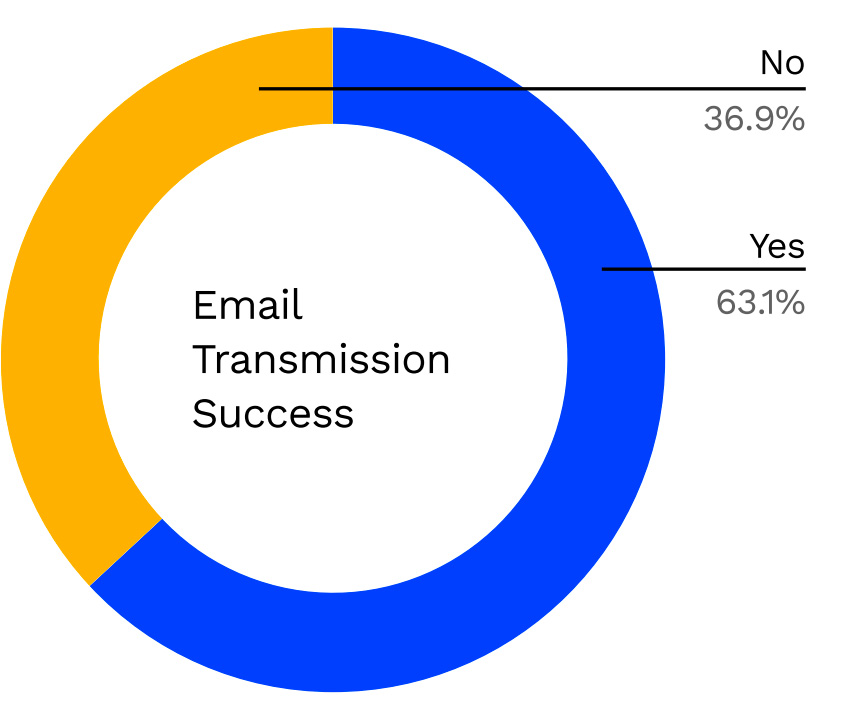
 Afnic, the French Network Information Centre and manager of the .fr TLD, has just published its Afnic's Global Domain Name Market in 2020 Report on the global domain market in 2020. The study is based on ICANN statistics, information from registries, specialized websites, and its own research. This is an overview of global trends and an analysis of the mechanisms at work during the health crisis. more
 The financial industry is all about pinstripe suits, excessive Excel sheets and boring data. Or is it? Financial markets are more colorful than their reputation: take a look at Bloomberg's or Reuters' sites, and you'll see that pork belly is as much an object of investment speculation as coffee, electricity, bananas, hides, or fishmeal. Recently, the universe of data available to financial analysts and investment bankers grew further, with the addition of the Internet Domain Name Index (IDNX) to leading financial data distributors Bloomberg (ticker symbol: IDNX <Index>) and Reuters (ticker symbol: .IDNX). more
A World-Renowned Source for Internet Developments. Serving Since 2002.