
Welcome:
Login
|
Sign Up
|
About CircleID
Follow:
|
|
|

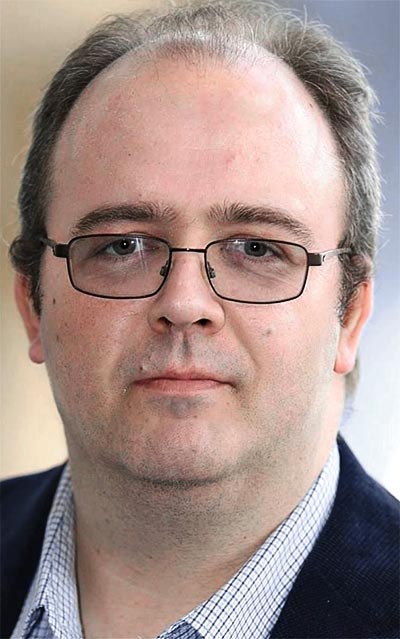 The Irish domain registry (IEDR) is to come under the control of the Commission for Communications Regulation ComReg. At present the registry is managed by a "not-for-profit" company, however it has come under increasing criticism with regard to both its management and policies. Although there are approximately 40,000 IE domains currently registered, it is still one of the strictest and most expensive ccTLDs in the world. more
 Having been involved in the whole TLD issue since its inception, back in the ancient history of the mid-1990's, one would think that nothing would surprise me anymore. As it turns out, however, watching the comments on ICANN's public comment list with respect to the new sTLD proposals, I find that I'm taken-back by some of the kinds of comments I'm seeing. more
This article proposes the reservation of a special use TLD to allow a more convenient addressing of devices by general physical location or context. ...As wireless networking and devices become more common there may be a need for a convenient way to address hosts by physical location or context, especially when the users themselves are using mobile or wearable devices. more
 Before starting I'd like to remind you that there are two distinct Whois systems -- the one for IP address delegations and one for DNS registrations. I believe that the former is a useful system in which there are clear utility values that outweigh the privacy costs, and in which the person whose privacy is exposed has made a knowing choice. I do not believe that these arguments apply to the latter, the DNS, form of Whois. more
 Naming for today's global e-commerce is very fragmented and every corporation is trying to cope with little or no guidance at all. When a name fails to deliver a clear and distinct message no amount of bizarre branding ideas will ever save it. Now to check on the health of a name here are some key reasons and if not corrected, a name will endlessly shout and eventually die. more
Andrew McLaughlin, in his excellent dismemberment of the BBC's report on the "IPv4 address crisis", is observing not a random piece of sloppy research, but the success of settled policy. That policy, pursued by public relations companies serving information technology and telecommunications (IT&T) companies, is simple to sum up: "identify, support and encourage technically ignorant journalism". It centres around the most valuable word in the lexicon of the public relations firm: "placement"...A key characteristic of the "placement" story is its conformance to a template...With one search, I found a CNET story published in July with quite startling parallels to the BBC story... more
Today a letter was submitted to the President of ICANN, Paul Twomey, at the ICANN Carthage meeting, "asking him to ensure that strong privacy safeguards, based on internationally accepted standards, are established for the WHOIS database." Latest reports indicated that the draft letter had been signed by about 50 nonprofit groups and represented 21 countries on six continents. "Signers of the letter included the American Library Association, the U.S. Association for Computing Machinery, the Australian Council for Civil Liberties, Electronic Frontier Finland, Privacy Ukraine, and the United Kingdom's Foundation for Information Policy Research." more
 Well, I have remained silent on this issue for now -- mainly because of conflicts. I was one of a few members of the technical advisory group asked by VeriSign to look at Site Finder and ask the questions -- what does it add, what does it break, and how can we fix anything it breaks? The scope of the group was unlimited by any VeriSign edict and the members were of impeccable individual credentials. This group has now completed its work so I feel able to comment. more
While the registration policies and accreditation of registrars are yet to be finalized for the newly announced .eu TLD, the following email may find its way to your inbox, if not yet already: "We are now accepting registrations for .eu domain names. You can check on our site to see if your ideal domain has been taken yet..." more
 In 2002, VeriSign, the registry for .COM and .NET domain names, proposed the idea of a centralized, registry-level "wait list" for currently registered domain names. The system would let anyone around the world get "next in line" for a name that is registered now but may become available later.
This new registry service, titled Wait List System (or WLS), would augment what is now an ad-hoc group of registrar-level services that are useful, but aren't always fully dependable or even available to the general public. more
 New data on DNS abuse reveals most malicious domains remain active beyond 24 hours, while a handful of registrars host the bulk of infrastructure, leaving India's population of first-generation internet users uniquely exposed to fraud. more
Fake recruitment websites exploiting India's young job seekers are proliferating, exposing millions to identity theft, financial fraud and malware while regulators, registrars and digital literacy programs struggle to keep pace with a growing labor market. more
 Third-party domains exploiting brand names are proliferating, with 88% of homoglyphs externally owned. Many remain dormant yet email-enabled, creating scalable phishing risks as attackers increasingly target trust rather than infrastructure. more
 Satellite internet is from backup to core infrastructure, as LEO constellations, non-terrestrial networks and direct-to-device services reshape connectivity, forcing governments and operators to rethink resilience, sovereignty and the architecture of the internet. more
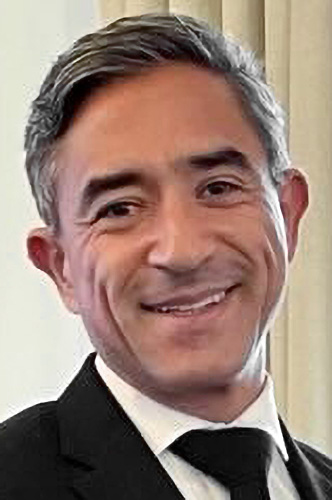 ICANN's new DNS abuse rules mark progress, yet short-term domain leasing enables fleeting, hard-to-detect attacks. A proposed 30-day minimum lease could curb cybercrime by undermining the economics of weaponised parked domains. more
A World-Renowned Source for Internet Developments. Serving Since 2002.