
Welcome:
Login
|
Sign Up
|
About CircleID
Follow:
|
|
|

One-Quarter of US Households Live Without Cable, Satellite TV Reception, according to new GfK Study: "New findings from GfK show that US TV households are embracing alternatives to cable and satellite reception. Levels of broadcast-only reception and Internet-only video subscriptions have both risen over the past year, with fully one-quarter (25%) of all US TV households now going without cable and satellite reception. more
 Beijing News is reporting (in Chinese) that one of their reporters noticed on Monday that the Google.cn landing page has added an ICP license number dated 2010. The license number had not been there before. ... The report did not clarify whether the addition of the ICP license means that the Chinese authorities have renewed Google.cn's ICP license... more
Damien Allen of VTalk Radio recently interviewed Professor Eric Goldman of the Santa Clara University School of Law on the topic of "Domaining". The interview covers the nature of domaining as a business and how it differs from cybersquatting. From the interview: "Often times the domainers are not particularly interested in profitable resale and, in fact, in my experience many times when domainers get complaints about domains, they'll just hand the domain name back, no questions asked and no money charged. They're not looking to make money from the resale of the domain names..." more
 SpaceX and OneWeb get a lot of publicity and have ambitious plans, but Telesat is the first low-Earth orbit (LEO) satellite Internet service provider to begin testing with potential resellers. Last January, Telesat launched a demonstration satellite and it is now ready for testing. Maritime connectivity provider OmniAccess and Australian ISP Optus had committed to testing the system previously and this week they were joined by in-flight entertainment company Global Eagle Entertainment. more
 ICANN's chairman says meetings offer special "circumstantial opportunity"; recent estimates peg average annual expense for attending at $30,000 per person. Oops - he's done it again. The latest blog update from ICANN's current board chair needs - no, it demands - a spotlight on what is revealed in plain and unashamed language. Indeed, this communique - along with another recent blog post that I've previously commented on - captures in exquisite relief what has gone terribly, horribly wrong at ICANN. more
Japan Post said Monday that it has launched a "digital address" system that links seven-digit combinations of numbers and letters to physical addresses. more
Malaysia is advancing legislation for an internet “kill switch” aimed at curbing online abuse and illegal activities. This initiative, spearheaded by the country’s Law and Institutional Reform Minister Azalina Othman Said, seeks to hold social media and messaging platforms accountable for content disseminated through their services. more
 History is a great teacher, we are told. So, on the cusp of an explosion in new top-level domains, what can we learn from the two previous expansions of the Internet's naming space? And what are the pitfalls to avoid? Let's just assume the fundamental and obvious lessons of realistic expectations, a solid business plan and prudent resource management, and instead focus on the little talked about but still critical lessons that will separate the winners and the losers in this race. But first - a caveat! more
 For now, it appears that the new, more technically focused and privacy-friendly definition of the purpose of Whois survived the Marrakech meeting. The U.S. Government and the copyright and law enforcement interests mounted a major onslaught against the Generic Names Supporting Organization (GNSO) action, using the Governmental Advisory Committee (GAC) as their pressure point. more
The bottom line is that success is not guaranteed, but neither is failure -- there is a non-zero probability of success. On May 26th, SpaceX applied for permission to launch 30,000 "second-generation" Starlink broadband Internet satellites. (Note that the software on Starlink satellites is updated about once a week). The application narrative states that the second-generation satellites will be configured... more
Experts fear European Union court case attempting to keep personal data private could backfire and prove damaging to Europe. more
Report describes a technique with which public wifi can be used to identify in-baggage dangerous objects in public spaces that don't typically have affordable screening options. more
 Social media platforms like Instagram and Facebook have become key places for businesses to communicate with customers and even sell directly to consumers. Yet when it comes to actually making a purchase, do consumers trust a social media site over a domain? This is a relevant question for virtually every business. Earlier this year, we designed a survey to answer this question... more
 Yesterday, taking a look at the "Legal Rights Objection" (3.1.2.2) I read : "An intergovernmental organization (IGO) is eligible to file a legal rights objection if it meets the criteria for registration of a .INT domain name". Taking a look at registered .INT domain names, I found Basel Convention on the Control of Transboundary Movements of Hazardous Wastes and their Disposal... more
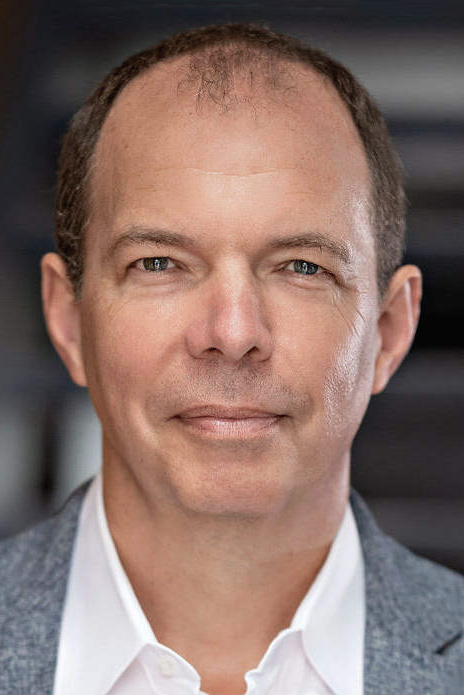 As the operator of the registry for the .CA top-level domain and the domain name system (DNS) infrastructure that supports it, I am uncomfortable, though not surprised, with the knowledge that a government is monitoring the activities of Internet users. And while recent reports about the National Security Agency's top-secret PRISM program actively monitoring Internet users in the United States and (by default) citizens of other countries - Canada included - are on the front page of newspapers around the world, Internet surveillance is not exactly new. more
A World-Renowned Source for Internet Developments. Serving Since 2002.