
Welcome:
Login
|
Sign Up
|
About CircleID
Follow:
|
|
|

 How will the business of existing top-level domains (TLDs) be impacted by the new gTLDs? Someone asked me this simple question and I was very surprised to see that my online searches couldn't easily find many detailed articles or research related to that point. more
 I have not submitted any comments on ICANN's new gTLD process, mostly because many other people have said more diplomatically what I think, but I thought I could blog about it. My main concern from the beginning was that the process should allow any serious candidate to run with a reasonable chance to be able to actually start running a gTLD. This includes small and medium sized communities and startup companies with little seed money. This also includes registry models that may not favour mass registrations. For all these, the current model is flawed. more
 With lessons learnt from the first Round, what does a new applicant need to know to prepare for the coming Round? Which example should he follow to increase his chances of success? I have had the chance to read about new domain names sales figure expectations, prior to the launching of Round one of the ICANN new gTLD program. Comments that I read and feed-backs that I have today are: "our expectations are the one we wrote on the paper and we are happy with them". more
 The American industry lobby (AT&T, Verizon, and Comcast) successfully pushed the regulator to get rid of net neutrality, but they are not stopping there. They can sense the opportunity under the Trump Administration to roll further back any regulations that stand in the way of maximising their profits. As all three largely enjoy geographic monopolies in their regions of operation, there is little competition driving innovation forward, so their aim is to milk the networks that they currently have in place for as long as possible. more
Eugene Kaspersky has warned global leaders that the world needs international agreements about cyber-weapons in the same way as it needs agreements about nuclear or biological weaponry. The chairman and chief executive officer of Kaspersky Lab, warned delegates at CeBIT Australia that cyber-warfare and terrorism was the number one internet threat facing the world today. He said the Stuxnet industrial virus had demonstrated that cyber-weapons were capable of damaging physical infrastructure, and were "a thousand times cheaper" to develop than conventional weaponry. more
The Federal Communications Commission announced today that the landmark 2015 U.S. net neutrality rules will end on June 11. The FCC said the new rules will take effect 30 days from Friday, and confirmed to be Jun 11 according to Reuters. more
 The Internet is currently full of news articles describing how the FCC will soon be putting to bed the last vestiges of its order a few years ago to eliminate net neutrality rules. The order that is widely being called the net neutrality ruling was a far-reaching change at the FCC that essentially wrote the FCC out of any role in regulating broadband. more
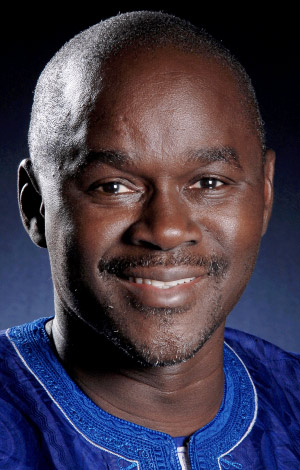 The announcement last month of a new approach by the Internet Corporation for Assigned Names and Numbers (ICANN) to Africa is welcome, and significant for a number of reasons. Africa must participate in ICANN's activities to help shape its policies, and benefit from the domain name industry (estimated at $2 billion in 2008), where it lags behind other regions, given the few African registrars, and that there are no generic top-level domain names (gTLDs) registries that are African. more
The US Department of Homeland Security (DHS) and the Federal Bureau of Investigation (FBI) this week issued a malware analysis report on Trojan malware variants linked to the North Korean government. more
 According to recent news reports, the administration wants new laws to require that all communications systems contain "back doors" in their cryptosystems, ways for law enforcement and intelligence agencies to be able to read messages even though they're encrypted. By chance, there have also been articles on the Stuxnet computer worm, a very sophisticated piece of malware that many people are attributing to an arm of some government. The latter story shows why cryptographic back doors, known generically as "key escrow", are a bad idea. more
ICANN has published its first new monthly report providing statistics and insight into security threats to generic top-level domains (gTLDs). more
Last week I took a Cab on my way back from the Montparnasse Station in Paris. My wife had ordered a Taxi and it was waiting for us at the Taxi station. We had ordered it because we arrived late in Paris that night. Surprisingly, the Cab was a black Limousine with no Taxi sign on its top and the driver, who wore a costume, was gentle and polite. If you ever took a Taxi in Paris, you probably know why I am adding this to this paragraph. more
 A remote exploit in the BIND 9 DNS software could allow hackers to trigger excessive memory use, significantly impacting the performance of DNS and other services running on the same server. A flaw was recently discovered in the regular expression implementation used by the libdns library, which is part of the BIND package. The flaw enables a remote user to cause the 'named' process to consume excessive amounts of memory, eventually crashing the process and tying up server resources to the point at which the server becomes unresponsive. more
 Not satisfied with seizing domain names, the Department of Homeland Security asked Mozilla to take down the MafiaaFire add-on for Firefox. Mozilla, through its legal counsel Harvey Anderson, refused. Mozilla deserves thanks and credit for a principled stand for its users' rights. more
ICANN and internet exchange firm Packet Clearing House (PCH) have joined forces with Infocomm Development Authority of Singapore (IDA) and the National University of Singapore (NUS) to launch the first of three facilities designed to boost the adoption of Domain Name System Security (DNSSEC) among country code Top-Level Domains (ccTLDs). The three new facilities, located in Singapore; Zurich, Switzerland (still under construction) and San Jose, California, provide cryptographic security using the recently deployed DNSSEC protocol. more
A World-Renowned Source for Internet Developments. Serving Since 2002.