
Welcome:
Login
|
Sign Up
|
About CircleID
Follow:
|
|
|

 The Uniform Domain Name Dispute Resolution Policy (UDRP) is known as an inexpensive alternative to litigation (and that's true), but some proceedings can end up costing a trademark owner more than it may have expected. There are generally two additional types of expenses that can arise during the course of a UDRP proceeding: (1) extra filing fees for certain aspects of a case filed at the Forum, and (2) an increased filing fee if the domain name registrant wants a three-member panel to decide the case. more
 "Net neutrality" is implicitly framed as a debate over how to deliver an equitable ration of quality to each broadband user and application. This is the wrong debate to have, since it is both technically impossible and economically unfair. We should instead be discussing how to create a transparent market for quality that is both achievable and fair. In this paper I propose an alternative approach that (potentially) meets the needs of both consumer advocates and free market proponents. more
 The Federal Communications Commission (FCC) has just voted to open up the so called TV Whitespaces for UNLICENSED use. This is incredibly good news for rural America in particular but actually for all of America. It's not as important as the election the rest of us in the US voted in today -- but this action is a very, very big deal. Just a few of the benefits... more
 It's official. A team of market analysts from Oppenheimer are saying [PDF] what I've been saying since 1997, that the apps are separating from the network, and this is driving a wave of "explosive innovation." more
 The world of networking tends to be bistable: we either centralize everything, or we decentralize everything. We started with mainframes, passed through Lotus 123 hidden in corners, then to mini's and middleware, then to laptops, and now to the cloud, to be followed by fog. This particular cycle of centralization/decentralization, however, has produced a series of overlapping changes that are difficult to decipher. You can somehow hear someone arguing about disaggregation and hyperconvergence through the fog -- but just barely. more
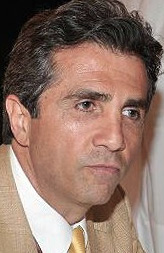 Just under 4 years ago and fresh from his world celebrated election win of the White House and the US Presidency on a platform of "Change Has Come To America", newly elected US President Barak Obama packed his bags and headed to Cairo on a strategic vision and mission that included delivering a speech from Cairo University aimed at winning the trust of Arabs and Muslims worldwide... This morning in Toronto, Canada new ICANN President and CEO Fadi Chehadé will also attempt a similar feat that is no less important to the world than that of Obama's 4 years ago. more
 ICANN is a strange beast. Even the term "ICANN", which is itself an acronym, has more than one meaning. There are at least two "ICANNs", one is the "community", which is made up of everyone who engages with the ICANN "circus" and then there is ICANN the organisation itself -- a California not-for-profit. While people outside the internet industry probably have never heard of ICANN or had any direct dealings with it, the policies that get decided at ICANN have a tangible impact on how the internet operates. more
In the spirit of shining more light on how government actions could affect users, Google Inc. in early 2010, began periodically sharing number of government requests received in what it calls the "Transparency Report." more
 The Internet was built on the promise that everyone, everywhere could create, share information and ideas without frontiers. Yet, Internet restrictions are increasing to the point they are becoming the norm. And it's happening fast. In its 2016 Freedom on the Net report, Freedom House revealed that Internet freedom declined for the 6th year in a row. The report notes that more governments have been blocking social media and communication apps than ever before. more
ICANN's Board Governance Committee (BGC) today released its comments on recent reconsideration request of dotgay LLC's new top-level domain .GAY application. Kevin Murphy from Domain Incite reports: "ICANN has refused dotgay LLC's latest appeal against adverse .gay decisions, and has taken the unusual step of preemptively defending itself against probably inevitable accusations from gay right groups." more
 Last week the European Network and Information Security Agency (ENISA), which assists the European Commission and its member states with network and information security issues, published its third Anti-Spam Measures Survey. The survey provides insight into how network operators in Europe are responding to the continued onslaught of email spam. more
 If you are passionate about ICT policy, Peering, and Interconnection, then the Africa Peering and Interconnection Forum (AfPIF) is the place to be. The 7th annual AfPIF takes place in Dar es Salaam, Tanzania from 30 August – 1 September 2016. AfPIF is a multistakeholder forum organized by the Internet Society that brings together a diverse range of business leaders, infrastructure providers, Internet service providers (ISPs), Internet Exchange Points (IXPs), international financial institutions, policy-makers, and regulators from all over the world. more
 You might recall that I played an advisory role to the World Conference on International Telecommunications (WCIT) in 2012 in Dubai. In the run-up to that event -- as well as during and after it -- I gave my opinion on the role of internet governance, plus an analysis of what was happening. At that time I held a more conciliatory position on the issue, but you may have noticed that, in the wake of the Snowden revelations and the illegal NSA activities, as well as many other similar activities from ASIO in Australia and no doubt the Russian, Israeli and Chinese authorities, my position has shifted significantly. more
 When the fantasy of a universal trademark clearance house was floated in the name of protecting existing trademark owners by the opposing lobbies against the global domain name expansion, particularly the gTLD programs, the domain name industry and ICANN quickly accepted the idea. A universal trademark clearance house is perhaps a greatest idea but in reality a fantasy. Today, at ICANN, the best minds are teamed-up and struggling to get the TMHC (Trademark Clearance House) constructed. more
In October 2012, the Chairman and Ranking Member of the House Intelligence Committee issued a joint statement warning American companies that were doing business with the large Chinese telecommunications companies Huawei and ZTE to "use another vendor." The bipartisan statement explains that the Intelligence Committee's Report, "highlights the interconnectivity of U.S. critical infrastructure systems and warns of the heightened threat of cyber espionage and predatory disruption or destruction of U.S. networks if telecommunications networks are built by companies with known ties to the Chinese state, a country known to aggressively steal valuable trade secrets and other sensitive data from American companies." more
A World-Renowned Source for Internet Developments. Serving Since 2002.