Welcome:
Login
|
Sign Up
|
About CircleID
Follow:
|
|
|

New TLDs |
Sponsored by |

|


 U.S. laws remain set to govern the coming multilingual internet through ICANN's new generic Top-Level Domains (gTLDs) yet the ramifications of this fact if you are Chinese, Arab, Indian, Russian or other are huge as ICANN published its 7th Applicant Guidebook in preparation for its board consideration on June 20th during the Singapore meeting. To many nations and citizens around the world, especially the non-English speaking communities, this will be seen as a strategically alarming direction for the global Internet. more
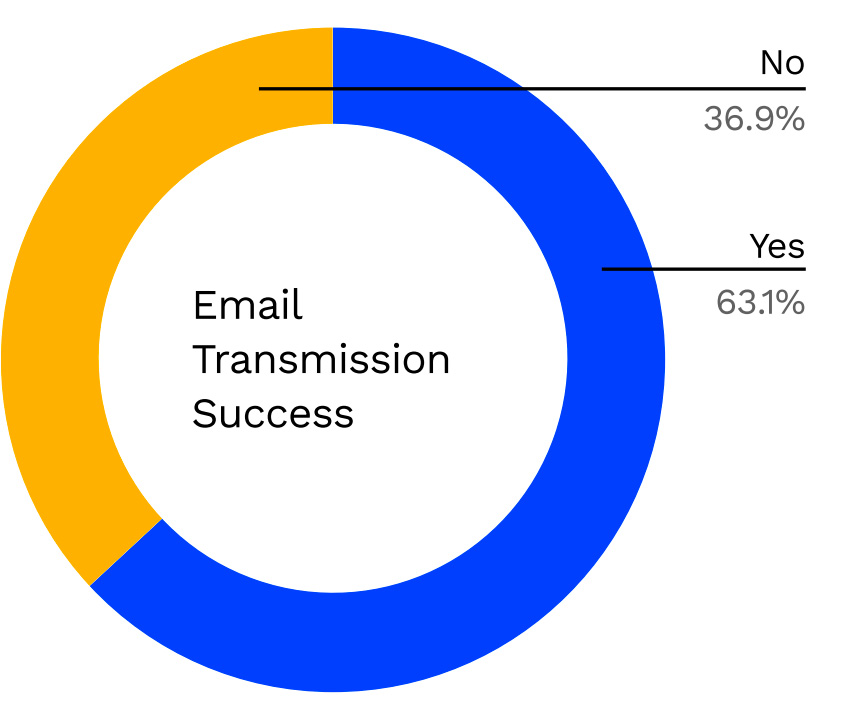
 The recent decision by ICANN to start a new round of applications for new generic Top-Level Domains (gTLDs) is launching a round of questions on the IETF side about its consequences. One possible issue may be with vanity gTLDs like apple, ebay etc. Some expect that every Fortune 1,000,000 company will apply for its own TLD. My guess is rather the Fortune 1,000 for a start, but this does not change the nature of the issue, i.e. those companies may want to use email addresses like user@tld. more
 A comment period on the "strawman", a proposal to update the Trademark Clearinghouse (TMCH), is currently underway. Originally planned to end on January 11, it has been extended by ICANN to February 5. The comment portal has so far received 89 email contributions. A fair number, but the real story is how many major brands have spoken out on the proposed amendments to the TMCH model. more
 Criminals are now looking to use established domain names, via phishing targeted at domain registrars. This is possibly related to ICANN finally moving to stop the black hat registrars of the world. According to the first report on the matter sent yesterday to Registrar Operations (reg-ops) mailing list, the attacks seem to be run by gang of child pornography spammers. more
Respected ICANN Chairman of the Board Steve Crocker has wrapped up his organisation's 47th International Meeting, held in Durban last week, with a message to the community. This message, reproduced here in its entirety, provides both a useful and concise summary of the Durban meeting and insights into the Chairman's view of where ICANN stands at the moment, the successes it has notched up and the challenges it faces. more
 Last month ICANN began soliciting comments on Stuart Lynn's A Plan for Action Regarding New gTLDs, which will be one of the Internet governance organization's primary discussion topics at its December meeting in Amsterdam. more
 By now, I've probably spoken with close to a hundred brand owners who are all trying to make some very important decisions about whether or not to apply for a new generic Top-Level Domain (gTLD). Everyone wants to know what "the other guy" is doing. But for the most part (with the exceptions of Canon and Hitachi), brand owners have been tight-lipped about their intentions. Even in a recent New gTLD webinar hosted by MarkMonitor (primarily attended by brand owners), when asked in an anonymous poll whether they intended to apply... more
With the application launch period scheduled to begin in less than three months, everyone wants to know just how many new generic Top-Level Domains (gTLDs) applications will be submitted. In terms of the number of applications to be submitted, I've seen estimates putting the figure as low as 500. But just last week, an industry insider told me that he thought the number could go as high as 3,500. more
ICANN has denied a request by new top-level domain operators to reduce the $25,000 annual fee. more
AFNIC, the domain name registry for .rf (France), recently conducted a study of major trends for "Legacy gTLDs" or traditional TLDs such as .biz, .com, info, etc., as well as country code TLDs corresponding to territories such as .de (Germany), .fr (France), and .uk (United Kingdom). The new TLDs have note been included in this study since they are still something of a "new development", but will be included in the future, AFNIC says. more
 There are 4 applications related to the wine business in the new gTLD program. Yesterday the new gTLD prioritization draw took place where each application was assigned a randomly-drawn priority number. These priority numbers are used to determine the order in which initial evaluation results are released. In the 1917 applications, 4 applications are related to wine. more
In response to the Washington Post's December 11 article title "What's the .rush?", directed at the expansion of new TLDs, Rod Beckstrom, ICANN's President and CEO has replied in a letter to the Washington Post stating: ""The program of the Internet Corporation for Assigned Names and Numbers (ICANN) to open the Internet to new top-level domain names (TLDs) has been anything but rushed..." more
Within 24 hours of opening, .uk domain registrations have topped the sales charts, according to Nominet. "More than 50,000 domains were registered, making this one of the fastest selling new domain releases on record, and beating the first day sales for all of the current batch of new generic Top Level Domains by a large margin." more
 On 24 and 25 February 2011 the European Commission, DG Home Affairs, organised a meeting on cyber crime in cooperation with the US government, Department of Justice, with representatives of the law enforcement community, registries and registrars. The basis of the discussion was the RAA due diligence recommendations (hence: the recommendations) as presented by LEAs in the past years during ICANN meetings. The meeting was constructive, surprising and fruitful. I give some background, but what I would like to stress here is what, in my opinion, could be a way forward after the meeting. more
 Nearly ten years ago, the Government of Canada wrote a letter to the chair of the Canadian Internet Registration Authority (CIRA) that set out the framework for the management of the dot-ca domain. The government articulated a vision of the dot-ca domain as a “key public resource” and called on CIRA to act in an open and transparent manner. CIRA has long sought to live up to those standards, but in recent months the organization has shown an unmistakable shift toward prioritizing commercial gain over the public interest along with a troubling move toward secret decision making... more
A World-Renowned Source for Internet Developments. Serving Since 2002.