
Welcome:
Login
|
Sign Up
|
About CircleID
Follow:
|
|
|

 In 2014, Cuba embarked on a program for the "informatization" of society and "advances in the informatization of society" was the theme of the short videos by ETECSA president Mayra Arevich Marín and Vice Minister of Communications Wilfredo González... I was struck by the emphasis on the Cuban national intranet, as opposed to the global Internet... This emphasis is reflected in the relatively low price of intranet access and the continued development of Cuban content and services. more
Kodak today revealed the launch of a blockchain-based platform called KODAKOne which is aimed to empower photographers and agencies to take greater control of image rights management. more
 Doug Isenberg notes in a recent CircleID essay that two records in domain name disputes were broken in 2017, namely number of cybersquatting claims (3,036 in 2016, 3,073 in 2017) and number of domain names implicated (5354 in 2016, 6370 in 2017). Fairly consistently from year to year, approximately twenty percent of filings are terminated (withdrawn): whether by settlement or nolo contendere we don't know. (All of these statistics come from the World Intellectual Property Organization (WIPO). more
The banking industry is evaluating security benefits of using blockchain to send encrypted information. more
A Senate bill that would reverse the Federal Communications Commission's (FCC) decision to repeal Net Neutrality received its 30th co-sponsor today, ensuring it will receive a vote on the Senate floor. more
 Would you be interested in helping guide the future of the Public Interest Registry (PIR), the non-profit operator of the .ORG, .NGO and .ONG domains? If so, the Internet Society is seeking nominations for three positions on the PIR Board of Directors. The nominations deadline is 23:00 UTC on Thursday, February 1, 2018. Find out more about the positions and the required qualifications. more
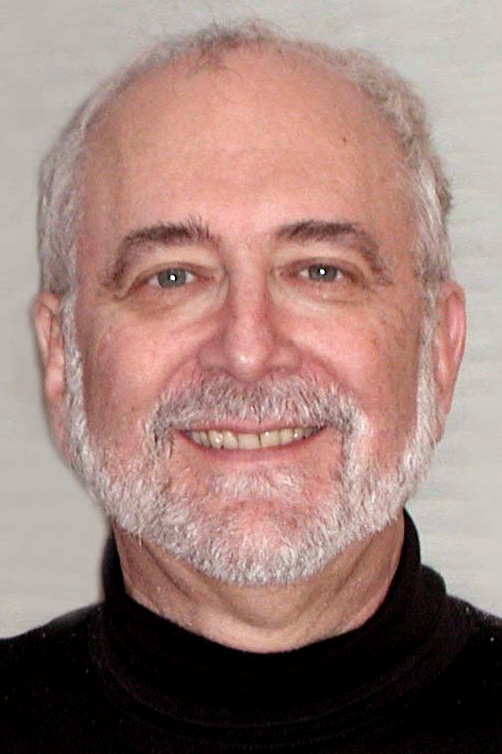 There are relatively few venues today for the development of public international cybersecurity law among Nation States. One was the United Nations Group of Governmental Experts (UNGGE) at which the U.S. several months ago announced its de facto withdrawal with some concern expressed. A much older, well-established venue is newly assuming considerable significance - the Expert Group on the International Telecommunication Regulations (EG-ITRs). more
It is once again time for our annual review of posts that received the most attention on CircleID during the past year. Congratulations to all the 2017 participants for sharing their thoughts and making a difference in the industry. 2017 marked CircleID's 15th year of operation as a medium dedicated to all critical matters related to the Internet infrastructure and services. We are in the midst of historic times, facing rapid technological developments and there is a lot to look forward to in 2018. more
Sen. Scott Wiener along with ten state assembly and Senate Democrats have proposed legislation which includes a number of ways to ensure telecom companies operating in California adhere to the principles of net neutrality. more
It is now out -- all 539 pages entitled "Declaratory Ruling, Report and Order, and Order" (Reversal Order). As someone who has dealt with this subject matter at a working level over the past 40+ years, it seems clear that the FCC will readily prevail here and the protagonists need to move on. (Admittedly that is wishful thinking given the appellate revenue to be made and press blather opportunities.) The document from a Federal Administrative Law perspective is very thorough and well-crafted. more
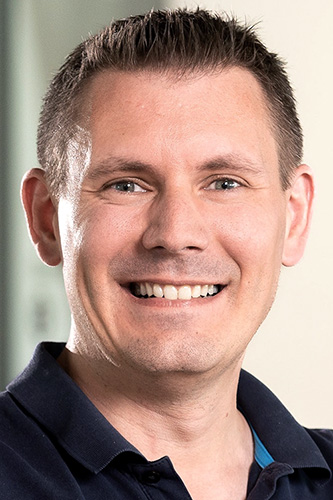 In September 2017, I wrote an article [1] about the new domain extensions in German and got very good feedback and was asked to translate it into English in order to make it available for a broader audience. I wanted to comply with this request, but unfortunately, it took a while to revise and translate my article... In June 2011, ICANN gave the starting signal for about 1,400 new top-level domains (TLD) to make the existing namespace bigger and more diverse. more
 I don't (and probably won't) have anything substantive to say about the technical details of the just-announced Meltdown and Spectre attacks. What I do want to stress is that these show, yet again, that security is a systems property: being secure requires that every component, including ones you've never heard of, be secure. These attacks depend on hardware features... and no, many computer programmers don't know what those are, either. more
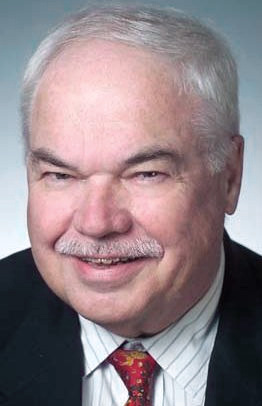 The courts of the United Kingdom have set themselves outside the mainstream of Internet consensus policies on trademark/domain name disputes. A U.K. court decision regarding the UDRP reflects an unfortunate tendency to overlook one of the fundamental principles of the UDRP, namely the opportunity to seek independent resolution of a trademark/domain name dispute by court proceedings. more
The internet is unavailable and/or unaffordable by about 50% of the world's population. The situation is worse in, but not confined to, developing nations where the service is typically sub-standard when it is available.Geostationary satellite connectivity is available globally, but it is slow and expensive because the satellites are high above the Earth. Low-Earth orbit (LEO) satellites can deliver speeds comparable to terrestrial links, but constellations of many satellites would be needed to serve the entire planet. more
US prosecutors have charged two Romanians with hacking Washington DC police computers linked to surveillance cameras just days before President Donald Trump's inauguration. more
A World-Renowned Source for Internet Developments. Serving Since 2002.