
Welcome:
Login
|
Sign Up
|
About CircleID
Follow:
|
|
|

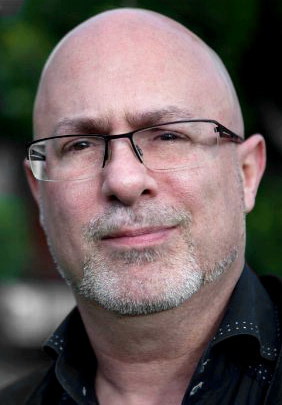 It is with a heavy heart that we note the passing of a dear friend, colleague and member of the CAUCE board of directors, Don Blumenthal, on September 28, 2019, in Ann Arbor, Michigan. He was 67. Don was an anti-spammer for as long a there was an anti-spam community: he helped design, deploy and maintain the famous 'Spam Fridge,' the repository of junk email maintained by the Federal Trade Commission (FTC). more
 There are plenty of new domain names and if .COM never had any real identity or true meaning, it is quite possible that new gTLDs may bring new ideas to those who want to acquire a global identity without focusing on a country, a niche market, a specific industry, a community or just anything which does not cover "the world". I made a list of these new domain names with potential to replace .COM and I believe that the alternatives might be in the list down below. more
Minds + Machines reports: "A quantitative analysis of UDRP data for all open generic Top-Level Domains (gTLDs) concludes that the introduction of new gTLDs will result in approximately 316 new cases of cybersquatting, and that the resultant cost to trademark holders, overall, will be $870,000 per year -- less than less than $.10 for each trademark registered worldwide, or about $.44 per trademark registered in the United States. The data show that cybersquatting correlates to registration volume across all open gTLDs, not to the number of gTLDs, but is more prevalent in .com." more
 One of the consequences of our increased use of broadband is a big increase in the amount the data that we store outside our homes and businesses. The numbers are becoming staggering. There are currently about 3.7 billion people using the Internet, and together we generate 2.5 quintillion bytes of online data every day. The trends are that by 2025 we'll be storing 160 zettabytes of data per year - a zettabyte is one trillion gigabytes. I store a lot more data online than I used to. I now store things in the cloud all day long. more
 In 1949 a Bell Laboratory researcher, Claude Shannon, published a paper on a new science of "Information". Bell Labs had sponsored the research with the goal of improving phone networks but was not prepared to embrace the full implications of the new science which made explicit the distinction between information in the information sense and information encoded in numbers or bits... more
 It has been just over 3 years since the General Data Protection Regulation (GDPR) came into effect, and the work within ICANN (type "EPDP 2a" into your acronym decoder ring) to develop a permanent Registration Data policy is progressing at a snail's pace. At issue is a proposed mandatory requirement for Contracted Parties (really just Registrars), to differentiate between "legal persons" (a fancy way of saying corporations and similar organizations) and "natural persons" (the kind that eat and breathe and schedule Zoom calls). more
 It happened in San Jose, it happened in Taiwan and soon it will happen in Philadelphia! A nightmare? A conspiracy? No, no, it was just the IPv6 hour. One hour of pure IPv6 LAN for NANOG attendees with a NAT-PT as valve to the crowded teeming world of the IPv4 internet... At 12 noon, Tuesday February 19th it happened! While Mac, Vista, Linux and Unix can breathe AAAA, Windows XP however cannot do DNS over IPv6 transport. What to do to avoid all these Windows XP users... more
 The first four new Top Level Domains (TLDs) have signed contracts with ICANN, known as Registry Agreements, to allow the applicants to operate new TLDs on the Internet. This is a historic event and marks the first of many new Registry Agreements which will be signed over the coming months as prospective new TLD operators complete the Initial Evaluation phase, pre-delegation testing, and finally sign Registry agreements. more
This article proposes the reservation of a special use TLD to allow a more convenient addressing of devices by general physical location or context. ...As wireless networking and devices become more common there may be a need for a convenient way to address hosts by physical location or context, especially when the users themselves are using mobile or wearable devices. more
 In Ian Flemming's Thunderball M sends 007 to the Bahamas on a hunch that SPECTRE is hiding something there. Well, it's been our hunch for a while that the Bahamas "office" for the Registrar Internet.BS does not exist. Now we have confirmation of such. It has been documented in an explosive undercover expose by LegitScript that Internet.BS address as stated could not be verified, could not accept mail, and that the business itself could not actually be found in the Bahamas. more
 From will they ever learn department, we are once again seeing attempts by incumbent carriers to skirt rules around network neutrality. They tried and failed with UBB. Now they are at it again with "speed boost" technologies. The two technologies at question are Verizon's "Turbo" service and Roger's "SpeedBoost". more
 I've finally recovered from another ICANN meeting, frustrated as ever. 700 or so people flew halfway around the world to hear canned presentations, dueling-monologue public form sessions, and resolutions that left major issues unresolved, and to gripe in the hallways about how little was being done. more
A New Jersey man was one of the three who pled guilty to hacking charges and creating the massive Mirai botnet attacks which spread via vulnerabilities in IoT devices causing massive DDoS attacks. more
RIPE NCC and CENTR have released a statement today in response to the upcoming European Commission's Digital Services Act, urging policymakers to distinguish between the Internet's core infrastructure and operations. more
 Regarding a domain name dispute involving famous authors, the novelist, Louis Sachar, observed that "if some unrelated person is going to co-opt my name in cyberspace, and fails to use it to identify a web site related to my books or myself, that's going to endanger my career, as well as my reputation." Louis Sachar is one of nine famous authors for whom the Authors Guild, recently successfully snatched personal name domain names from a United Kingdom domain name registrant known as Old Barn Studios... more
A World-Renowned Source for Internet Developments. Serving Since 2002.