
Welcome:
Login
|
Sign Up
|
About CircleID
Follow:
|
|
|

DNSSEC is a mechanism where clients can verify the authenticity of the answers they receive from servers. There are two sides here. The server must supply signed answers, and the client must verify the signatures on those answers. The validation/verification side is widely implemented, but there are very few signed zones... However, if no one signs their zones, those validating resolvers don't have many signatures to check. more
 At Verisign we take our Internet stewardship mission very seriously, so when details emerged over the past week concerning the XcodeGhost infection, researchers at Verisign iDefense wanted to help advance community research efforts related to the XcodeGhost issue, and leveraging our unique capabilities, offer a level of public service to help readers determine their current and historical level of exposure to the infection. more
While Congress and the White House deliberate possible actions on FISMA reform and increased oversight of critical infrastructure, relatively little attention is being given to the government-wide cybersecurity regulation already in place, the Data Quality Act (DQA). Unlike FISMA, which primarily governs the government's internal cybersecurity processes, and contemplated legislation and/or Executive Order(s), which would likely also include a focus on critical infrastructure protection, the DQA contains a unique mandate. more
 As spearhead of the Yes2DotAfrica Campaign, I recently wrote a letter on behalf of DCA, to the Chairman of the United States Senate Committee on Commerce, Science & Transportation, Senator Jay Rockefeller which was also copied to other U.S. leaders and officials to express support for the present status quo on Global Internet Goverenance and a Reaffirmation of the Mult-stakeholder model. The full text of the letter is published in this post. more
 A few days ago, Eric Goldman wrote an interesting thinkpiece in CircleID regarding users' feeling about privacy. He seems to conclude that the existent regulations and policies on the matter are unnecessary, since Privacy doesn't "really" matters to the consumer. Eric based his argumentation on a number of surveys, stating that, even when the user expresses concerns about their privacy, on line behavior shows a different reality. We don't want to discuss here the soundness of surveys as a reliable source of information, but the author could be assuming too much in his analysis. more
 The word "confusion" in the Uniform Domain Name Dispute Resolution Policy (UDRP) signifies two separate states of mind. The first in ¶4(a)(i) appears in the phrase "identical or confusingly similar to a trademark or service mark in which the complainant has rights." It is a test to determine whether the mark owner has standing to maintain a UDRP proceeding. more
 Nestled in the northeastern part of the United States is the small state of Vermont, the 14th State to join the United States in 1789. Its name comes from the French, in which 'vert montagne' means 'green mountain.' and it is known as the Green Mountain state. With only about 625,000 inhabitants, it is the 45th state out of 50 in size, and 49th of 50 in number of people, even less populated than Alaska. more
 Tomorrow, January 12th 2012 ICANN will open the application window for new TLDs. This post includes answers to some of the based frequently asked questions. If you have any other questions/queries, or if something is unclear please let me know via the comment at the end of the post. more
 To date, most of the discussion on net neutrality has dealt with the behaviour of conventional wireline ISPs. RCR Wireless News is carrying an opinion piece called "Paying for the bandwidth we consume" by Mark Desautels, VP -- Wireless Internet Development for CTIA -- the trade association for the US wireless industry. His article follows up on reports of Comcast cable moving to discontinue internet access service to so-called "bandwidth hogs"... more
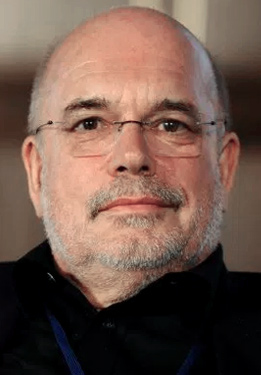 The UN Panel on Digital Cooperation presented last week in New York its final report, and an old question is back on the international agenda: Could the global Internet be ordered by a reasonable arrangement among stakeholders which would maximize the digital opportunities and minimize the cyber risks by keeping the network free, open and safe? more
 TeenSpeak is being rivalled by GeekSpeak: most Internet Geeks know what "the cloud" is. They know because they are "Internet Geeks", most Internet users don't profess to the same level of 'Geekdom'. Now while I don't claim to be an Internet Geek, I do like to think of myself as an educated Internet user; and the way I think of "the Cloud" is of a computer, plugged in somewhere, and holding lots of "computer things" for the use of anyone, anywhere. You may have heard the expression: "it is hosted in the cloud". more
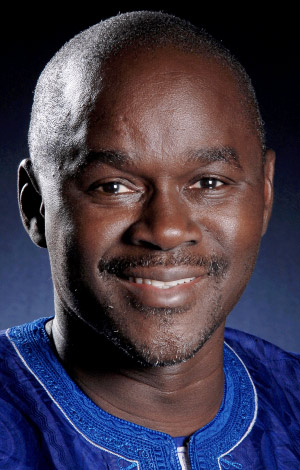 Last week, the much-anticipated Governmental Advisory Committee (GAC) Early Warnings on new gTLD applications were finally issued. And the GAC didn't disappoint. A total of 242 warnings were issued on 163 strings (including 31 strings applied for by Radix). The GAC warnings yet again show that Africa is perfectly capable of being at the top of league tables -- for the wrong reasons. more
 Ever want to know where all the submarine cables are that provide part of the physical infrastructure of the Internet? Or which cities in the world have the most connectivity via submarine cables? (or which regions might be single points of failure?) In doing some research I stumbled across this excellent site from the folks at TeleGeography... It is a very well done and captivating (to me, anyway) view into where all the current and planned submarine cables are located. more
ICANN has announced that three more domain name registrars have lost their accreditation due to non-compliance with the RAA. The three registrars have been informed that their agreements with ICANN will not be renewed. South American Domains (NameFrog), Simply Named and Tahoe Domains have been sent letters by ICANN outlining the decision and the reasons for it. So what now? more
 At first glance, this book looks like another history of the Internet, but it is much, much more. The authors use their engineering and scholarly understanding of what constitutes Internet history to identify forks in the digital road and key past decisions that shaped the Internet's path. The first part of the book maps out the core technical and policy decisions that created the Internet. more
A World-Renowned Source for Internet Developments. Serving Since 2002.