
Welcome:
Login
|
Sign Up
|
About CircleID
Follow:
|
|
|

 This year, the IGF Multistakeholder Advisory Group which provide assistance in the preparations for Global IGF meetings called for Intersessional work (activities that are pursued in the months between annual IGFs with the aim of helping the IGF produce more tangible outputs that can become robust resources). Previously, the IGF has used best Practice Forums and Dynamic coalitions to bring out key issues that affect the world as it relates to the Internet. This year's Intersessional activity is centred on "Policy Option for connecting the Next Billion". more
 Cloud or dedicated? That's the question companies face each time they need new storage space or resources -- is it better to build local or host off site? Both tech segments are performing strongly, with the global data center blade server market to reach more than $15 billion by 2019 at a compound annual growth rate of 10.25 percent and cloud computing sitting on a $16 billion market that's only trending up thanks to increased public and hybrid adoption. In other words, it's virtual war: Who wins the battle? more
Over the next five years, the number of mobile cloud computing subscribers worldwide are expected to grow rapidly, "rising from 42.8 million subscribers in 2008, (approximately 1.1% of all mobile subscribers) to just over 998 million in 2014 (nearly 19%)," according to the latest study by ABI Research. "From 2008 through 2010, subscriber numbers will be driven by location-enabled services, particularly navigation and map applications. A total of 60% of the mobile Cloud application subscribers worldwide will use an application enabled by location during these years,” says senior analyst Mark Beccue. more
 ICANN meetings sometimes congeal around a single theme. In San Francisco the theme was captured on clever t-shirts bearing the iconic symbol of the London Underground with the words, "Mind the GAC." Here was a succinct and timely plea for the ICANN Board to pay serious attention to the Governmental Advisory Committee (GAC)'s concerns about new generic Top-Level Domains (gTLDs), rather than to risk undermining the long-term viability of the multi-stakeholder model. more
 Once again, and hopefully for the final time, the internet community has an official time-line for the arrival of new generic top-level domains. ICANN's recent decision to publicly name May 30, 2011 as the planned launch date for new gTLD program was courageous, welcome, and absolutely necessary. The ICANN Board and staff alike should be congratulated for their bold commitment to opening the first-round application window less than seven months from now, and for providing the community with visibility into its working plan. more
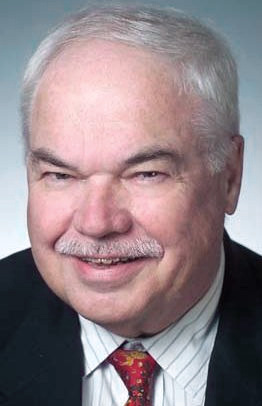 The Mexico City ICANN Conference was more eventful than some of us had anticipated. Among the highlights was Paul Twomey's announcement that he is stepping down as President and CEO of ICANN effective on June 30... Before the Conference, ICANN had released the second draft of its Guidebook for new generic Top-Level Domains (gTLDs). It was not greeted with universal acclaim... more
China is revising its cybersecurity laws to include faster reporting requirements and stricter oversight of AI-related incidents, reflecting growing concerns about national security and the unchecked expansion of digital infrastructure. more
 Today a senior McCain advisor, Doug Holtz-Eakin, proudly held up a Blackberry and declared: "You're looking at the miracle that John McCain helped create." Bloggers on all sides of the partisan divide are having a field day with this -- suggest that the McCain campaign is out of touch, desperate, or trying to top the trouble VP Al Gore got into, when he was falsely accused of claiming to have invented the Internet... more
 On February 5th, while many (including the author) were on route to ICANN 52 in Singapore, the U.S. Senate passed S.Res. 71, a non-binding, "Sense of the Senate" Resolution declaring February 8th–14th as "Internet Governance Awareness Week". Those dates overlap the now ongoing ICANN meeting in Singapore, and the congruence is intentional. more
 Internet Corporation for Assigned Names and Numbers (ICANN) has been holding a public comment period on the second draft of the new generic Top-Level Domains (gTLD) handbook. This period was due to close yesterday. Prior to yesterday afternoon there was a healthy number of comments, but in the past 24 hours a significant number of new comments have been submitted... more
 As a longtime member of ICANN's Intellectual Property Constituency (IPC), I'm impressed by the important work that this group does on behalf of trademark owners worldwide (as I've written before). While some die-hard IPC members spend countless (and, often, thankless) hours working virtually and in-person (at ICANN's global meetings) for the constituency, I find it very educational and worthwhile to participate on an ad-hoc basis. more
McAfee, Inc. today unveiled its McAfee Threats Report: Third Quarter 2010, which uncovered that average daily malware growth has reached its highest levels, with an average of 60,000 new pieces of malware identified per day, almost quadrupling since 2007. At the same time, spam levels decreased in volume this quarter, both globally and in local geographies. Spam hit a two year low this quarter while malware continued to soar. More than 14 million unique pieces of malware were identified in 2010, one million more than Q3 2009. more
 The Internet Routing Registry (IRR) is a globally distributed routing information database that consists of several databases run by various organisations. Network operators use the IRR to publish their routing policies and routing announcements in a way that allows other network operators to make use of the data. In addition to making Internet topology visible, the IRR is used by network operators to look up peering agreements, determine optimal policies and to configure their routers. more
SpaceX successfully launched 21 satellites, including the first six Starlink satellites equipped with "Direct to Cell" capabilities. These advanced satellites aim to offer seamless global access to texting, calling, and browsing for mobile network operators worldwide, eliminating dead zones with a space-based cellphone tower. more
 In March of this year, the Federal Communications Commission (FCC) adopted an initial Notice of Inquiry (CG No. 17-59) to mitigate robocalls. In July, it adopted a Second Notice. Mitigating spoofed telephone calls is a global problem which every country in the world has been addressing as part of a global ecosystem for many years in intergovernmental and industry bodies, in academic R&D and patent filings, and industry products with ongoing activity continuing today. more
A World-Renowned Source for Internet Developments. Serving Since 2002.