Welcome:
Login
|
Sign Up
|
About CircleID
Follow:
|
|
|

New TLDs |
Sponsored by |

|


 In January we presented the glorious history of the MIT spam conference, today we present the schedule for the first day. Opening session will be from this author, Garth Buren with a topic entitled The Internet Doomsday Book, with details be released the same day as the presentation. Followed by Dr. Robert Bruen with a review of activities since the last MIT spam conference... more
 The imminent expiration date (September 30) of the joint project agreement between ICANN and the US government, establishing the US as unilateral supervisor over Internet's addressing and Domain Name System (DNS) operations, has rejuvenated the call for an internationalization of Internet oversight. The average Internet user, however, is unlikely to benefit from a change in the current status quo as both alternatives, full privatization and intergovernmental oversight, are bound to affect both the Internet's innovative power and the personal liberties enjoyed by its users. more
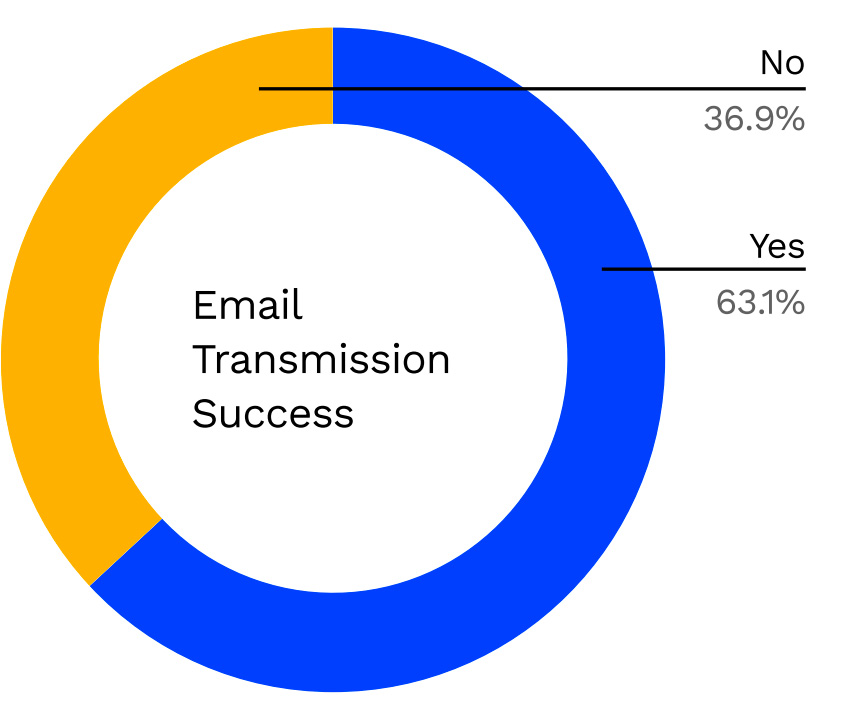
 Today, Friday April 27, ICANN had promised an update on the problems that led to its TLD Registration System (TAS) being taken offline on April 12. As the working day ends in Europe, that update has yet to come. Even if it does, I would not expect anything more concrete than the "we are still working on the issue, thanks for your patience" message of recent days. So what's really going on here? Does anyone at ICANN seriously expect us to believe that the tech team is "still reviewing the TAS data and checking the integrity of each and every application"? more
 Search marketers and SEO mavens are starting to pay attention to top-level domains (TLDs) now that ICANN has announced a starting date. Many of them are dubious about the benefits of TLDs to search, but they are missing out on why search will benefit from new TLDs - and vice-versa. A recent article on SEO.com looked at the value of new top-level domains for search. One of the reasons for his skepticism comes from a common but completely erroneous notion that there's some sort of order to how top-level domains work today... more
 VeriSign makes a great deal of money from the .COM and .NET registries. Can we tell how much they make, and how much that might change if the CFIT lawsuit succeeds? It's not hard to make some estimates from public information. The largest gTLD registry that VeriSign doesn't run is .ORG, which was transferred a few years ago to the Public Internet Registry (PIR) which pays Afilias to run the registry, and uses whatever is left over to support the Internet Society (ISOC)... more
 Minds + Machines was the first "new gTLD portfolio applicant" I spotted early in 2008, when .PARIS started being mentioned. Then came a few other projects like .HORSE and later .VODKA. Being French, my vision of good new gTLD suffixes may be slightly different to those native English speakers. Therefore, I favour some TLDs such as .SURF and .ART over some clearly English terms others such as .HORSE. more
ICANN issued an industry-wide six-month deadline for the deployment of the Registration Data Access Protocol (RDAP) - a replacement for the WHOIS protocol. more
 Too many techies still don't understand the concept of due process, and opportunistic law enforcement agencies, who tend to view due process constraints as an inconvenience, are very happy to take advantage of that. That's the lesson to draw from Verisign's proposal and sudden withdrawal of a new "domain name anti-abuse policy" yesterday. The proposal, which seems to have been intended as a new service to registrars, would have allowed Verisign to perform malware scans on all .com, .net, and .name domain names quarterly when registrars agreed to let them do it. more
 ICANN's new gTLD expansion is really quite an ingenious ploy to grow the once small California non-profit into an unstoppable machine, worth hundreds of millions of dollars, which soon plans to finally be free from any external oversight. I have no doubt that ICANN pats itself on the back for pulling the wool over so many eyes, including stakeholders, new gTLD applicants, politicians, and the global general public. more
 The deployment of Domain Security Extensions (DNSSEC) has crossed another milestone this month with the publication of DURZ (deliberately unvalidatable root zone) in all DNS root servers on 5 May 2010. While this change was virtually invisible to most Internet users, this event and the remaining testing that will occur over these next two months will dictate the ultimate success of DNSSEC deployment across the Internet. more
 The Intellectual Property Constituency's draft report on trademark issues is now available for comment. The draft report was put together behind closed doors, which would appear to go against the normal policy development process at ICANN, which is quite worrying. Its contents, however, are even more disturbing... more
 Last month saw a much-anticipated decision handed down in the Independent Review Panel (IRP) proceeding examining the controversial 2015 auction for the .web generic top-level domain name registry (gTLD). This decision has been covered by others, including Kevin Murphy's DomainIncite, and has been the subject of unsurprisingly incongruous statements by both Verisign and Afilias, who are both contending for the .web concession privilege. more
 ICANN has just published a paper from its contractor PowerAuctions LLC, regarding the use of auctions to award new Top Level Domains (TLD) strings in case of contention. I can understand what ICANN wants to avoid. In the past, it has been criticized for using the "beauty contest" model with the redelegation of the .net TLD... However, the auction model is based on the idea that whoever wins the auction will be able to recoup its investment on the sale... more
 Like everyone else applying for new gTLDs, the Donuts team thought it would now be poring over a list of applicant names and strings, nodding heads and at times raising eyebrows. The timing didn't work out that way. ICANN did the right thing by closing TAS temporarily in order to understand what it was dealing with. It's easy enough for applicants to get rattled by what they think may have happened... more
 The ICANN community here in Singapore is celebrating after the historic vote to expand top-level domains (TLDs). And while I wouldn't begrudge anyone a few Singapore Slings, I think it's a little early to start celebrating. The marathon effort ICANN began 5 years ago isn't even close to reaching the finish line. more
A World-Renowned Source for Internet Developments. Serving Since 2002.