
Welcome:
Login
|
Sign Up
|
About CircleID
Follow:
|
|
|

 Cloud computing will turn the IT-value chain upside down. That will lead to dramatic changes in the way hardware and software is being marketed and managed. These changes will be most profound for IT departments and value added resellers (VARs), but computer manufacturers will feel the heat too. To illustrate this point we can take a high level view of where servers are being deployed. more
 Last week American Airlines launched their Aircell wireless Internet access on a limited number of flights. It didn't take long before a few folks tried to make voice and video calls (in violation of Aircell's terms-of-service according to their PR folks), and it didn't take long before someone figured a way around their voice/video blocking efforts. more
EU lawmakers are pushing for additional negotiations to strengthen a proposed data transfer agreement between the European Union (EU) and the United States. They argue that the current agreement still has shortcomings that must be addressed. The potential delay in reaching an accord is concerning for the thousands of companies that rely on the agreement. more
Google Inc. today announced via its official blog that the Chinese government has renewed its license and that it will continue to operate in China. Google further notes: "We currently automatically redirect everyone using Google.cn to Google.com.hk, our Hong Kong search engine. This redirect, which offers unfiltered search in simplified Chinese, has been working well for our users and for Google. However, it's clear from conversations we have had with Chinese government officials that they find the redirect unacceptable -- and that if we continue redirecting users our Internet Content Provider license will not be renewed (it's up for renewal on June 30). Without an ICP license, we can't operate a commercial website like Google.cn -- so Google would effectively go dark in China." more
 I have on my desk a rather small tube. It's a little under 2cm in diameter, 6 cm long, and looks like it's made from a dull white polycarbonate material. At the end, I can see a copper inner tube, and inside that, another polycarbonate layer, and then a smaller steel tube that holds a thin steel thread and some fibre optic cables. There are no layers of steel jacketing, nor any other additional wrapping at all. more
A Chinese-linked cyberattack exploited Anthropic's Claude AI to infiltrate global institutions with limited human input, prompting urgent calls for regulation and sparking debate over the growing autonomy of artificial intelligence in digital threats. more
A recent report from Specops Software reveals alarming security vulnerabilities within VPN password systems, highlighting over two million VPN passwords stolen by malware in the past year. more
 Today marks a major milestone for .brand Top-Level Domain applicants, as we pass the deadline set by ICANN for them to sign their Registry Agreement (RA). For those who have knuckled down over the last few weeks and months to meet this deadline, congratulations -- for many, this was no mean feat and the effort should be acknowledged. more
 It has been beaten, butted, and batted around quite a bit in the past few weeks -- let's look at a rough timeline of political issues which bring me to this point. Let's look at the power struggle (I prefer to call it confusion) in the U.S. Government with regards to "Cyber Security" -- in a nutshell. In the latter part of 2008, the U.S. House of Representatives Homeland Security Committee determined that DHS was not capable of providing proper critical infrastructure protection (and other Cyber protection capabilities) due to a number of issues. This may well be a political maneuver, or it may well actually have merit. more
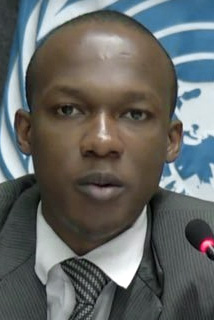 The internet affects every individual in this world whether directly or indirectly. For example, a medical professional somewhere in Goma, Congo might access the internet to read and post reviews to current medication available and this might have an impact on the kind of medication that he/she recommends to the patient, whether the patient has access to affordable internet or not. Since the internet affects everyone, Africans citizens who are aware of internet governance discussions, expect African stakeholders to engage in these discussions. more
 It was with great interest that I read a recent announcement about a plan by the International Telecommunications Union (ITU) to publish template answers on a wiki for the 22 questions relating to registry technical operations contained within ICANN's new Top-Level Domain Applicant Guidebook. As someone who has spent the best part of six years following the development of the program (witnessing first-hand each evolution of the Applicant Guidebook) my first thought was one of bemusement... more
Following his State of the Union Speech last week, Obama was asked a number of user-submitted questions via prepared via YouTube. Popular questions included the issue of open internet and neutrality, to which Obama responded: "I'm a big believer in Net Neutrality. I campaigned on this. I continue to be a strong supporter of it. My FCC Chairman Julius Genachowski has indicated that he shares the view that we've got to keep the Internet open..." more
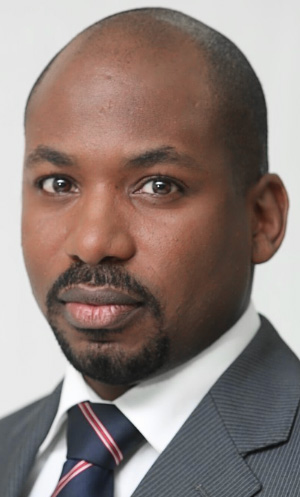 Before the American Registry for Internet Numbers' 40th Public Policy Meeting closed last week, members were reminded that the elections for two seats on its Board of Trustees was an opportunity for needed change. The opening of polls last Thursday marked the end of an era. The clue was the candidates. For the first time in ARIN’s history, at least one seat on its board would not be filled by an elected white male. more
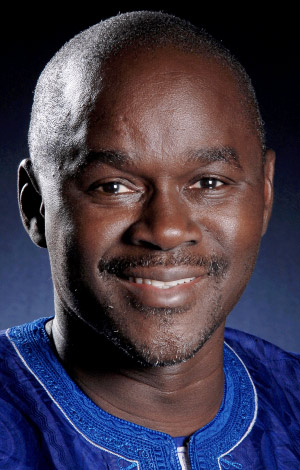 Toward the end of last week, the world waited with bated breath for the outcome of the 21st annual meeting of the Conference of the Parties (COP) of the UN Framework Convention on Climate Change (UNFCC). The meeting, commonly called COP 21, was held in Le Bourget, Paris, from November 30 to December 12; a bit too soon after the terrorists attacks on Paris earlier in November. COP 21 was important because COP 15 in Copenhagen (2009) failed to arrive at a global consensus... more
 In 1991, eight high-level Soviet officials attempted a coup that failed after two days. During those two days, citizen journalists and activists used Usenet newsgroups to carry traffic into, out of and within Russia (70 cities). News spread and protests were organized in Russia. In the west, we saw images of Boris Yeltsin speaking to demonstrators while standing on top of a tank and the Russians saw that we were aware of and reporting on the coup. more
A World-Renowned Source for Internet Developments. Serving Since 2002.