
Welcome:
Login
|
Sign Up
|
About CircleID
Follow:
|
|
|

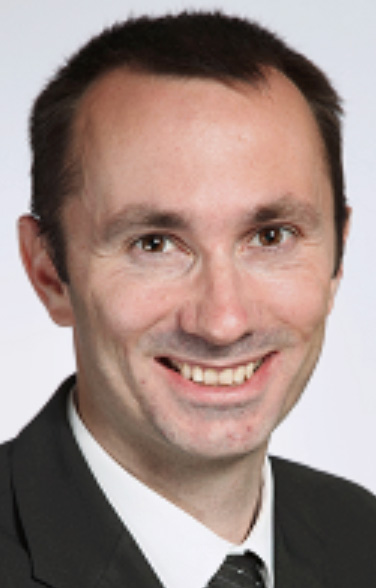 The .BEST new gTLD Registry was acquired 3 months ago by Cyril Fremont, a French Entrepreneur from Paris, and a team of investors. I took the time to meet with Cyril in the latest ICANN63 meeting in Barcelona to ask him a few questions about his future new gTLD project, three months after it was acquired from the previous owner... .best has just released the MVP (Minimum Viable Product) of the social network. The ".best" social network will be officially present at the next Namescon... more
Thousands of Russians in Moscow and other cities rallied on Sunday against tighter internet restrictions. The protest is reported to be one of the most prominent in the Russian capital in years. more
 Challenging UDRP awards in actions under the Anticybersquatting Consumer Protection Act (ACPA) is infrequent though steady. There are currently a number of court filings in U.S. district courts that are in the early stages, most notably the ADO.com case reported on in an earlier essay and several others have either been referred to mediation (the IMI.case) or settled or discontinued. more
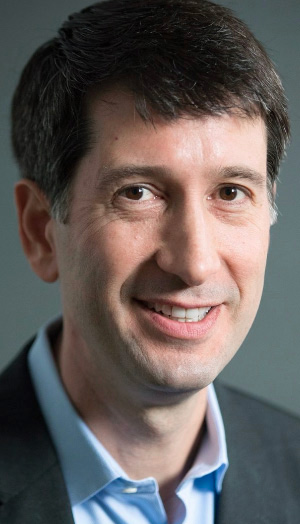 It's highly unusual for a well-known trademark owner to be accused of cybersquatting, but that's what happened when a Mexican milk producer filed a complaint against Apple Inc. under the Uniform Domain Name Dispute Resolution Policy (UDRP) in an attempt to get the domain name lala.com. Not only did Apple win the case, but the panel issued a finding of "reverse domain name hijacking" (RDNH) against the company that filed the complaint. more
"It's possible that application fees for new gTLDs could be artificially propped up in order to discourage gaming," reports Kevin Murphy in Domain Incite. more
 There are quite a lot of NTP-amplified denial of service attacks going around at the moment targeting tech and ecommerce companies, including some in the email space. What does NTP-amplifed mean? NTP is "Network Time Protocol" - it allows computers to set their clocks based on an accurate source, and keep them accurate. It's very widely used - OS X and Windows desktops typically use it by default, and most servers should have it running. more
 In 2015, a significant focus of the United Nations will center on the future of global development, including negotiating a set of Sustainable Development Goals (SDGs) aimed at guiding policy in achieving dignity, well-being, and equality for all the world's people -- especially the poor and underserved. The currently proposed SDGs consist of an ambitious set of 17 goals and 169 specific targets. more
Canadian human-rights activists and computer security researchers have released a report on the extensive surveillance system in China that monitors and archives text conversations that include politically charged words. The research group, called Information Warfare Monitor, is a joint project of The SecDev Group, and the Citizen Lab, at the Munk Centre for International Studies, University of Toronto. The following are introductory excerpts from the study... more
 Do consumers still get confused when they see a URL without a .com (or other traditional extension)? Probably -- but I don't think anyone really knows the answer to that from a global perspective. What I do know, however, is that it's important for those of us in the new TLD industry to help our brand customers ensure that we're providing audiences with the best possible chance to identify new domains as legitimate web addresses. more
Kieren McCarthy reporting in the Register: "The US government has posted a step-by-step guide to how it authorizes changes to the internet's root zone -- the heart of the world's domain-name system. The 16-page slide deck published by the Department of Commerce's National Telecommunications and Information Administration (NTIA) sheds light on what has been a contentious and largely secret process for the past 15 years." more
 Anybody that uses more than one brand of Internet of Things (IoT) device in the home understands that there is no standard way to connect to these devices. Each manufacturer chooses from a range of different protocols to communicate with and control its devices, such as BLE, LoRa, LTE-M, NB-IoT, SigFox, ZigBee, and others. more
SpaceX's Starlink satellite internet service has been seen as a great hope for connecting people in hard-to-reach areas, but it has also raised fears about the potential for weaponization and other abuse. According to COO Gwynne Shotwell, the company is pleased to help Ukraine in its "fight for freedom," but Starlink was "never intended to be weaponized." more
 I could have ignored yesterday's ICANN New gTLD Applicant Update Webinar and just read summaries from the usual respected news and industry sources. However, with three hours slotted and likely questions regarding ICANN CEO Fadi Chehadé's somewhat eyebrow-raising comments at the regional ICANN Registry-Registrar meeting in Amsterdam last week -- led me wanting to hear it all myself. more
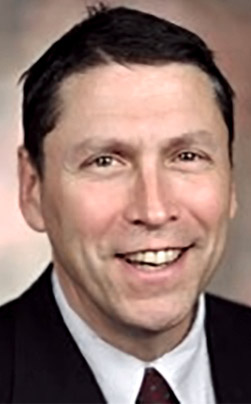 It should come as no surprise that the Federal Communications Commission will substantially change its regulatory approach, wingspan and philosophy under a Trump appointed Chairman. One can readily predict that the new FCC will largely undo what has transpired in previous years. However, that conclusion warrants greater calibration. more
 Periodismo de Barrio has edited a collection of 13 articles on the Cuban Internet in collaboration with the Internet Policy Observatory at the University of Pennsylvania. The articles cover the history of the Cuban Internet, the legal framework, services, communities, and projects. It is a diverse collection -- something for everyone. Here are thumbnail summaries of each article. more
A World-Renowned Source for Internet Developments. Serving Since 2002.