
Welcome:
Login
|
Sign Up
|
About CircleID
Follow:
|
|
|

Ok, so I had a day in Wellington that was not busy with other things so I thought I'd wander over to the ICANN venue and sit in on the PUBLIC Forum... I saw friends on the walk over and we entered the venue, chatting about several different things. They pulled out their badges. I didn't have one. They were admitted, I was denied entrance... more
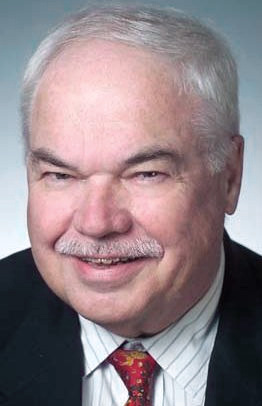 "GOD, at least in the West, is often represented as a man with a flowing beard and sandals. Users of the Internet might be forgiven for feeling that nature is imitating art — for if the Net does have a god he is probably Jon Postel" (The Economist, Feb. 1997) David W. Maher, Senior Vice President, Law and Policy of Public Interest Registry (PIR) offers his reminiscence of the early days of the Internet and attempts made to restructure the Domain Name System — an article he has entitled 'Reporting to God'. more
 If you have been following the debate over Internet governance over the past few years, you know that while ICANN supporters (U.S., Canadian, Australian governments; business lobby) and critics (developing world and occasionally Europe) argue over the optimal approach, particularly with respect to government involvement in the domain name system, the reality has been that possession is all. ...The alternate root has always lurked in the background as a possibility that would force everyone to rethink their positions since it would enable a single country (or group of countries) to effectively pack up their bags and start a new game. ...It is with that background in mind that people need to think about a press release issued yesterday in China announcing a revamping of its Internet domain name system. Starting tomorrow, China's Ministry of Information Industry plans to begin offering four country-code domains. more
 Goodmail Systems made a big splash last week when AOL and Yahoo announced that they will be giving preferential treatment to mail that uses Goodmail's CertifiedEmail service, claiming (implausibly) that this has something to do with stopping spam... Since Goodmail charges senders for each message, some people see this as the end of e-mail as we know it. I have my concerns about Goodmail, but a lot of the concerns are either overblown or based on bad reporting... more
 I'm kinda foxed by the some of the discussion going on about "Net Neutrality". The internet was designed from the outset not to be content neutral. Even before there was an IP protocol there were precedence flags in the NCP packet headers. And the IP (the Internet Protocol) has always had 8 bits that are there for the sole purpose of marking the precedence and type-of-service of each packet. It has been well known since the 1970's that certain classes of traffic -- particularly voice (and yes, there was voice on the internet even during the 1970's) -- need special handling... more
 In September 2005 ICANN approved the first top–level Internet domain to be dedicated to a particular human language and culture: '.cat'. A related paper was recently published in First Monday by Peter Gerrand, titled "The Catalan campaign to win the new .cat top level domain". As explained in its abstract, the paper explains: "While '.cat' creates a precedent for greater use on the Internet of 'minority languages', there are significant hurdles for other candidates for language–based top–level domains. The paper discusses the concomitant factors needed to support the greater use of any minority language on the Internet." more
 This document is intended to be a starting point for a discussion on upcoming city Top-Level Domain Names (city TLDs) such as .berlin, .nyc, or .london. It reflects considerations about the impact of city TLDs on the city society, the individuals in the city, the regional and global environment, and the Internet at large. more
 Unfortunately I cannot be in Vancouver for the conference. I write this from Cape Town, venue of last years fall ICANN. I want to disclose a couple of things upfront. Those who know me will know I am nothing if not strongly independent in my views. However disclosure helps those of a more suspicious mind know my associations and if they choose to, take them into account in interpreting my opinions. ...I am somewhat disappointed by the reaction to the proposed settlement. I feel that most of the discussion fails to take into account the actual conditions under which the settlement has been negotiated. more
 The basic problem posed by WSIS was the role of national governments and national sovereignty in global Internet governance. That conflict remains completely unresolved by the WSIS document. The document's thinking is still based on the fiction that there is a clear divide between "public policy" and the "day to day operation" of the Internet, and assumes that governments should be fully in control of the policy-setting function. Moreover, new organizational arrangements are being put into place which will carry on that debate for another 5 years, at least. The new Internet Governance Forum is a real victory for the civil society actors, but also fails to resolve the basic issue regarding the role of governments and sovereignty. Although called for and virtually created by civil society actors, the language authorizing its creation asks to involve all stakeholders "in their respective roles." In other words, we still don't know whether this Forum will be based on true peer-peer based interactions among governments, business and civil society, or whether it will reserve special policy making functions to governments. more
United Nations Secretary General Kofi Annan, writing in The Washington Post, declared that it is a "mistaken notion" that the U.N. "wants to 'take over,' police or otherwise control the Internet." Unfortunately, neither the World Summit on the Information Society (WSIS), the WSIS' Working Group on Internet Governance (WGIG) or the Secretary General's column give comfort to those committed to cyber-freedom. more
A small but intriguing paragraph in the VeriSign settlement says that ICANN gets to maintain the root zone. I thought they did now, but I guess VRSN does, following advice from ICANN. This has two and a half effects. The most obvious is political -- if ICANN rather than VRSN is distributing the root zone, it removes the symbolic significance of VeriSign's A root server. The second is DNSSEC key management. Until now, the contents of the root zone have been pretty boring, a list of names and IP addresses of name servers. If DNSSEC is deployed in the root, which is not unlikely in the next few months, ICANN rather than VeriSign will hold the crypto keys used to sign the root zone. If a tug of war develops, whoever holds the keys wins, since without the keys, you can't publish a new version of the root with changed or added records unless you publish your own competing set of keys and can persuade people to use them. more
 The Collaboration for International ICT Policy for East and Southern Africa (CIPESA) recently published "ICANN, Internet governance and Africa", a public briefing on the current status and key points of the debate that provides essential background for the second phase of the World Summit on Information Society (WSIS). During the last few years the relationship of African stakeholders with ICANN has received greater attention, largely driven by a few key individuals within African governments, the technical community, and civil society organizations. Meanwhile, the broader topic of Internet governance has been put on the public agenda in the context of the WSIS. ...Decisions taken at the upcoming second phase of the WSIS (to occur in Tunis in November 2005) are likely to have a profound impact on ICANN and the field of Internet governance more generally. more
The House Committee on Science recently held a hearing to "examine the extent of U.S. vulnerability to cyber attacks on critical infrastructure such as utility systems, and what the federal government and private sector are doing, and should be doing, to prevent and prepare for such attacks." Specific issues addressed at the hearing included whether: 1) the U.S. is able to detect, respond to, and recover from cyber-attacks on critical infrastructure; and 2) is there a clear line of responsibility within the federal government to deal with cybersecurity... more
 I ran into a Reuters headline today, which illustrated to me the pace at which some legislative bodies operate. Yes, this .kids idea is timely. It is an idea so good, that I remember multiple different bidders proposing it in the initial wave of new TLDs laid in front of ICANN back in 2000. The contenders all had fantastic presentations and capabilities, which I heard voiced in the Marina Del Rey ICANN meetings as the 44 initial proposals were culled into seventeen, and then into the seven... more
 BioCryst Pharmaceuticals, Inc., of Birmingham, Alabama, challenged registration of domain name www.biocrystpharmaceuticals.com. Respondent used domain name to criticize the Complainant's business (BioCryst Pharmaceuticals, Inc. v. Kumar Patel, Case No. D2005-0674). Panelist Daniel Gervais denied relief, stating... more
A World-Renowned Source for Internet Developments. Serving Since 2002.