
Welcome:
Login
|
Sign Up
|
About CircleID
Follow:
|
|
|

 Danny Sullivan has been the go-to guy for understanding the world of search for over 15 years. This week he published a really good story on Google Plus Your World. A group of engineers have launched a site called Focus on the User that shows exactly how the new Google service could be including other social media content listings besides only Google Plus, but is not. more
 I recently caused a stir in a small but passionate community. I was speaking about a topic I've discussed many times before: the need for more effective public input into the Internet Corporation for Assigned Names and Numbers, the nonprofit corporation that controls the Internet's protocols, addresses and domain name system. "We want public input into ICANN," I had said at a conference at Oxford University. Then, I referred to ICANN's new At-Large Advisory Committee, set up to foster public input and on which I sit: "We've got a mechanism where (the public) can have a seat on the task forces, liaisons to working groups, be part of the policy making process -- I see that in many ways as more important than having a seat on the board." more
 Are you doing something interesting with DNS, DNSSEC, or routing security that you would like to share with the larger DNS community at the ICANN 76 meeting in March 2023? If so, please send a brief (1 -- 3 sentence) description of your proposed presentation to [email protected] by the close of business on Friday, 20 January 2023. Are you doing something interesting with DNS, DNSSEC, or routing security that you would like to share with the larger DNS community at the ICANN 76 meeting in March 2023? more
What is the current state of DNSSEC deployment around the world and also in Africa? How can you deploy DNSSEC at a massive scale? What is the state of using elliptic curve crypto algorithms in DNSSEC? What more can be done to accelerate DNSSEC deployment? Discussion of all those questions and much more can be found in the DNSSEC Workshop streaming live out of the ICANN 55 meeting in Marrakech, Morocco, on Wednesday, March 9, from 9:00 to 15:15 WET. more
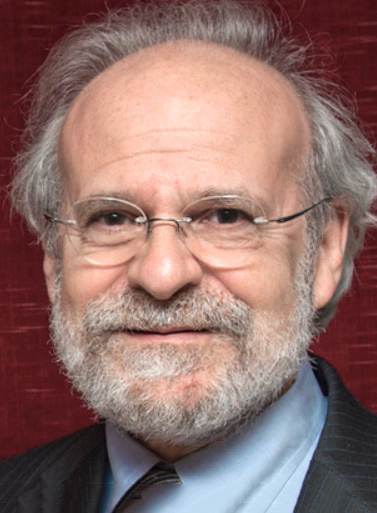 Evolution isn't just about biology. Our focus on biology is part of the world-wide challenge in getting people to understand how systems evolve. Think of the resistance Galileo faced when he said that the universe didn't, literally, revolve round us. One reason people have difficulty accepting undirected evolution is that educators don't give people a good sense of why things "work". It's a difficult problem because we tend to look for a "reason" for why things are the way they are... more
 As few as seven years ago, cyber-threat intelligence was the purview of a small handful of practitioners, limited mostly to only the best-resourced organizations - primarily financial institutions that faced large financial losses due to cyber crime - and defense and intelligence agencies involved in computer network operations. Fast forward to today, and just about every business, large and small, is dependent on the Internet in some way for day-to-day operations, making cyber intelligence a critical component of a successful business plan. more
 This is a follow-up to my previous post on Cybersecurity and the White House. It illustrates an actual cyberwarfare attack against Estonia in 2007 and how it can be a legitimate national security issue. Estonia is one of the most wired countries in eastern Europe. In spite of its status of being a former Soviet republic, it relies on the internet for a substantial portion of everyday life -- communications, financial transactions, news, shopping and restaurant reservations all use the Internet. Indeed, in 2000, the Estonian government declared Internet access a basic human right... more
The Asia Pac Digital Marketing & gTLD Strategy Congress for first and prospective second round applicants will be held in Hong Kong and timed to take place in conjunction with the International Trademark Associations' (INTA) 136 Annual Conference at the Hong Kong Convention and Exhibition Centre (HKCEC) starting on May 10. more
The two lawsuits filed by the Russian software firm Kaspersky Lab against the U.S. government banning federal networks from using the company's anti-virus software was dismissed on Wednesday by a federal judge. more
Are you interested in helping guide the future of the Public Interest Registry (PIR), the non-profit operator of the .ORG, .NGO and .ONG domains? Or do you know of someone who would be a good candidate? If so, the Internet Society is seeking nominations for three positions on the PIR Board of Directors. Read more for details if you are interested in being considered as a candidate or know of someone who should be considered. more
 2014 will be remembered as the year of the "multistakeholder model" on the Internet. NTIA demonstrated its commitment to bottom-up, multistakeholder Internet governance by committing to complete the transfer of responsibility for various technical functions -- known as the IANA Functions -- to the multistakeholder community. NTIA called on ICANN to convene the community to develop a transition plan to accomplish this goal. more
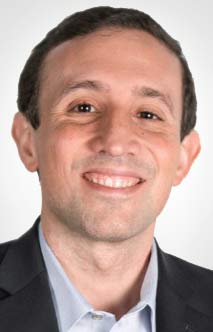 The risks of fraud and disinformation in the U.S. election process have been hiding in plain sight. CSC's new research finds that a large majority of web domains closely linked to the campaign websites for Joe Biden and Donald Trump lack basic domain security protocols and are prone to domain spoofing tactics. This makes them a potential target for hackers looking to spread disinformation ahead of the election, and criminals who want to take advantage of voter intentions... more
 It, perhaps, does not have to be said that cybersquatting is an intentional tort. No one would expect the respondent to admit unlawful intention, but complainant's proof must nevertheless support that contention. The Panel in Hästens Sängar AB v. Jeff Bader / Organic Mattresses, Inc. FA2005001895951 (Forum July 31, 2020) reminds us that it takes more than bad faith use of a domain name to find cybersquatting. more
 Last week there was a flurry of stories about China's 3G plans after Jonathan Dharmapalan of Ernest & Young was quoted as saying he expected it to take 12 to 24 months from the start of China's commercial TD-SCDMA trials, i.e. from now, until 3G licenses were issued. But there was little analysis or comment on what's really happening. 3G licenses are a formality. They delay the deployment of 3GSM & CDMA 2000 which could otherwise happen rapidly -- just plug new cards into existing radios and offer established handsets (already being manufactured, in China, for the world market). more
 I recently gave a short talk that concluded with some speculation on the attitude of Miguel Diaz-Canel, who is expected to replace Raúl Castro next year, toward the Internet. I searched online and came up with three clues -- two talks he has given and one act. In May 2013, Diaz-Canel gave a speech at an educator's conference in which he anticipated today's preoccupation with fake news. He acknowledged the futility of trying to control information. more
A World-Renowned Source for Internet Developments. Serving Since 2002.