
Welcome:
Login
|
Sign Up
|
About CircleID
Follow:
|
|
|

 This morning I was forwarded a link to the Business2.0 article on domainer Kevin Ham about a half-dozen times and one sent the reddit comment thread on it (titled "This guy is a piece of s**t") and I had to chuckle and replied "I see Techno-Pinkos are out in full force". Some of the comments are just classicly clueless: "He's just a parasite. Someone gaming the system for their own financial ends without providing a useful service to anyone, and making it worse for many." ...Newsflash: Speculation is any time you choose one path, good or service over another in the hopes that you will do better... more
OECD, Organization for Economic Co-Operation and Development, has released a report for policy makers assessing the level of IPv6 deployment around the world. "[T]he timely deployment of IPv6 by network operators and content/application providers is an increasing priority for all Internet stakeholders. In terms of public policy, IPv6 plays an important role in enabling growth of the Internet to support further innovation. In addition, security, interoperability and competition issues are involved with the depletion of IPv4." more
 On 29 March 2024, an announcement was posted notifying the world that the Open-Source Software (OSS) package "xz-utils," which includes the xz data compression program and a library of software routines called "liblzma" and which is present in most Linux distributions, had been compromised. The insertion of the compromised code was done by "Jia Tan", the official maintainer of the xz-utils package. more
 Earlier this week, Poland’s new President, Karol Nawrocki, vetoed amendments to the Act on Assistance to Citizens of Ukraine, provoking debate over critical satellite connectivity. Deputy Prime Minister and Minister of Digital Affairs Krzysztof Gawkowski warned that the veto “de facto switched off Starlink for Ukraine,” potentially disrupting connectivity for hospitals, schools, and government operations. more
 This is a new development in the VoIP market. This is how one of my colleagues, Cullen Jennings explained it to me. Today we have two widely deployed global identifiers for reaching people. One is delegated address out of DNS and the other is phone numbers. So I consider an address like email: [email protected] or xmpp:[email protected] to roughly be out of the DNS namespace and phone number to be out of the E.164 name space. Phone numbers have lots of parts that are not cool, but they also have some cool parts... more
 On April 16 ICANN issued a breach notice to Turkish Registrar Alantron for not consistently providing access to its WHOIS database via Port 43, a command-line query location that all Registrars are required to supply under conditions of their contract with ICANN under section 3.3.1. Four days later they issued a breach to Internet Group do Brazil for the same problem. ... The WHOIS record, as we all know, is a massive fraud with illicit parties filling records with bogus information and hiding behind anonymity. more
 As the world becomes more and more reliant on electronics, it's worth a periodic reminder that a large solar flare could knock out much of the electronics on earth. Such an event would be devastating to the Internet, satellite broadband, and the many electronics we use in daily life. A solar flare is the result of periodic ejections of matter from the sun into space. Scientists still aren't entirely sure what causes solar flares, but they know that it's somehow related to shifts in the sun's magnetic field. more
Until a few weeks ago, almost everyone in the Internet governance circus seemed to ignore the very existence of WSIS. After it popped up on international newspapers, however, things have been changing; and suddenly, I have started noticing plenty of negative reactions, on the lines of "we don't need WSIS, we don't need the UN, we don't need governments, we don't need internationalization - just go away from our network". However, I often find that these reactions are based on fundamental misunderstandings of the issues at stake; so please let me offer a different perspective. more
 A corporate name of any merged entity, at best, is really an outcry from the deep bottom of a corporation, all in search of attention and in pursuit of fame and glory. Whether you read a corporate brand name in a column, see it in a phone book, hear it on a radio, TV or come across it on the web, the name is always, a real show-off with a desperate mission to seek all the attention it can get...a corporate brand name is the single most important issue of corporate communications today. Equally, a domain name, the twin of a corporate name, still as to most CEOs, it is the most misunderstood term of corporate communications. Even now, domain name issues are often left to webmasters, ISPs and, sometimes to lawyers. It has yet to earn the respect as the single most important issue of e-Commerce and also to earn the respect as a real and a true passkey for global access for the web. more
 Large-scale IPv6 deployments suggest that IPv6 is at least a technical success, the technology works. Time to visit the other important question: does it work commercially. Does IPv6 really come with a positive business case? We are about to find out, if you help us... The Internet technical community has spent about two decades making IPv6 work on a technical level. We have developed the protocol, modified and expanded a few others; we set up the registry system and distributed the addresses. more
 The IETF MARID working group has been slogging away all summer trying to produce a draft standard about e-mail sender verification. They started with Meng Wong's SPF and Microsoft's Caller ID for E-mail, which got stirred together into a hybrid called Sender ID. One of the issues hanging over the MARID process has been Microsoft's Intellectual Property Rights (IPR) in Caller ID and Sender ID. The IETF has a process described in RFC 3668 that requires contributors to disclose IPR claims related to their contributions. more
 The .xxx controversy is a legacy of the Bush era. In the dark period of WSIS and the Iraq invasion, ICANN's independence was fatally undermined when a political appointee of the Bush administration, in response to an email campaign from rightwing groups in the Bush "base", issued a direct threat to Paul Twomey that if ICANN approved the .xxx Top-Level Domain (TLD) it would not put it in the root. more
 On April 24th the NETmundial "Global Multistakeholder Meeting on the Future of Internet Governance" concluded with the issuance of an eight-page statement. This non-binding document falls short of the "Magna Carta for the Internet" called for in an opening statement delivered by Tim Berners Lee, but it does set the stage for the other two major 2014 events that will affect the course of Internet Governance (IG) - the IGF meeting in Istanbul, Turkey and the ITU meeting in Busan, Korea. more
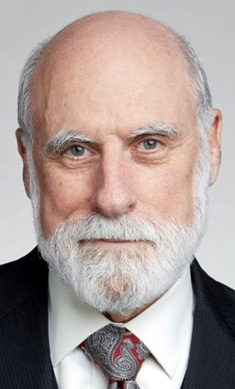 A decade has passed since Jon Postel left our midst. It seems timely to look back beyond that decade and to look forward beyond a decade hence. It seems ironic that a man who took special joy in natural surroundings, who hiked the Muir Trail and spent precious time in the high Sierras was also deeply involved in that most artificial of enterprises, the Internet. more
 Some domains are too big to fail. Quite apart from the obvious ones like google.com and facebook.com, upon whose availability our everyday lives depends, there are many others upon which the infrastructure of the Internet (and much of the modern world itself) depends. These are domains like w3.org and ietf.org, which host the technical specifications which describe the World Wide Web and the Internet themselves. more
A World-Renowned Source for Internet Developments. Serving Since 2002.