
Welcome:
Login
|
Sign Up
|
About CircleID
Follow:
|
|
|

 It's a late entry, but this opinion may be a dark horse candidate for the most bizarre case of 2008. Meyerkord was a Zipatoni employee and listed as the registrant on domain names at Zipatoni's Register.com account. Meyerkord left in 2003. In 2006, Zipatoni ran an astroturfing viral campaign for Sony to promote the Play Station Portable at the domain alliwantforxmasisapsp.com... Unfortunately for Sony -- and Meyerkord -- the campaign did not go well. more
Google has launched a new Public Policy Blog focused on U.S. government legislation and regulation -- reported in the media as part of Google's efforts in setting up focus on the U.S. government since early 2005. In an entry posted over the weekend on the blog by Richard Whitt, Washington Telecom and Media Counsel, key argument within the net neutrality debate is explained... more
Today's FBI action against Genesis Market is the latest in a string of coordinated efforts to take down bot shops and other services that enable cybercrime. Earlier this year, the FBI seized Webstresser.org, a DDoS-for-hire service that was thought to be responsible for launching a massive attack against the City of Atlanta in 2018. more
 For many people the comments made by Michael Hayden, Former Director of the Central Intelligence Agency, at this week's Black Hat Technical Security Conference in Abu Dhabi may have been unsettling as he commented upon the state of Chinese cyber espionage. I appreciate the candor of his observations and the distinction he made between state-level motivations. In particular, his comment... more
 A few early technical hiccups with the system streaming it live did not prevent ICANN's prioritization draw from running smoothly yesterday, December 17, 2012. All 1917 remaining applications (out of initial 1930 announced last June) were processed in one of the meeting rooms at the Los Angeles Airport Hilton, starting at 13:00 local time. Shortly before midnight, or more than 10 hours later, Google's Dot MBA was the last application to be pulled out of the box. more
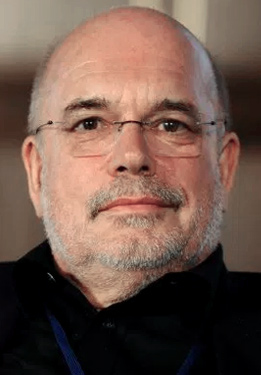 In mid-May 2020, UN-Secretary General Antonio Guterres will present a "Roadmap for Digital Cooperation". This will be another milestone in the discussion on the future of cyberspace, pushed further forward by the UN High Level Panel on Digital Cooperation (HLP), co-chaired by Jack Ma (AliBaba) und Melinda Gates (Microsoft Foundation) The HLP Final Report presented five groups of recommendations. Discussion started during the 14th IGF in Berlin... more
Google Inc. and T-Mobile USA today unveiled the highly anticipated smart-phone G1, the first in the industry to be based on Android, Google's operating system for mobile phones. Currently available for T-Mobile customers only, the T-Mobile G1 combines full touch-screen functionality and a QWERTY keyboard with a mobile Web experience that includes popular Google services such as Google Maps Street View, Gmail, YouTube and others. The T-Mobile G1 is also the first phone to provide access to Android Market, where customers can find and download unique applications to expand and personalize their phone to fit their lifestyle. more
 The Internet Governance Project has unearthed a consultancy report to the U.S. Department of Homeland Security (DHS) that makes it clear that the issue of root signing and DNSSEC key management has been recognized as a political issue within the US government for long time. more
Russia's Ministry of Communications has announced that it has successfully tested a country-wide alternative to the global Internet and that general users did not notice any changes. more
 The email portability bill has just been approved by the Knesset's committee for legislation, sending it on its way for the full legislation process of the Israeli parliament. While many users own a free email account, many in Israel still make use of their ISP's email service. According to this proposed bill, when a client transfers to a different ISP the email address will optionally be his to take along, "just like" mobile providers do today with phone numbers. more
 In Akamai Technologies' "State of the Internet" report for Q4 2010 Hong Kong (as a region/country) was identified as the market with the fastest average peak internet connection speed in the world. Hong Kong fixed line users can access the internet with an average peak speed of 37.9Mb/s, ahead of South Korea at 32.3Mb/s, Romania at 31.7Mb/s and Japan at 30.5Mb/s. more
 A week ago, ICANN announced the latest delay in the New gTLD Program: the so-called "contention sets" will only be published March 1, 2013. The original deadline was July 2012, postponed serially in two-month intervals. The gTLD program is lost in confusing similarity. What went wrong? In order to determine which TLD applications are in contention, it is necessary to say which TLD strings are confusingly similar to one another. more
 With the recent attacks against high-profile New Zealand domain names including Coca-Cola.co.nz and F-Secure.co.nz, fingers are naturally pointing to Domainz, the registrar of record for these domains, as the party responsible for this lapse in security. While domain name registrars certainly need to ensure the security and stability of their systems, domain name registries must also step up and take responsibility for mitigating risks posed by hackers... more
Meta has unveiled plans for an ambitious undersea cable project that, at 50,000 kilometers (31,000 miles), would be the longest in the world—surpassing the Earth’s circumference. Dubbed Project Waterworth, the infrastructure aims to link the United States with India, Brazil, South Africa, and other regions, bolstering global connectivity and supporting artificial intelligence (AI) development. more
 We the people like to own stuff and not pay rent to use it (BTW, rent includes taxes but that's another story). They the oligarchs like to own the stuff and charge us rent to use it. The rise of a middle class has historically meant the rise of a property-owning class. The underclass pays exorbitant rents. The telecommunications world -- or at least the US part of it -- is a battle of rent vs. buy. Economics says that ownership or rentership is all based on access to capital. Certainly capital is a huge part of the equation -- can you spell "home loan"?; but it's not the whole story... more
A World-Renowned Source for Internet Developments. Serving Since 2002.