
Welcome:
Login
|
Sign Up
|
About CircleID
Follow:
|
|
|

I have been working on URL, Web address, ID's and Namespace since quite a long time and I have my reservations about the present set up being a complete network. generic Top-Level Domains (gTLDs), country codes (cc), .co are all complicating the network, add to that the problem of address shortage plus other problem mentioned in comments and blogs at CircleID. It's time for out of the box thinking. more
 ICANN stated recently that it will allow similar (i.e. singular and plural) versions of the same string to co-exist for new Top-Level Domains (TLDs). This surprising decision immediately begs the question: "Will ICANN give holders of a string first refusal on the (singular or plural) version that they do not already hold during the next round of applications where only one version (singular or plural) of a string has been awarded?" more
 Back in September a number of domain name industry leaders wrote to ICANN to express deep-felt concerns about some companies' declared plans for generic domain name extensions. We have sent ICANN another letter this week which is also planned to be distributed in a press release included here in this post. more
 There's been a fair amount of controversy of late about ICANN's decision to dramatically increase the number of top-level domains. With a bit of effort, though and with little disruption to the infrastructure -- we could abolish the issue entirely. Any string whatsoever could be used, and it would all Just Work. That is, it would Just Work in a narrow technical sense; it would hurt innovation and it would likely have serious economic failure modes. more
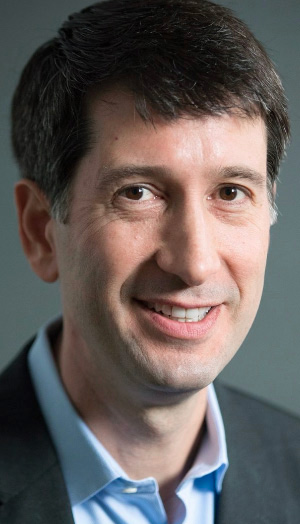 While plenty of UDRP decisions have made clear that a trademark owner's delay in bringing an action against a cybersquatter (often referred to as "laches") is typically not a defense, actor David Duchovny's decision to file a UDRP complaint nearly 21 years after the domain name davidduchovny.com was registered may set a record for the longest wait in a domain name dispute. more
 I recently read an interesting post on LinkedIn Engineering's blog entitled "TCP over IP Anycast -- Pipe dream or Reality?" The authors describe a project to optimize the performance of www.linkedin.com. The web site is served from multiple web server instances located in LinkedIn's POPs all over the world. Previously LinkedIn used DNS geomapping exclusively to route its users to the best web server instance, but the post describes how they tried using BGP routing instead. more
In 2003 - what did we have in terms of domain names? In 2003, the .AERO, .BIZ, .COOP, .INFO and .NAME Registries were just born. The . .MUSEUM Top-Level Domain was born that very year and .ASIA, .CAT, .JOBS, .MOBI, .PRO, .TEL and .TRAVEL did not exist yet. However, .EU was on its way. Although this particular TLD was a country code Top-Level Domain targeted at the European Union, it was awaited for by many brands in its Sunrise Period. more
 The sixth annual Counter-eCrime Operations Summit (CeCOS VI) will engage questions of operational challenges and the development of common resources for the first responders and forensic professionals who protect consumers and enterprises from the ecrime threat every day. This year's meeting will focus on the shifting nature of cybercrime and the attendant challenges of managing that dynamic threatscape. more
 Last month, the Obama administration sponsored one of the first high-level government workshops on IPv6. At the meeting, the administration's Chief Information Officer, Vivek Kundra, announced a remarkable 2012 deadline for federal agencies to support IPv6. So with a high-level US government mandate and a recent spade of vendor and carrier IPv6 announcements (e.g. VeriSign, Hurricane Electric), is the 15 year old IPv6 migration effort finally gaining momentum? more
 Willis Alan Ramsey, who wrote "Muskrat Love," recorded one and only one studio album. The cognoscenti of country think it's a gem, an all time top ten. There's an apocryphal story that when Ramsey was pushed to make another record he allegedly retorted, "What's wrong with the first one?" We who use the Internet every day risk losing sight of what a miracle it is, and the openness that keeps it so miraculous... We also lose sight of the fact that even as the Internet's miracles occur, it's almost always broken or malfunctioning or threatening or worse in many places along the line. more
 Google's Cuba project has been in the news lately. Mary Anastasia O'Grady wrote a Wall Street Journal article called "Google's Broken Promise to Cubans," criticising Google for being "wholly uninterested in the Cuban struggle for free speech" and assisting the Castro government. The article begins by taking a shot at President Obama who "raved" about an impending Google-Cuba deal "to start setting up more Wi-Fi access and broadband access on the island." more
 The European Data Protection Board certainly has been keeping its records straight. Its 27 May statement starts with the following: "WP29 has been offering guidance to ICANN on how to bring WHOIS in compliance with European data protection law since 2003." All internet users have dealings with the Internet Corporation for Assigned Names and Numbers, yet the vast majority have never heard of ICANN. more
 Maybe you saw the stories recently about comments that were made at a recent World Economic Forum debate on cyberwarfare. As one of them notes, Hamadoun Toure, Secretary General of the International Telecommunications Union, proposed a treaty in which countries would pledge not to attack each other without having been attacked. This post isn't about Mr. Toure's proposal. It's about a comment the story attributes to Craig Mundie, Chief Research and Strategy Officer for Microsoft. According to The Raw Story, Mundie "called for a `driver's license' for internet users." more
 There is an interesting battle going on to be the technology that monetizes the control of Internet of Things devices. Like a lot of tech hype, IoT has developed a lot slower than initially predicted -- but it's now finally becoming a big business. I think back to a decade ago when tech prognosticators said we'd soon be living in a virtual cloud of small monitors that would monitor everything in our life. According to those early predictions, our farm fields should already be fully automated, and we should all be living in the smart home envisioned by the Jetsons. more
 An IDN is a domain name which uses a particular encoding and format to allow a wider range of scripts to represent domain names such as Gujarati, Arabic, Chinese, Cyrillic, Devanagari and many more scripts. In simple words, a domain name with non-English characters will be called an Internationalized Domain Name. Humans have a variety of languages and alphabets that are familiar to them, and domain names do too. IDN unlocks an increased familiarity and affinity for humans. more
A World-Renowned Source for Internet Developments. Serving Since 2002.