
Welcome:
Login
|
Sign Up
|
About CircleID
Follow:
|
|
|

 In its security bulletin, Akamai's Security Intelligence Response Team (SIRT) reported on abuse of DNS Security Extensions (DNSSEC) when mounting a volumetric reflection-amplification attack. This is not news, but I'll use this opportunity to talk a bit about whether there is a trade-off between the increased security provided by DNSSEC and increased size of DNS responses that can be leveraged by the attackers. more
 Not understanding the need for a newer, more economically sound, eco-friendly, and secure utilities infrastructure can be a (socio-economic disaster in the making), if top leaders of U.S. industry and government do not seek a solution to our historically aged telecommunications, power, and water delivery systems. The legacy systems in place are expensive, un-reliable, publically unsafe, and vulnerable to sabotage on both a large and small scale. more
 For the longest time, it was an insurmountable challenge for those in the developing world to be able to afford to legally consume multimedia products. Prices originally set in Dollars, Euros or Yen often received insufficient adjustments to compensate for lower incomes, something that was compounded by local import or manufacture taxes that did little to alleviate matters. more
 Previous article introduced my DNS extension language, intended to make it easier to add new DNS record types to DNS software. It described a new perl module Net::DNS::Extlang that uses the extension language to automatically create perl code to handle new RRTYPEs. Today we look at my second project, intended to let people create DNS records and zone files with new RRTYPEs. more
 On Friday, the decision to deregulate "special access" circuits was upheld. The case had been brought by the Ad Hoc Committee, a long standing body of large business users, one of the main categories of buyers of high capacity leased lines to interconnect business premises. more
 Experience is the best teacher. In the interest of capturing lessons learned (and avoiding the repetition of hard experiences needlessly), it is worth highlighting what the interactions between the ICANN Board and the Governmental Advisory Committee (GAC) since Cartagena have taught. more
Google Inc. today announced via its official blog that the Chinese government has renewed its license and that it will continue to operate in China. Google further notes: "We currently automatically redirect everyone using Google.cn to Google.com.hk, our Hong Kong search engine. This redirect, which offers unfiltered search in simplified Chinese, has been working well for our users and for Google. However, it's clear from conversations we have had with Chinese government officials that they find the redirect unacceptable -- and that if we continue redirecting users our Internet Content Provider license will not be renewed (it's up for renewal on June 30). Without an ICP license, we can't operate a commercial website like Google.cn -- so Google would effectively go dark in China." more
 Last week American Airlines launched their Aircell wireless Internet access on a limited number of flights. It didn't take long before a few folks tried to make voice and video calls (in violation of Aircell's terms-of-service according to their PR folks), and it didn't take long before someone figured a way around their voice/video blocking efforts. more
 A certain number of brands are using a dot brand domain as their main actual website. The following analysis looks at how dot brands are used in brand communication. Are brands communicating about their domain names, or are domain names supporting brand communication? Dot brand corresponds to the ability, for a certain number of pioneering brands, to use their brand name at the top level of the naming system for their own purpose, in parallel to a dot com or a country code. more
 Cloud computing will turn the IT-value chain upside down. That will lead to dramatic changes in the way hardware and software is being marketed and managed. These changes will be most profound for IT departments and value added resellers (VARs), but computer manufacturers will feel the heat too. To illustrate this point we can take a high level view of where servers are being deployed. more
 Today marks a major milestone for .brand Top-Level Domain applicants, as we pass the deadline set by ICANN for them to sign their Registry Agreement (RA). For those who have knuckled down over the last few weeks and months to meet this deadline, congratulations -- for many, this was no mean feat and the effort should be acknowledged. more
 Toward the end of last week, the world waited with bated breath for the outcome of the 21st annual meeting of the Conference of the Parties (COP) of the UN Framework Convention on Climate Change (UNFCC). The meeting, commonly called COP 21, was held in Le Bourget, Paris, from November 30 to December 12; a bit too soon after the terrorists attacks on Paris earlier in November. COP 21 was important because COP 15 in Copenhagen (2009) failed to arrive at a global consensus... more
 The steepening trajectory towards event-driven and real-time API architecture is imminent. This means incorporating event-based APIs into a technology strategy and leveraging existing API legacy systems that may have incurred a fair amount of technical debt, especially for historically progressive organizations. more
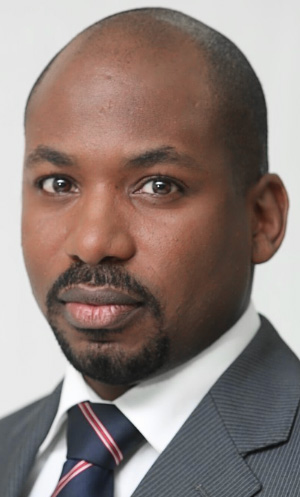 Before the American Registry for Internet Numbers' 40th Public Policy Meeting closed last week, members were reminded that the elections for two seats on its Board of Trustees was an opportunity for needed change. The opening of polls last Thursday marked the end of an era. The clue was the candidates. For the first time in ARIN’s history, at least one seat on its board would not be filled by an elected white male. more
Following his State of the Union Speech last week, Obama was asked a number of user-submitted questions via prepared via YouTube. Popular questions included the issue of open internet and neutrality, to which Obama responded: "I'm a big believer in Net Neutrality. I campaigned on this. I continue to be a strong supporter of it. My FCC Chairman Julius Genachowski has indicated that he shares the view that we've got to keep the Internet open..." more
A World-Renowned Source for Internet Developments. Serving Since 2002.