
Welcome:
Login
|
Sign Up
|
About CircleID
Follow:
|
|
|

Google has accused Microsoft, Oracle, Apple and other companies for waging an organized campaign against Android through "bogus patents". Google's Senior Vice President and Chief Legal Officer, David Drummond, in a blog post yesterday wrote: "I have worked in the tech sector for over two decades. Microsoft and Apple have always been at each other's throats, so when they get into bed together you have to start wondering what's going on. Here is what's happening..." more
 Well, 2012 is almost over, and we can now reflect on the major events that hit our industry this year. If I had to choose the top three trends from the past 12 months, they would have to be: 1. Over-the-top (OTT) services; 2. IPv6 deployments (finally!); 3. TR-069 adoption. Let's examine each of these in more detail. more
 The Internet's Domain Name System undertakes a vitally important role in today's Internet. Originally conceived as a human-friendly way of specifying the location of the other end of an Internet transaction, it became the name of a service point during the transition to a client/server architecture. A domain name was still associated with an IP address, but that 1:1 association was weakened when we started adjusting to IPv4 address exhaustion. more
The White House has released a charter offering more transparency into the Vulnerabilities Equities Process. more
 The Federal Trade Commission intends to monitor the information that telecom and cable companies provide about high-speed Internet service in the service plans they offer to customers, according to a report issued last week by the agency. The FTC asserts in the report, released on June 27, that since it has jurisdiction over matters involving consumer protection, it "will continue to enforce the consumer protection laws in the area of broadband access."... The consumer protection sections of the FTC report raise this question: are broadband providers engaging in a deceptive practice when they advertise a connection speed of, for example, "up to" 768 kilobits per second (kbps) - and yet actual speeds are considerably lower? more
 It appears that the FCC will permit exceptions to the standard, plain vanilla best efforts routing standard for Internet traffic, such as the paid peering arrangement recently negotiated between Comcast and Netflix. In both academic and applied papers I have supported this option, with several major conditions... With no opposition that I have seen, companies like Akamai offer better than best efforts routing of "mission critical" traffic from content source to last mile, "retail" Internet Service Providers. more
 Having been a member of the Committee for this past year, I'm pleased to share that the US Federal Communications Commission (FCC) "Open Internet Advisory Committee" has published its first annual report... The report is weighty - 98pp if you kill trees to print it. The OIAC was established as part of the US FCC Open Internet activity and Open Internet Report and Order from 2010. The FCC appointed expert committee members from a broad range of commercial, academic, and not-for-profit organizations. more
 Let's start by stating the obvious: All business communications depend on IP addresses. Without an IP address, you simply can't communicate over the network. No IP address means no access to your email server, no access to your website, and no cell phone or VoIP access. So much for the new VoIP system installed last month. What does that mean to you? more
Brian Krebs reporting in Krebs on Security: "Millions of computers infected with the stealthy and tenacious DNSChanger Trojan may be spared a planned disconnection from the Internet early next month if a New York court approves a new request by the U.S. government. Meanwhile, six men accused of managing and profiting from the huge collection of hacked PCs are expected to soon be extradited from their native Estonia to face charges in the United States." more
 Sitting on the plane after a tightly packed 3 days in Amsterdam for the regional registrars meeting, I'm bursting with ideas and thoughts. The highlight of the event for me was the meeting organized by Google to propose the creation of a trade association on behalf of TLDs. Brilliant and long overdue. The comedy of the situation the domain name industry has lived with since its inception is the fact that it actually doesn't exist in the eyes and minds of the average business or consumer. Domain names are simply a by-product of websites, or possibly even web-hosting. more
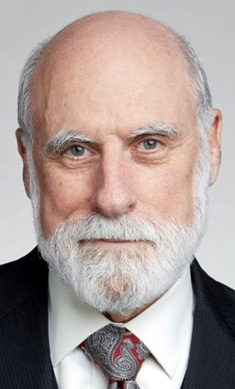 In the fall of 1998, I was present at the first meeting of the ICANN Board which was then made up of very senior, prominent parties from a broad spectrum of sources. Much to her credit, Esther Dyson accepted the position as the first Chair of the ICANN Board for the newly birthed organization. I was in attendance in support of the nomination of Michael Roberts as the first ICANN CEO. It was a time of uncertainty. more
 When talking about the problems of attracting infrastructure funds to the telecoms industry, I would make one exception; that is backbone infrastructure... We increasingly describes mobile networks as fibre networks with a wireless access component. This clearly indicates the need for fixed backbone network capacity, eventually all the way to the street. more
 A year ago, under the leadership of the Internet Corporation for Assigned Names and Numbers (ICANN), the internet naming community completed the first-ever rollover of the cryptographic key that plays a critical role in securing internet traffic worldwide. The ultimate success of that endeavor was due in large part to outreach efforts by ICANN and Verisign which, when coupled with the tireless efforts of the global internet measurement community, ensured that this significant event did not disrupt internet name resolution functions for billions of end users. more
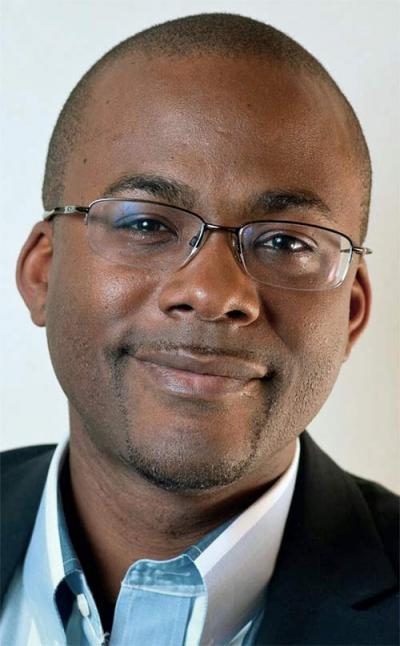 The Caribbean needs more robust infrastructure to support the delivery of local online services during the COVID-19 pandemic and for crises to come. Public health and safety mandates, from social distancing and quarantines to stay-at-home orders and curfews, have confined an estimated one billion persons to their homes globally. The sudden restrictions on social movement have created a reliance on the Internet and technology-enabled services. This should come as no surprise. more
 With the ICANN Silicon Valley in San Francisco meeting just six short weeks away, the Internet community's hopes of seeing the launch of the new generic top-level domains (gTLD) program have been once again reinvigorated. A meeting of the ICANN Board of Directors last week produced encouraging resolutions that have given hopeful gTLD applicants the clearest indication yet that San Francisco will be the venue for the final approval of the Applicant Guidebook and the beginning of the Internet's next extraordinary phase of evolution. more
A World-Renowned Source for Internet Developments. Serving Since 2002.