Welcome:
Login
|
Sign Up
|
About CircleID
Follow:
|
|
|

New TLDs |
Sponsored by |

|


fTLD Registry Services, the operator of .BANK top-level domain, reports that nearly seven months after .BANK launched, U.S. banks are continuing to register domain names. more
 The applicant community is working its will on the rules for generic top-level domain (gTLD) auctions published by the Internet Corporation for Assigned Names and Numbers (ICANN). But, as always, ICANN is no pushover. ICANN posted the new gTLD auction rules for public comment last month after community outcry over the preliminary rules during ICANN's Public Meeting in Buenos Aires in November. more
 This is the first post in a series from Corey Grant, Senior Industry Consultant at ARI Registry Services, on what .brand TLDs need to do to get started and make the most of their TLDs... If you are a .brand Top Level Domain (TLD) and have a Registry Agreement from ICANN which you have not yet signed, you need to sign it by July 29, 2015. You're not alone; there are many others in the same boat -- all staring at their Registry Agreement trying to figure out what to do next. more
 The long-running saga of victims who are pursuing 'state sponsors of terrorism' via ICANN has taken yet another turn. Some time back the Plaintiffs in Rubin & ors -v- Islamic Republic of Iran & ors managed to obtain Writs of Attachment in the Federal court district in Washington (D.C.) courts ordering that the ccTLDs of those respective countries be seized in part-payment of the damages they are owed. ICANN, fairly predictably, became involved at this point. more
 Applicants will have some considerable work to do over the next several months as the Evaluation Panels consider application comments and pose clarifying questions, the Governmental Advisory Committee (GAC) concludes its review for Early Warnings, and Objections are filed. In addition, Applicants have an opportunity to help ICANN with their timelines by settling string contention as soon as practical. more
 The new Community Priority Evaluation (CPE) guidelines prepared by the Economist Intelligence Unit (EIU), and published by ICANN are now past their feedback period. We, at Radix, believe that ICANN has received feedback from approximately 10 stakeholders, and I for one, am looking forward to those being published. In light of the fact that none of the comments that ICANN received have been made public yet, I decided to blog about my multiple concerns with the new guidelines. Sparing a thought for the not-so-involved reader, I have limited my rant to some of the more important issues. more
A number of new gTLD applicants, including .gay and .music are criticizing ICANN for conducting an investigation into its own controversial practices. more
.US is the top-level domain for the United States of America. As stakeholders in the .US ccTLD, we all share a vested interest in making sure that .US continues to be a vibrant namespace that reflects the diversity, creativity and success of our people. As the Internet continues to grow and evolve, it's important that the .US domain does too. To meet these needs, Neustar and the usTLD Stakeholder Council plan to hold a virtual .US Public Stakeholder Town Hall Meeting. more
One of my staff members pointed me to an article by Mikko Hyppönen in Foreign Policy. In this article Mikko argues that a new top level domain (TLD) like .bank for some reason would prevent on-line fraud, at least partially. Mikko seems to be arguing that with a dedicated TLD registry for financial institutions and a fee high enough to act as an entry barrier you would have a trustworthy bank domains that would be immune against today's phising attempts... more
Telnic Limited, the registry operator for the .tel top level domain (TLD), today announced that its regional partner TelChina and China Mobile, a leading mobile phone company, have entered into a strategic relationship to develop Mobile-Pay services on the .tel platform. ... On this platform, users will not have to log on to various websites for payment, but accomplish it through the clicking of a Mobile-Pay link on a .tel page. more
I think the new gTLD program will have many successes. It is a failure, however, when it comes to serving developing and less developed economies, especially the communities in those economies. Actually it failed in serving communities anywhere, but it really failed when it came to serving the peoples of the world outside WEOG (the UN designations for the developed Western European nations and Other Groups; others including AU, CA US, and NZ). more
 Here in the United States, we recently celebrated Thanksgiving and with that, we now enter the last weeks of 2018. I've spent much of this past year involved in ICANN's Expedited Policy Development Process (EPDP) for gTLD Registration Data and I'm happy to say our group has reached a historic milestone. Just last week, the group published its initial report for public comment. more
This isn't the blog post I had hoped to write. When I signed up to participate in ICANN's Expedited Policy Development Process for gTLD Registration Data, I knew we had a lot of work ahead of us, but I was cautiously optimistic that we would, eventually, reach a successful outcome. Today, I find myself looking at things differently. After hundreds of hours and countless meetings and emails, Phase 2 of the EPDP's work has wrapped up with the delivery of our final report to the GNSO Council. more
The latest Domain Name Industry Brief published by Verisign reports more than 5 million domain names were added to the Internet in the second quarter of 2011, bringing the total number of registered domain names to more than 215 million worldwide across all domains. The increase of 5.2 million domain names marks a growth rate of 2.5 percent over the first quarter. Registrations have grown by more than 16.9 million, or 8.6 percent, since the second quarter of 2010. more
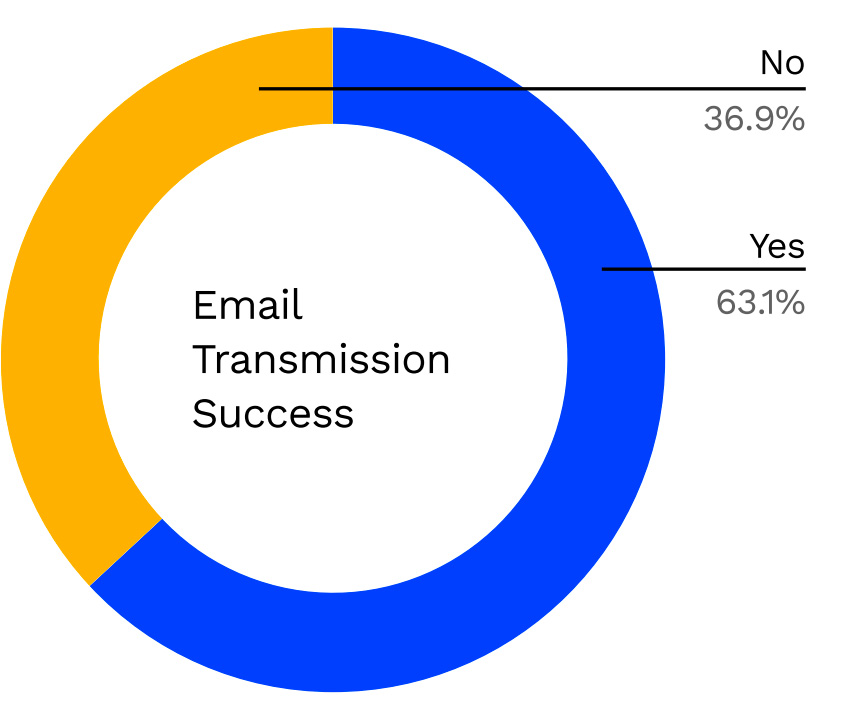
ICANN, in conjunction with the Universal Acceptance Steering Group (UASG) announced this week the availability of a new report: An Analysis of New gTLD Universal Acceptance. The study focuses on the concept of removing all technical barriers that might hinder a user from accessing any name in any top-level domain (TLD) from any web browser, email client, or other Internet application on any computer or electronic device. more
A World-Renowned Source for Internet Developments. Serving Since 2002.