
Welcome:
Login
|
Sign Up
|
About CircleID
Follow:
|
|

Some of the root server operators post public statistics for their domain name traffic at the top-level. For example, the graph (which can take a bit of time to generate, given ICANN's slow servers) for the L-root server's most popular Top-Level Domain (TLD) queries demonstrates, to no one's surprise, that .com is king. What's more interesting, though, especially given the new generic Top-Level Domain (gTLD) debate, is to look at the most popular invalid (non-existent) TLDs. more
 .ORG, The Public Interest Registry has, since its inception, advocated for policies designed to reflect the public interest, namely of fair and open competition that benefits not only .ORG, but all Internet users. ICANN is now faced with a critically important decision on whether to remove the trusted and proven safeguards that prevent domain name registrars from owning and operating domain name registries. Because of its concern for end users, support for the success for new Top-Level Domains (TLDs), and strong belief in the benefits of fair competition, .ORG vigorously opposes removing these critical safeguards and strongly supports registry-registrar separation... more
 Back in 2005 an organization called the Coalition for Internet Transparency (CFIT) burst upon the scene at the Vancouver ICANN meeting, and filed an anti-trust suit against VeriSign for their monopoly control of the .COM registry and of the market in expiring .COM domains. They didn't do very well in the trial court, which granted Verisign's motion to dismiss the case. But yesterday the Ninth Circuit reversed the trial court and put the suit back on track. more
 With all the buzz surrounding new Top-Level Domain (nTLDs) at the last ICANN meeting in Mexico, I am sure many of you have already encountered or read information regarding the latest applications. For those who haven't been staying abreast of the latest, here is a quick review... There are two different general types of TLDs -- gTLDs and ccTLDs. ICANN is now opening the possibility of adding further TLD extensions, which can virtually be anything... more
New research from the Anti-Phishing Working Group (APWG) has found that up to 81% of domain names used for phishing are legitimate domains that have been hacked. More specifically, out of the 30,454 phishing domains under observation, only 5,591 domain names (18.5%) were registered by phishers according to APWG. The remaining small percentage of the domains used in phishing belonged to subdomain resellers such as ISPs and other web-based services. more
 Last month Pool.com and Quintaris started a joint project to let consumers pre-order – without cost – domain names in new generic Top-Level Domains (gTLDs) for which ICANN will likely get an application. Latest stats released from the group is showing strong demand -- about 10,000 per day in the first month of the program... more
 News broke this week about an attack in Puerto Rico that caused the local websites of Google, Microsoft, Yahoo, Coca-Cola, PayPal, Nike, Dell and Nokia to be redirected for a few hours to a phony website. The website was all black except for a taunting message from the computer hacker responsible for the attack... more
 On April 21st the Internet Commerce Association submitted a formal request to Mr. Frank Fowlie, ICANN Ombudsman, requesting an immediate investigation of the non-compliance of the Implementation Recommendation Team (IRT) with applicable provisions of ICANN's Bylaws. The IRT was created by a March Resolution adopted by the ICANN Board during its Mexico City meeting, and was charged with proposing "solutions" to the concerns of trademark holders. Unfortunately, the IRT has chosen to operate in a non-transparent manner... more
 Yesterday, I sent ICANN my comments about the draft recommendations from ICANN’s Implementation Recommendation Team (IRT), which has been tasked with coming up with a trademark protection scheme for new top-level domains. For the most part, I think they did an excellent job... more
 With the recent attacks against high-profile New Zealand domain names including Coca-Cola.co.nz and F-Secure.co.nz, fingers are naturally pointing to Domainz, the registrar of record for these domains, as the party responsible for this lapse in security. While domain name registrars certainly need to ensure the security and stability of their systems, domain name registries must also step up and take responsibility for mitigating risks posed by hackers... more
 Potential trademark Rights Protection Mechanisms (RPM) at the 2nd level can be divided into three main areas -- each defined by their time relative to Top-Level Domain (TLD) launch... Of these, we believe the third, "After Launch," is the most fruitful path to explore. We believe it offers the most potential to protect the rights of trademark holders, the best balance between TM rights and the legitimate rights of others who may want to register names , and the most benefit to the trademark community at the lowest cost to them... more
 As reported last July, there is a proposal from some Flemish politicians to create a .vla top level domain under the new gTLD process launched by ICANN. The proposal further elaborated that the Flemish government would have to cover the costs. Not so fast, says the Flemish government... more
 Nearly ten years ago, the Government of Canada wrote a letter to the chair of the Canadian Internet Registration Authority (CIRA) that set out the framework for the management of the dot-ca domain. The government articulated a vision of the dot-ca domain as a “key public resource” and called on CIRA to act in an open and transparent manner. CIRA has long sought to live up to those standards, but in recent months the organization has shown an unmistakable shift toward prioritizing commercial gain over the public interest along with a troubling move toward secret decision making... more
According to latest reports from the World Intellectual Property Organisation (WIPO), allegations of cybersquatting by trademark holders continued to rise in 2008, with a record 2,329 complaints filed under the Uniform Domain Name Dispute Resolution Policy (UDRP). This represented an 8% increase over 2007 in the number of generic and country code Top-Level Domain (gTLDs and ccTLDs) disputes handled and brings the total number of WIPO cases filed under the UDRP since it was launched ten years ago to over 14,000. To improve efficiency and respond to growing demand, WIPO has proposed an "eUDRP Initiative" to render the UDRP paperless... more
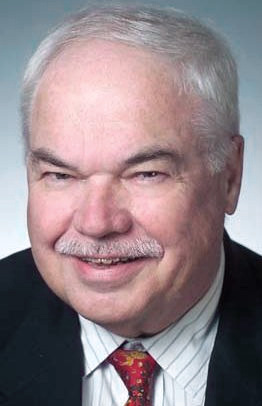 The Mexico City ICANN Conference was more eventful than some of us had anticipated. Among the highlights was Paul Twomey's announcement that he is stepping down as President and CEO of ICANN effective on June 30... Before the Conference, ICANN had released the second draft of its Guidebook for new generic Top-Level Domains (gTLDs). It was not greeted with universal acclaim... more
A World-Renowned Source for Internet Developments. Serving Since 2002.